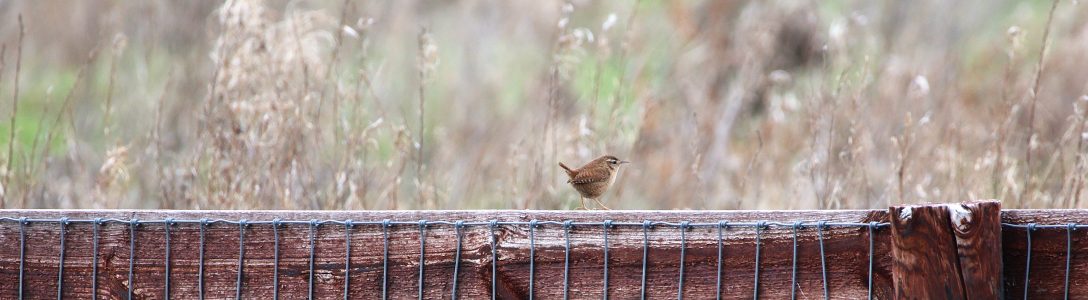
This post is about the birds that inspired us to begin this blog in the first place. They’re not vivacious songbirds nor majestic birds of prey, but captivating little visitors all the way from Africa. They are the sand martins (Riparia riparia).
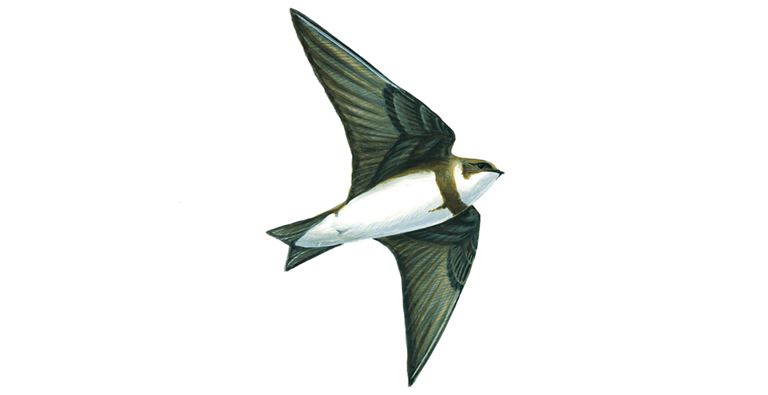
Sand martins, known in Irish as Gabhlán Gainimh, are our smallest Hirundine visitors. Hirundine means they are like swallows in their physicality and the way that they act. Indeed, when seeing them dart through the air, their resemblance to swallows is uncanny, though they do not have the iconic forked tail. They can reach speeds of up to fifty kilometers an hour, and their appearance has been likened to little penguins swimming through the air.

These little travelers spend their winters in the sweltering hot climate of sub-Saharan Africa. In spring, they begin their long journey north across the Sahara desert to reach Europe. They can spend days at a time in flight, catching and eating airborne insects to replenish their energy for the long trip to their breeding grounds in the north. They have a huge breeding range that stretches from Ireland all the way over to northern Japan! The sand martins of America follow a similar travel itinerary, migrating from North America to South America in the winter.
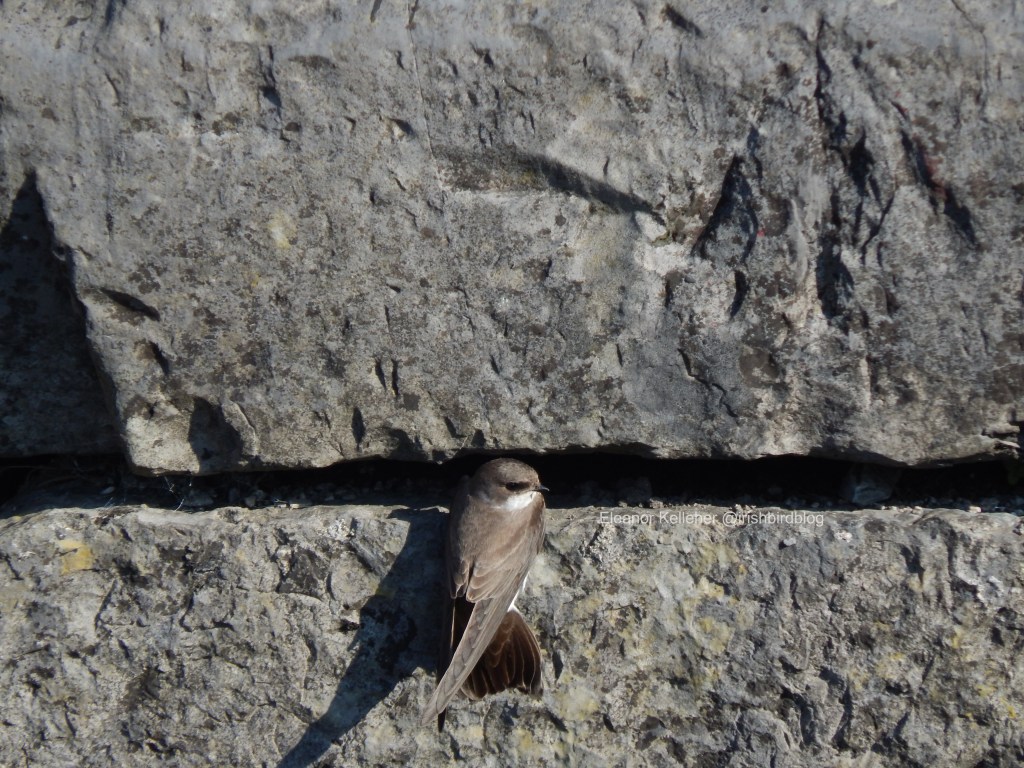
Sand martins are sociable birds. They nest togethers in colonies ranging in size from a few dozen nests to several hundred. Their nests are at the ends of tunnels that can be between a few inches to three or four feet in length, usually bored into sand or gravel (hence the name sand martin), and are very fond of beachside cliffs. Like many other migratory birds, a pair of sand martins will nest for life and return to the same nesting site year after year. As well as that, birds who were born in a particular site will often return there to raise their own chicks in the future.
So you may ask, why did these birds inspire the bird blog? Well, sand martins arrive in mid-March and stay until September, so you have a generous timeframe to go looking for them. You would expect to find them near sandy cliffs on the beach, but we’ve found that the place you’re guaranteed to see them at is the old Magazine Fort in Phoenix Park.
During the first uncertain COVID summer, we went out to Phoenix Park and climbed the hill up to the fort. It was a sunny day, blue skies and a light breeze, and the forgotten fort at the top of the hill had no other visitors but us. We stood there, getting our breath back after the climb, and heard the most astonishing noise. It was almost mechanical sounding, like a tiny power saw, yet it had this unmistakable trill pattern that we intrinsically recognised as a bird’s call. We couldn’t trace the origin of the sound, it felt like it was all around us.
Then, a small shape flew past my head, so close it swept a lock of hair into my face. Then another flew past, and another, and another. We were surrounded by a family of birds all calling to each other, swooping around our heads. They would take off from their nests in the cracks of the walls and dive down towards the moat, skimming the top of the grass and wildflowers there. Then quickly darting upwards, they would head towards the clouds, only to change direction again, in pursuit of some flying insect. We saw them repeat this dozens of times over before returning to their nests for a brief interlude, and heading out again.
I was mesmerized. I tried to follow one’s flight but they were so quick my eyes could not keep up.
I could have stood there and watched them for hours. It was magical, there’s no other way to describe it, and I have never had another experience quite like it, nor do I think I ever will.

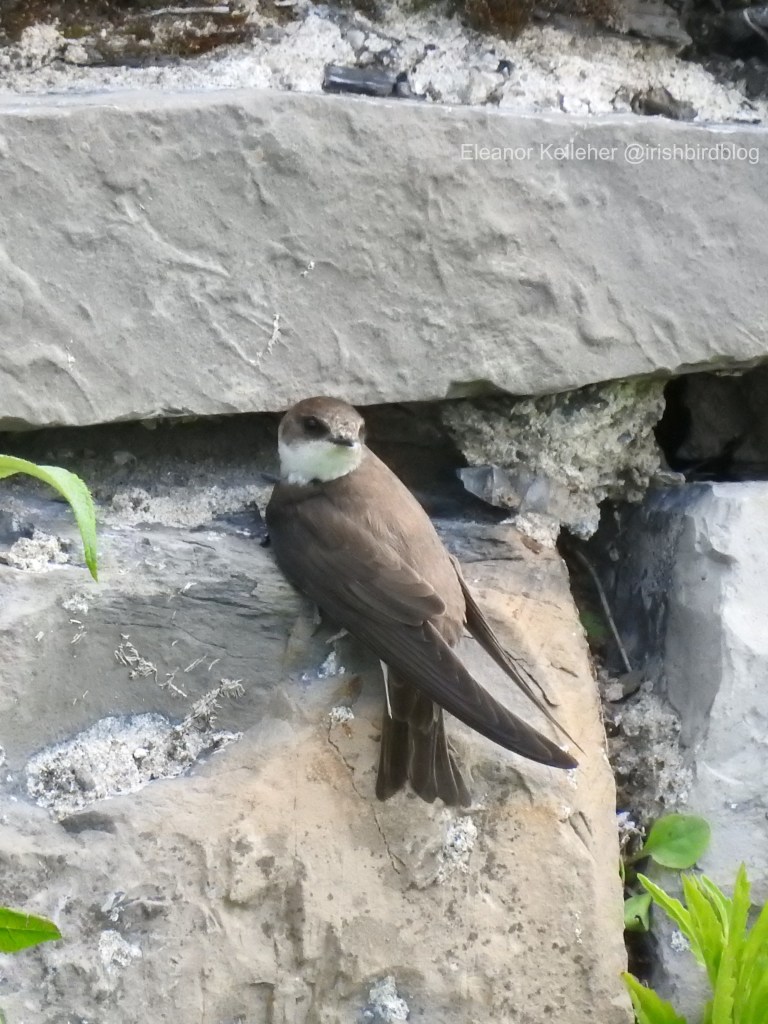
Although sand martins are registered as a global species of “Least Concern”, they are amber listed here in Ireland. This is due to declining numbers of appropriate nesting sites here, and unfortunately, the old Magazine Fort may soon become inhospitable to them. In 2021, the government announced plans to “conserve the site and improve its visitor facilities“, something that the history nerd in me would have been excited about, if it didn’t mean potentially destroying the homes of the sand martins in the process. While I can’t say for sure that these martins won’t return, I would assume that renovations to the buildings will probably eliminate most of the viable spots for their nests, and increased foot traffic will probably deter them from nesting. So, if you want to catch a glimpse of these marvelous little jetsetters and experience something truly breathtaking, head on over to the old fort while you still can.
 The Irish Bird Blog