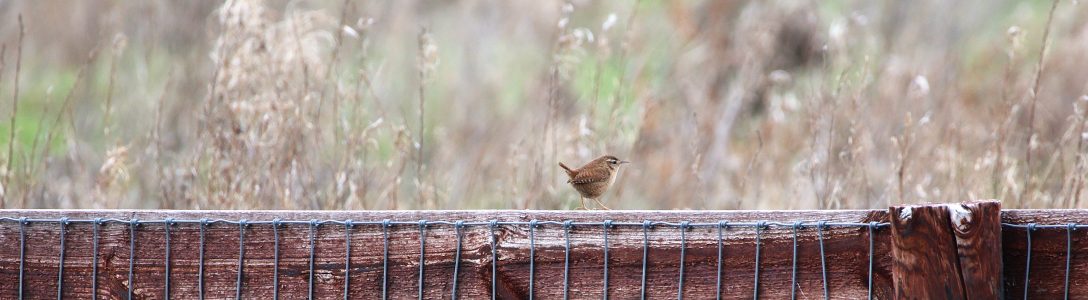
This month’s article is about one of the more famous bird visitors we get to Ireland: The Atlantic puffin (Fratercula arctica), known in Irish as Puifín or Gobachán.
There’s a lot to talk about when it comes to Puffins. They are auks – short winged, diving seabirds – hailing more specifically from the Fratercula family. The name Fratercula comes from the Medieval Latin word for friar, and looking at the puffin’s black and white plumage, reminiscent of the robes of a Catholic monk, is it any wonder the name stuck?
Their monochrome colour palette is actually common among seabirds. Having an upper crown and back that is black, and an underside that is white, deters attacks from both above and below. Aerial predators find it difficult to locate the puffins’ dark bodies against the backdrop of the inky waves, while underwater attackers fail to differentiate their brilliant white bellies from the sunlight breaking through the surface. Their beaks are of course their most well-known feature. Maintaining the high-vis orange hue is very energy-intensive, so it’s only present during the summer breeding season. In winter they shed the outer portions of their beak, leaving a smoky, sooty complexion.
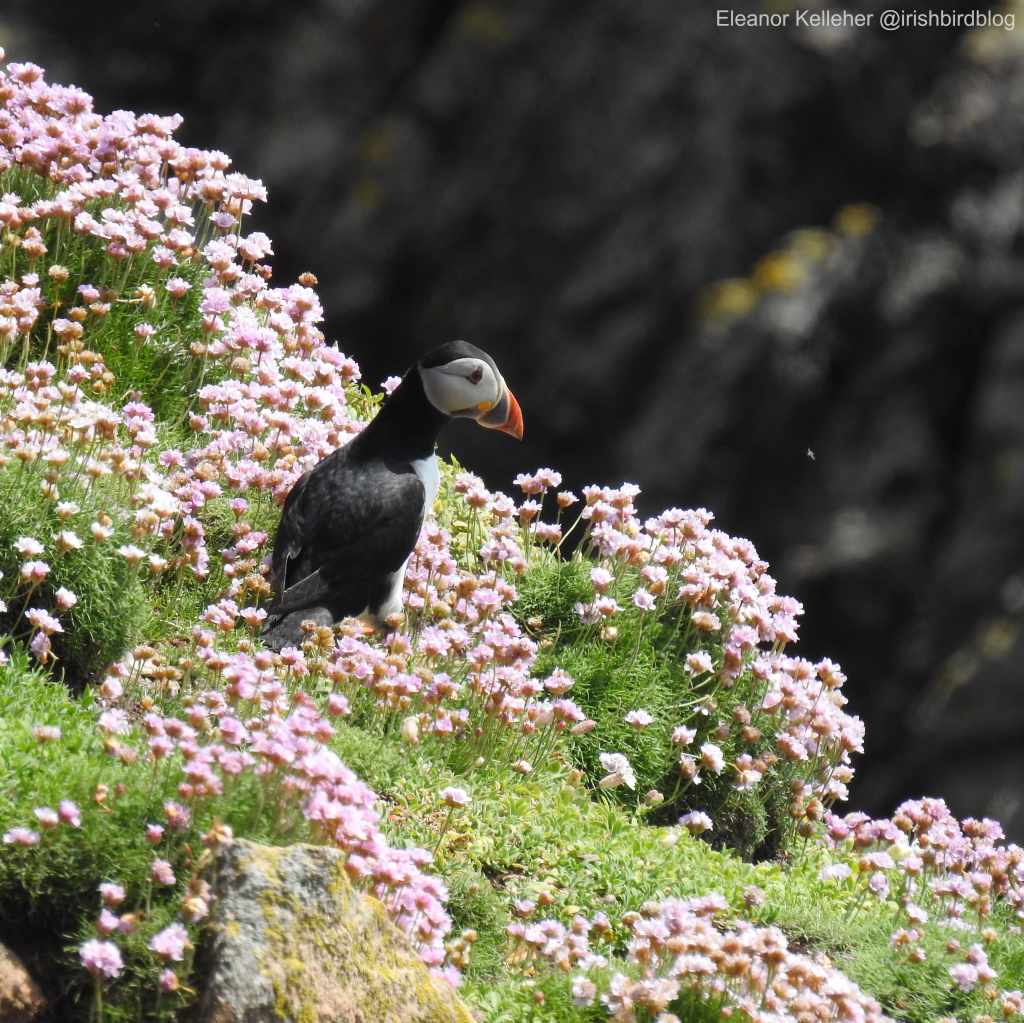
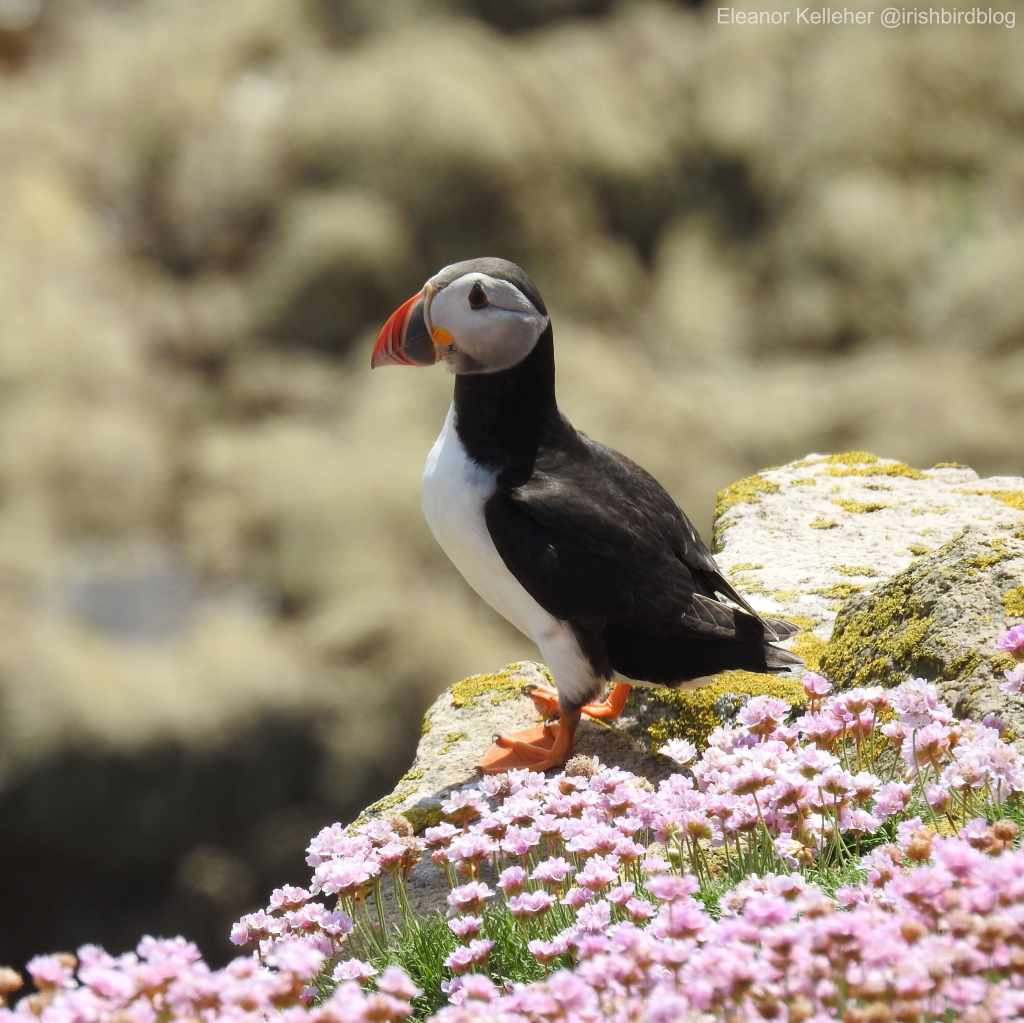
Puffins overlooking the cliffs, surrounded by sea pink.
Due to their time spent at sea and their ability to endure harsh storms, puffins are usually associated closely with weather. In Iceland they are regarded as expert forecasters, while Inuit and Alaskan native tribes thought puffins had the power to actually change weather patterns and ward off storms. In Irish folklore, puffins are reincarnations of Celtic monks, which makes their overwhelming presence on Skellig Michael all the more fitting.
We didn’t go to Skellig Michael when we went looking for puffins. We didn’t go to the pirate dens of Clare Island, or to the Cliffs of Moher, either. No, we decided to skip the popular hotspots and headed to a pair of islands sitting five kilometres off the east coast in the Irish Sea: the aptly named Saltee Islands.
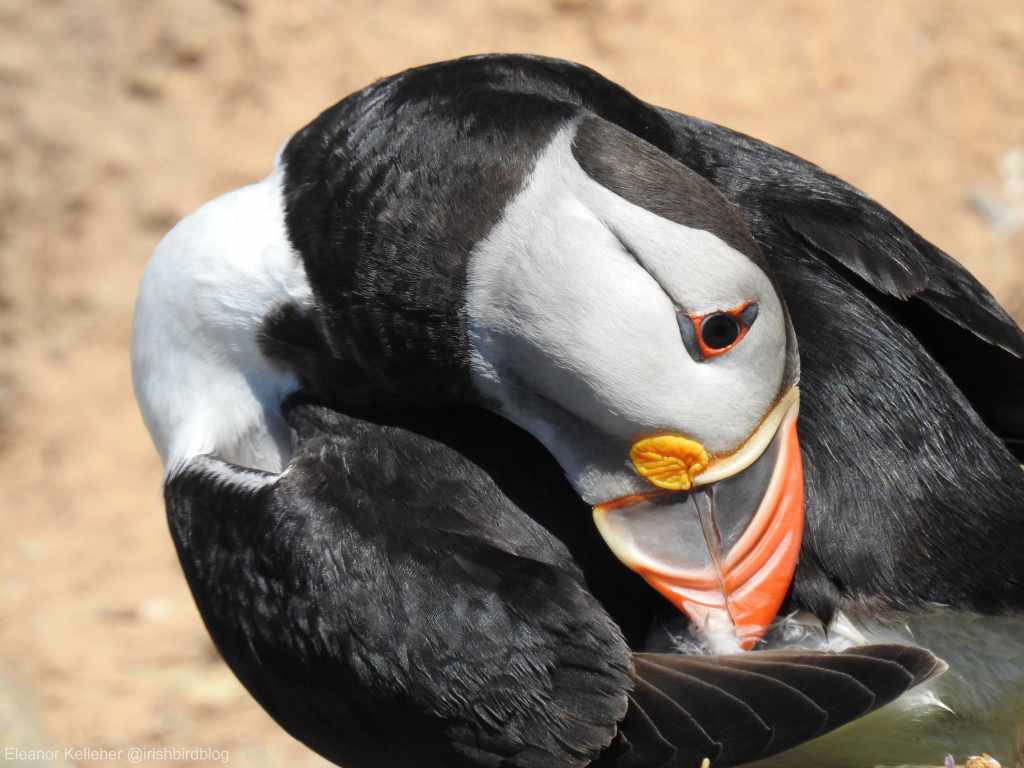

Two puffins preening themselves to upkeep the waterproof quality of their feathers.
It was overcast when we arrived at Kilmore Quay. We drove to the south of Wexford, parked our car, and made our way over to the small ferry named An Crosán – The Razorbill. We took off, travelling twenty minutes across the water until we reached Greater Saltee. There was no dock or jetty on the island. We transferred to little dinghy boats and came as close to the shore as we could, which still meant clambering over wet rocks to reach the beach. The sailors waved us goodbye, their ferry only ran twice a day, so they would be back for us in a few hours.
We climbed the steep staircase carved into the stones of the hill, and arrived at an unassuming grass field. There were some straggly Cordyline palm trees near the beach that thinned out and disappeared as we walked further inland. It had been cloudy back at the quay, but on the island there was nothing but sun and bright blue sky. We passed by dozens of rabbit holes, scrambled up and down rocks covered in rust-coloured lichen, and eventually came to the cliffs on the other side of the island.
We heard the birds before we saw them. They had taken up residence on every nook and cranny on the cliff face, as well as on the rock islands littering the waters around Saltee. The sound they made can only be described as raucous. It reminded me of being in the middle of town on a weekend, the same sort of all-encompassing noise.
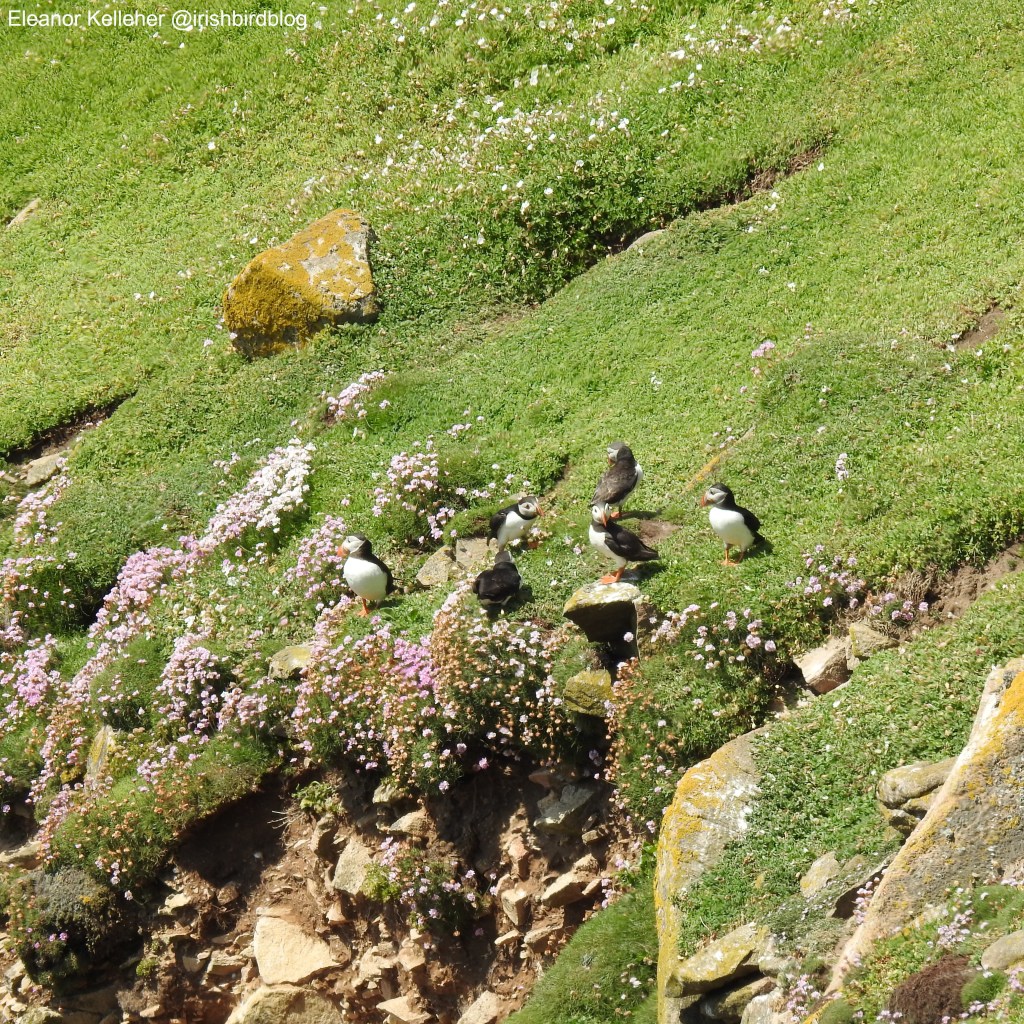
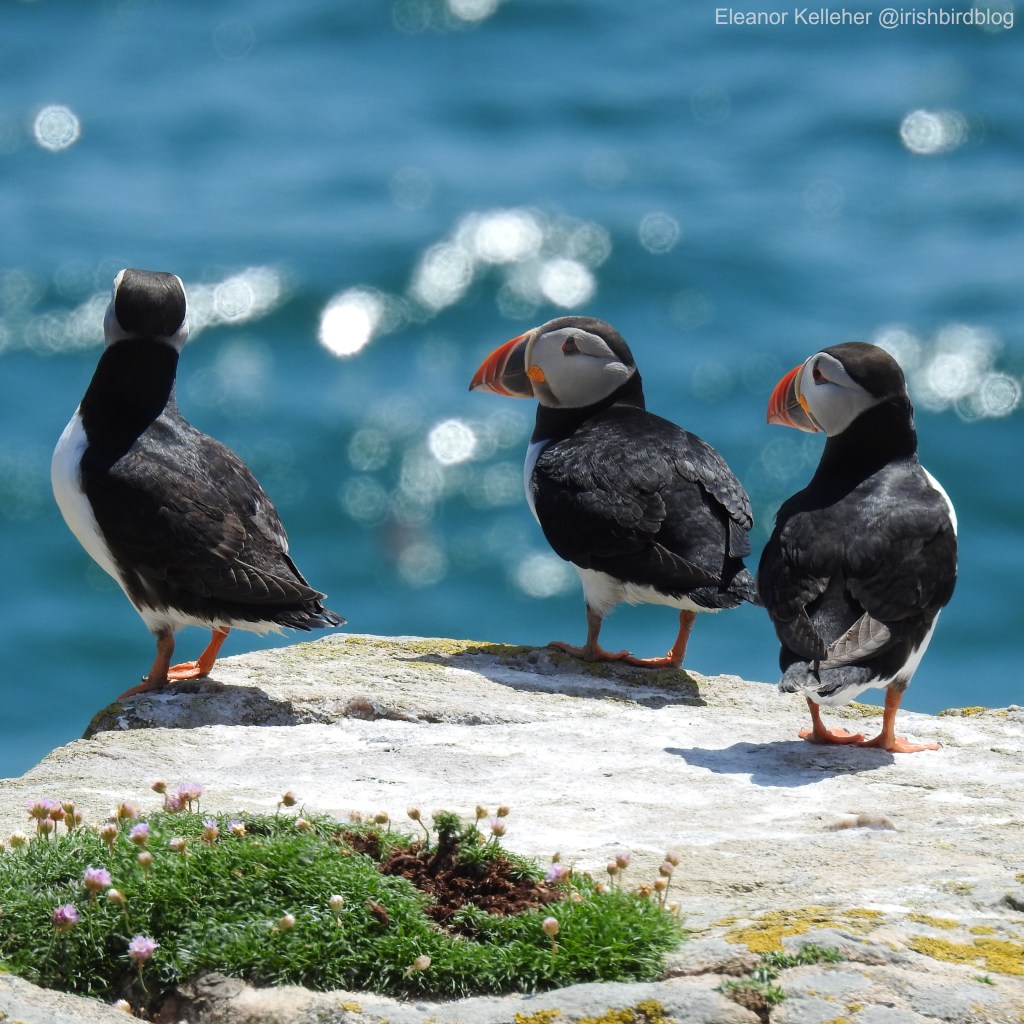
There was kilometres of land covered in soft pink wildflowers that stood out against the gentle green ferns around them. The cornflower blue of the sky above met the sapphire waves at the horizon. Bare brown rock was covered in vivid yellow and orange lichen. The whole island was a symphony of colours, and tying it all together were the magnificent little puffins dotted all over the place.
We had seen a few when we landed on the beach, but once we had travelled away from the well-trodden path, we started to see them everywhere. They were curled up on the rocks like cats, or standing together in groups, or strolling through the flowers, or curiously eyeing up the visitors to their island. We saw a few in flight, flapping their stubby little wings for all they were worth.

We took over a hundred pictures of these charming little fellows, and I’m so glad we can share a few of them with you. While it definitely was a tiring trip, it was so incredibly worth it to see these sweethearts out there in a place largely untouched by humans. The islands hold more surprises than just puffins too; many other summer seabirds make their home among the rocky walls of Saltee. I would highly recommend going out and looking for them yourself if you can, but until then, I hope these memories of our trip bring you a little joy.
 The Irish Bird Blog