This month, we thought we’d talk a little bit about a bird that’s made its way all around the world. Whether you live in New York city, out in the suburbs of Dublin, or even on a farm in China, you’ve almost definitely encountered this well-travelled fellow. It is the House Sparrow (Passer domesticus), known here at home as Gealbhan binne.
Some of my earliest childhood memories involve house sparrows. I remember sitting by a window, looking out into the garden of my parents’ home, and watching these little brown beauties flitting in and out of trees and bushes. My mother would leave cooked rice out for them from time to time, and on the days that she did, there would be at least ten birds crowding around our garden wall.
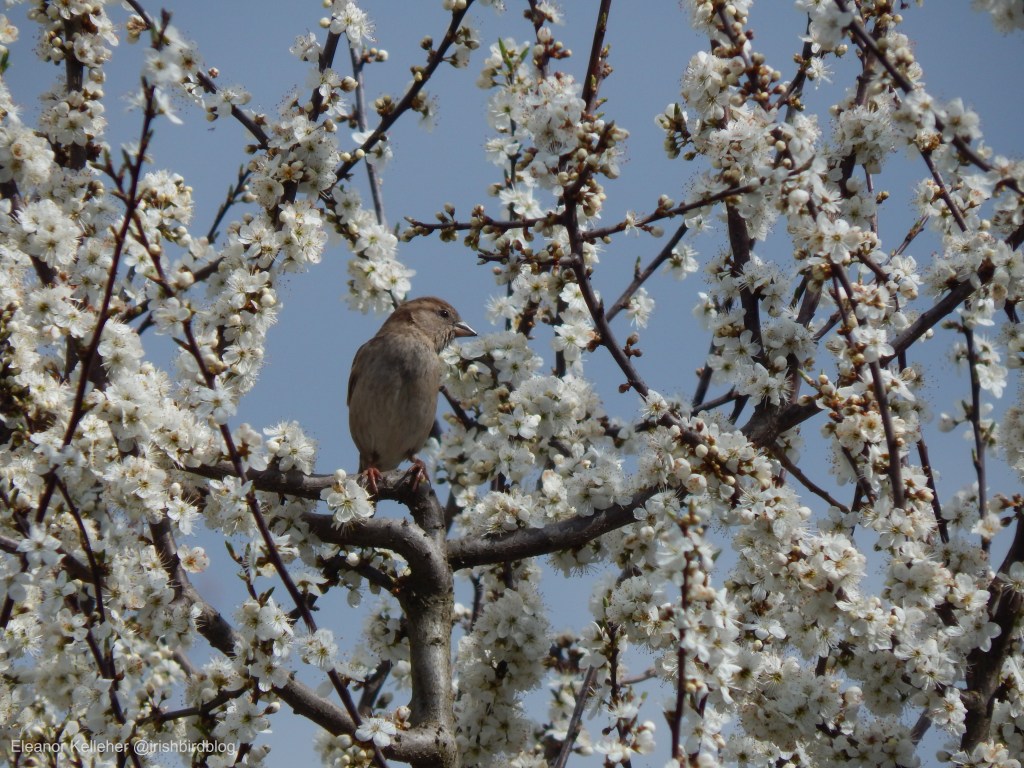
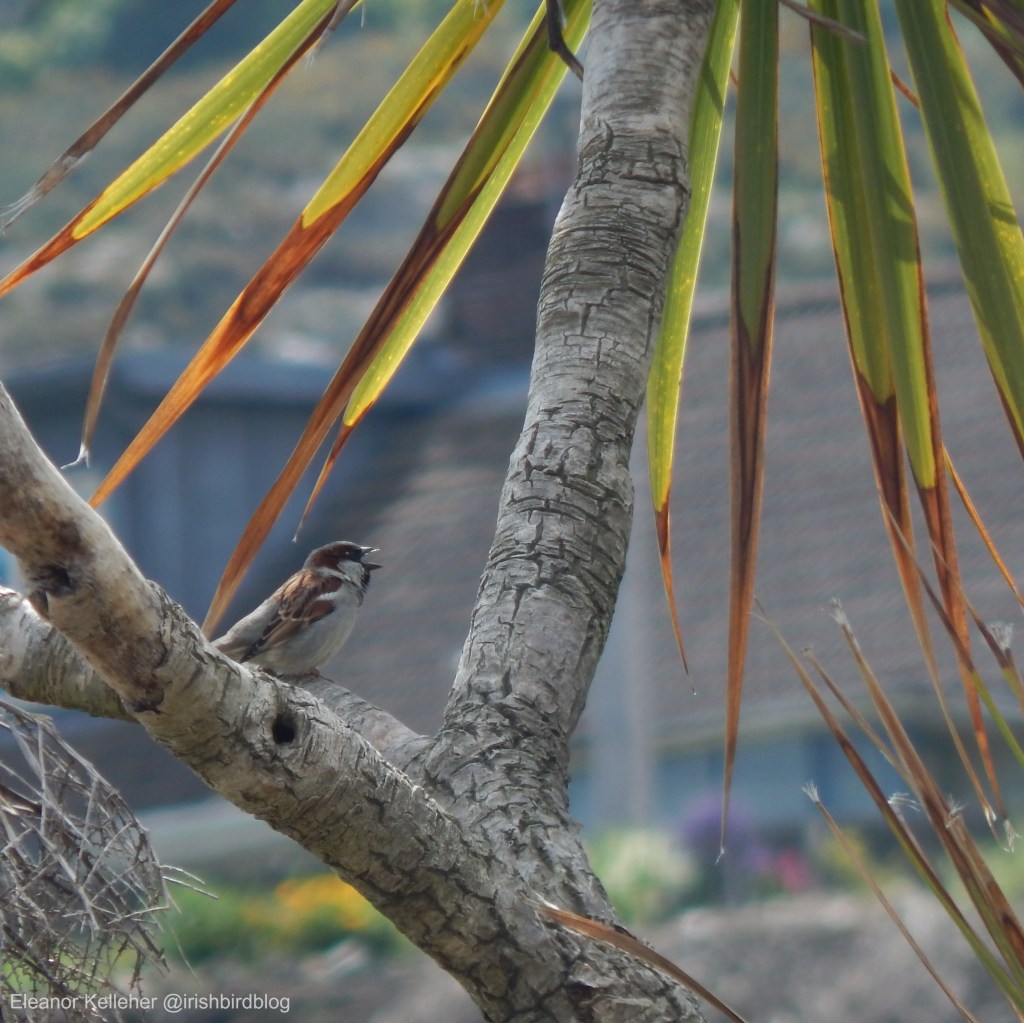
I remember thinking that the plainer-looking birds must be younger, and the ones with the reddish-brown and black feathers on their heads were the adults. Later I learned that that was not the case. The birds with the lighter brown feathers are female, while the ones with the fancy eye makeup and sooty-grey crown are male.


Of all the birdsongs I’ve become acquainted with, the call of a house sparrow is by far the most familiar to me. I grew up listening to them singing in the trees behind my parents’ house, my cousins’ house, my primary and secondary schools, and even around my university. They’re a staple of the Dublin soundscape, alongside the seagulls, the cars, and that beep-beep-beep that plays from traffic lights when it’s safe to walk across the road.
So imagine my surprise when I was walking along a street in Dubai, all the way out in the U.A.E, and recognised the same bird song.
Turns out that house sparrows are native to the Middle East, Eurasia, and North Africa. Not only that, but they’ve been introduced to other places like Australia, South Africa, and North and South America. The reason for this may be due to European settlers bringing over birds that remind them of their homeland.
Ironically enough, house sparrows are mostly beloved in Europe, but are quite hated in North America, where many people will kill them on sight. They were first introduced to the Brooklyn area of New York in 1850 to help combat the damages caused by the Linden Moth at the time. Little did they know that the house sparrows would spread like wildfire, and reach the Rocky mountains just fifty years later.
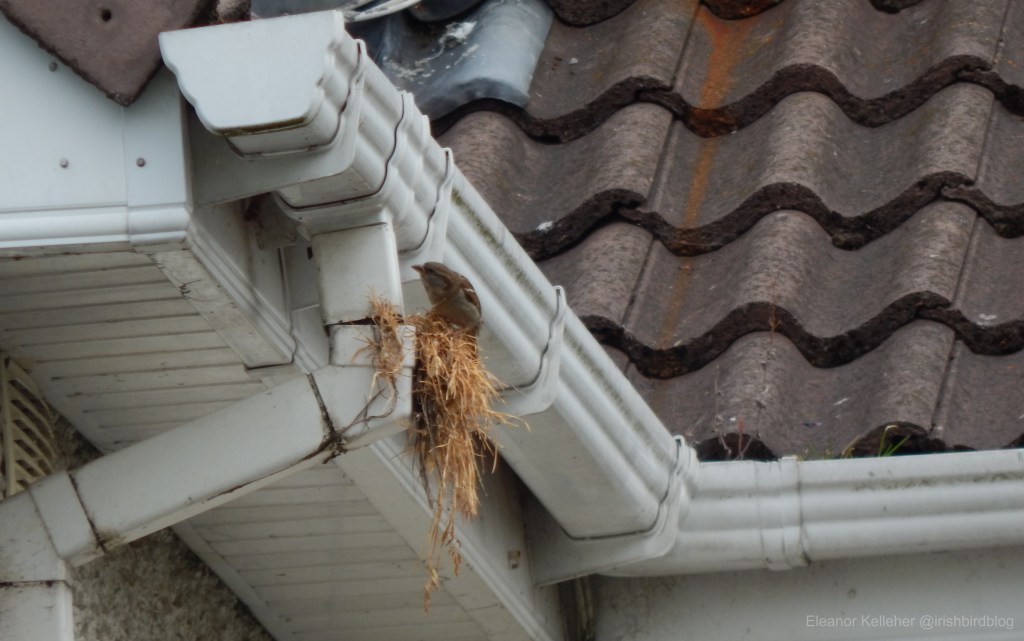
House Sparrow history is entwined with human history, and they seem to want to be in places where humans are living. They have been found in both rural and urban areas, and even though their massive range spans several climates and habitats, they usually stick close to our settlements.
They have been constant companions of people since the advent of grain farming centuries ago. In fact, if you look at the shape of their beaks, you can tell that grain makes up the majority (we’re talking ninety percent) of their diet, though they will also take advantage of any other foods in their area and consume everything from flies to fruit to frogs!
Perhaps its because of our shared history that house sparrows aren’t as fearful of humans as some other birds are. Whatever the reason may be for their boldness, we benefit greatly from it, as house sparrows are the most studied bird, with almost five thousand scientific papers published that use them as the study species.
Speaking of species, did you know that half of all bird species are of an order called Passeriformes? If that name seems vaguely familiar to you, it’s because you saw something similar at the beginning of this article: Passeriformes comes from the Latin words passer, meaning sparrow, and formis which means shaped. Half of all bird species have been categorised by comparing them to the sparrow, which makes them a quintessential or archetype songbird. And after learning about their history and their range, I can’t say I’m surprised!

While these cheery little birds are listed as being of ‘Least Concern’ worldwide, their numbers have declined significantly in Ireland and the UK, falling by over fifty percent since the 1980s. This is important to note, since Ireland is an island on the very north-westerly tip of their range, and seeing signs of population decline at the fringes of their habitat can be an indicator of something worse to come.
So, if you want to help out these friendly fluffy fellows, put out a bird feeder and fill it up with some grains and seeds. They’ll surely reward you with a song that humans have been hearing for millenia.
 The Irish Bird Blog