This month’s bird is one that not too many people are a fan of. If you’ve ever dared to eat a sandwich on a park bench, you’ve probably been harassed by a number of these birds. They are the infamous, much-beloathed Herring Gull (Larus argentatus), known here at home as Faoileán scadán.
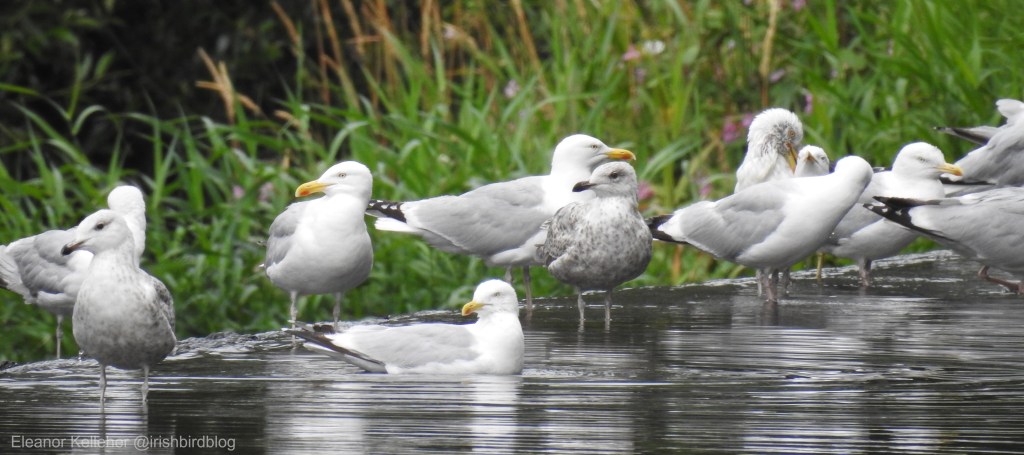
Ah, the herring gull. Many people will brand these birds with the overarching name “seagull”, but in reality, there are no birds that are actually called that. These big birds can be easily confused with several other similar seabirds, like the lesser or greater black-backed gulls (who are also mistakenly labelled seagulls), especially when the birds are juveniles. Herring gulls can live for a whopping thirty years on average, with the oldest recorded to have lived to be forty-nine years old. So, they can take a lot longer to mature than other birds do, and look quite similar to other species when they are young.
The herring gull timeline is split into four age groups.
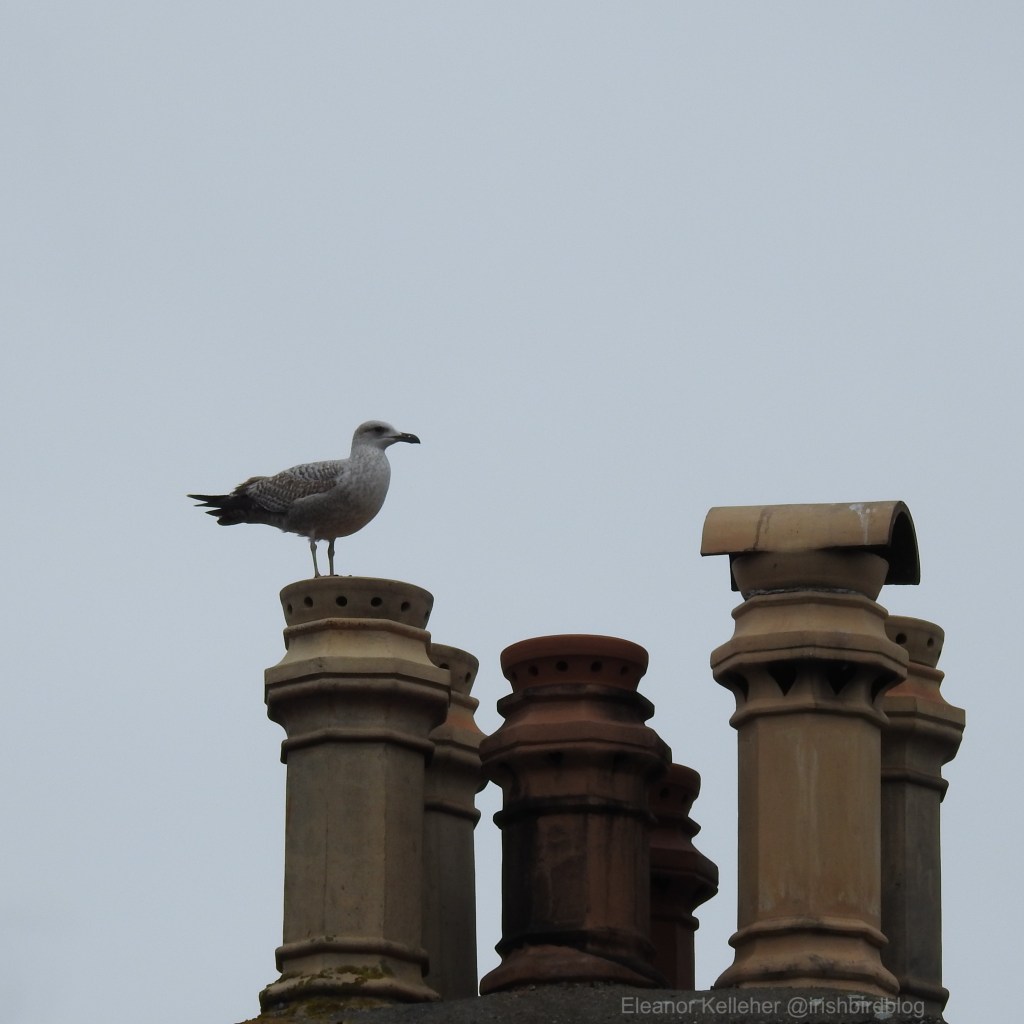
First, you start with the juveniles, who have brown, finely-patterned feathers. You’ve most likely seen these mottled birds chasing after older gulls with their heads and shoulders down, making this low, keening sort of sound (don’t be alarmed, they’re just bothering their parent for some food).
Next, you have the first year birds – a self-explanatory name. There isn’t a noticeable difference between them and the juveniles, neither of these birds have any plain grey feathers yet. This is the stage where their similarities to other bird species are the strongest, and it’s most difficult to tell them apart.
The grey feathers start to show from the bird’s second winter onwards. Initially, the colour appears on their mantle (which is the area at the nape of their necks), and spreads along their backs. By year three, they have officially reached adulthood, though their plumage will continue to grow out until their fourth year.
The “herring” part of their name should be a clue into these gulls’ diet, though as we know, they are expert scavengers of human rubbish too. While we may associate them with ripping open binbags in towns and cities, their scavenging skill began out on the waves; they initially learned that they can forage for scraps on fishing boats out at sea, so they hang around boats and feast on whatever they can snatch.
Herring gulls have this fantastic trick that they do whenever they are hunting for worms – be they the soil or the sand variety. Standing in one spot, they jog quickly in place. It almost seems like they’re dancing; but in reality, it’s believed that they pitter-patter their feet in such a way to mimic vibrations caused by rainfall, which attracts worms to the surface so they can gobble them up. It’s very clever and it’s really fun to watch.


If you’ve spent any amount of time in the urban areas around Ireland, you may be led to believe that there is an abundance of gulls. At the time of writing, housing minister Darragh O’Brien has just authorised a cull of three gull species in North Dublin, which of course includes the herring gull. This move is actually in violation of an EU directive that says it is illegal to kill gulls or destroy their nests, as they are a protected species.
That’s why we’re talking about them today.
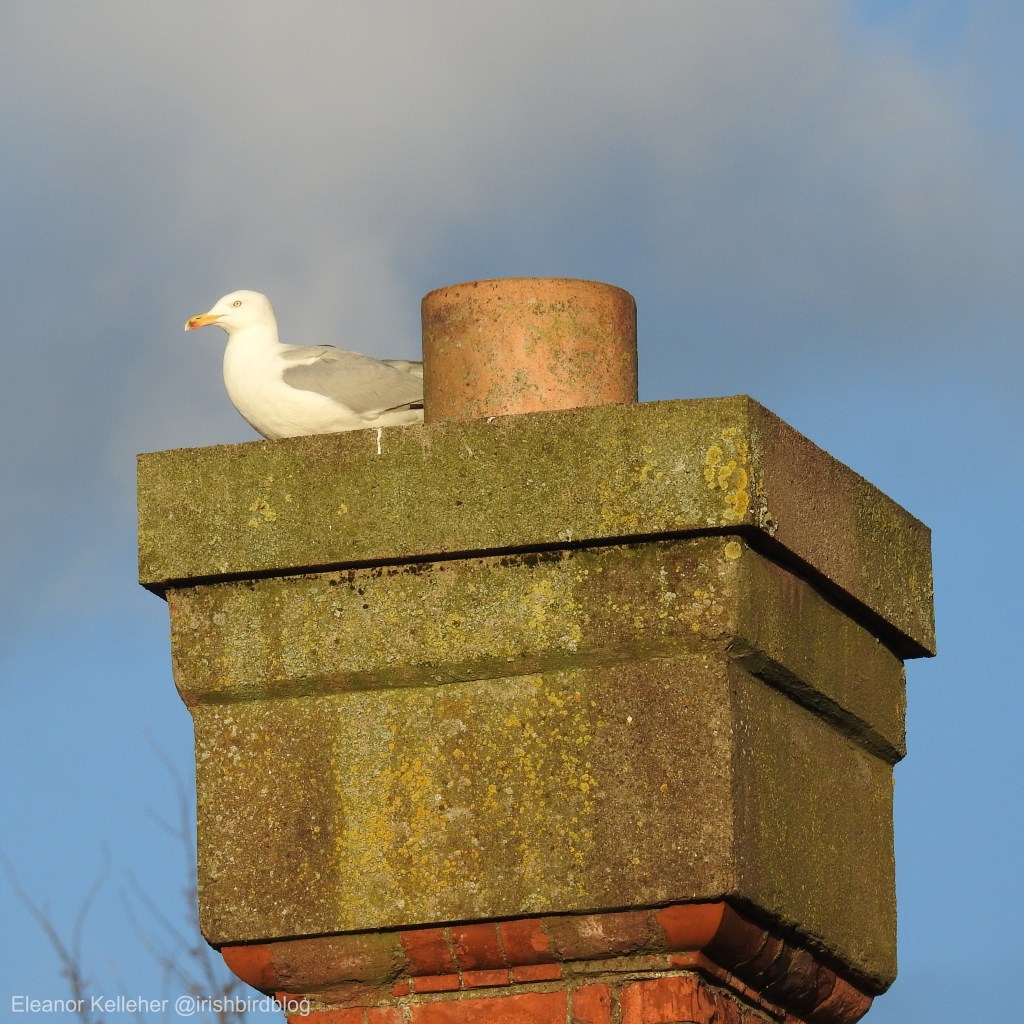
You may be surprised to learn that the herring gull population actually experienced a crash of over 90% fifteen years ago – a drop which was so severe, they were put on the national red list of birds of conservation concern. Thankfully, the numbers are slowly recovering, although some people are upset that the birds have chosen to build their nests on urban rooftops, dig through our bins for food, and “make their lives miserable”. How do you think the birds felt when humans moved into their territory and began stealing all their food?
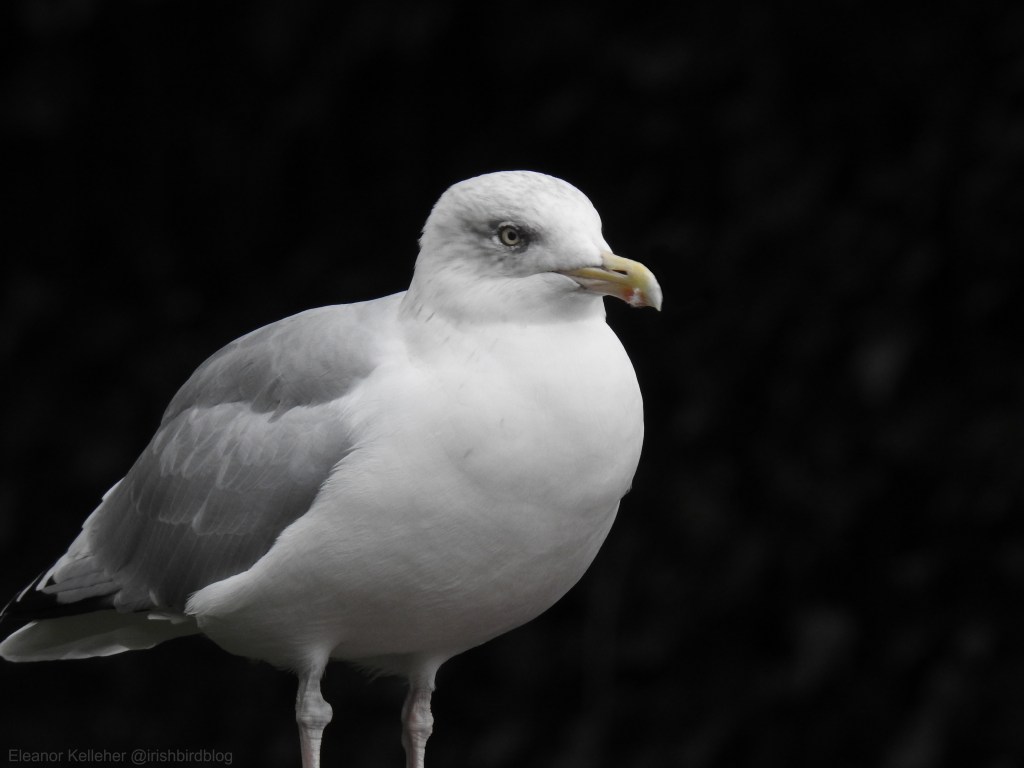
This blog entry doesn’t have a fun anecdote or personal story tying back to these birds, and there is a reason for that.
Many people dislike herring gulls and would like to see them gone; out of the cities and farmlands, pushed back to the coasts. But it’s just not that simple. The change in their preferred food source coincides with global fish stock plummeting, both as a result of increased industrial fishing and ocean temperatures rising – issues that are not easily solved by culling the species.
I didn’t include a story today because I don’t think any animal should have to earn its worth. I shouldn’t have to tell you a story about a charming herring gull to convince you into thinking that they deserve to be left alone. They are here and we share this island with them. That’s enough.
I think there is something to be admired about these birds who, when faced with extinction of their species, adapted their ways to work around humans. They squawk loudly, they nick your food when they think they can get away with it, and they sit in your path and stubbornly refuse to move so you have to walk around them. No, they are not sweet singing songbirds or clever corvids, but they are still important. Every bird is.
 The Irish Bird Blog