January can be a quiet time for birdwatching, so to kick off the year we thought we’d talk about a faithful bird that has a constant presence on our rivers and lakes. You may have seen this bird before, and once you get a glimpse of its distinctive feet, you won’t soon forget it! This month’s bird is the Eurasian/common coot (Fulica atra), known as Cearc cheannann in Irish.
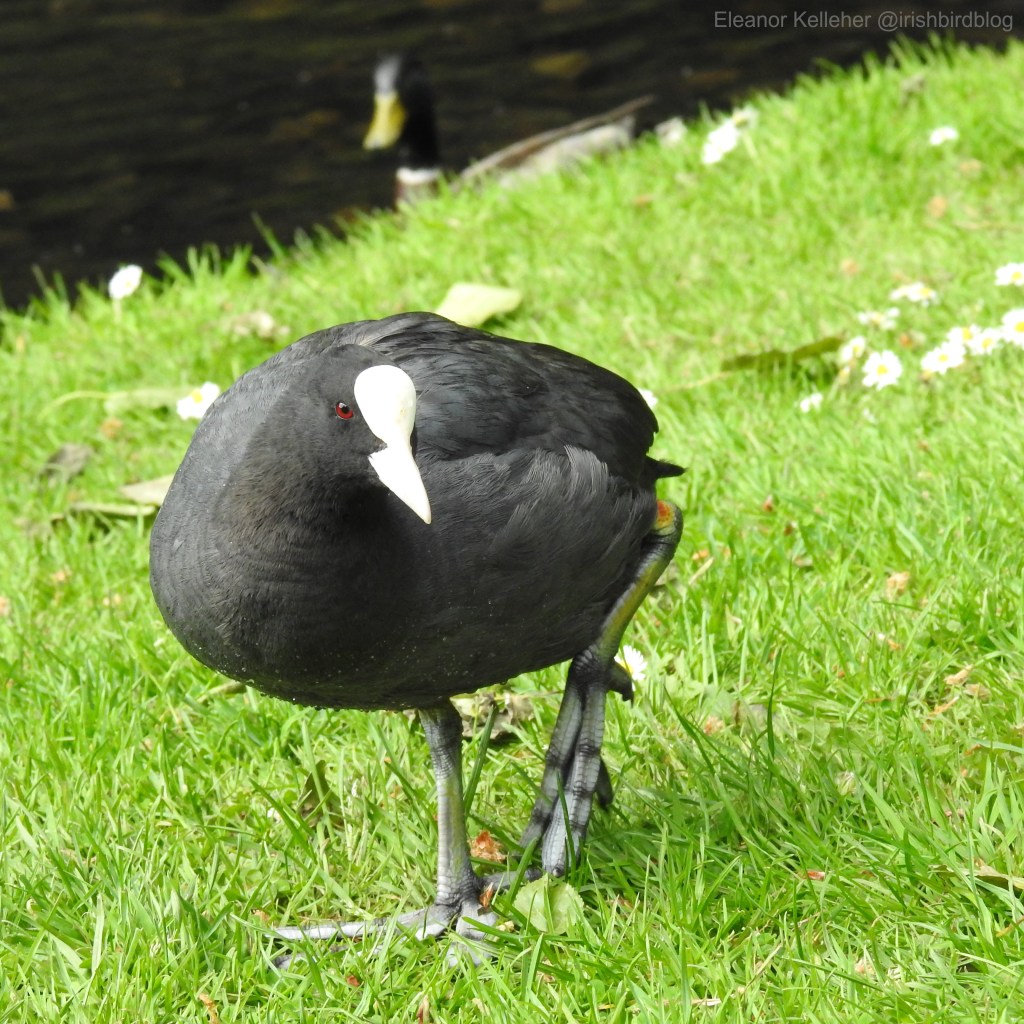
Coots are members of the rail/crake family, and are a widespread species that can be found in Europe, Asia, Australia, New Zealand, and parts of North Africa. Not all birds that are classified as rails/crakes are aquatic (for example, the corncrake prefers to stay most definitely on land), but coots are quite partial to water. They spend most of their time swimming on rivers and lakes, and as a result, they have some very striking skin on their toes that resembles thick flat leaves, and acts as partial webbing.

Have you ever heard the phrase “as bald as a coot”? It came about due to the coot’s stark white face shield. This shield serves a number of functions: protection, mate identification, sexual selection, and territorial defence. It’s much needed in that last case, as coots can be very aggressive. They’ll fight off both smaller birds, like their cousins, the moorhens, and much larger birds, such as wily grey herons (which we’ll be talking about in next month’s instalment so stay tuned!).
They are especially territorial of their nests and will fend off other birds that try to steal their eggs or pinch their newly-hatched chicks. Their nests are pretty interesting feats of engineering. Male coots will gather sticks, reeds, and vegetation for the females, who will use them to build a sort of floating bowl on the surface of the water. It’s not the most strategic location, so its no wonder they attack other birds so viciously with their beaks and feet.
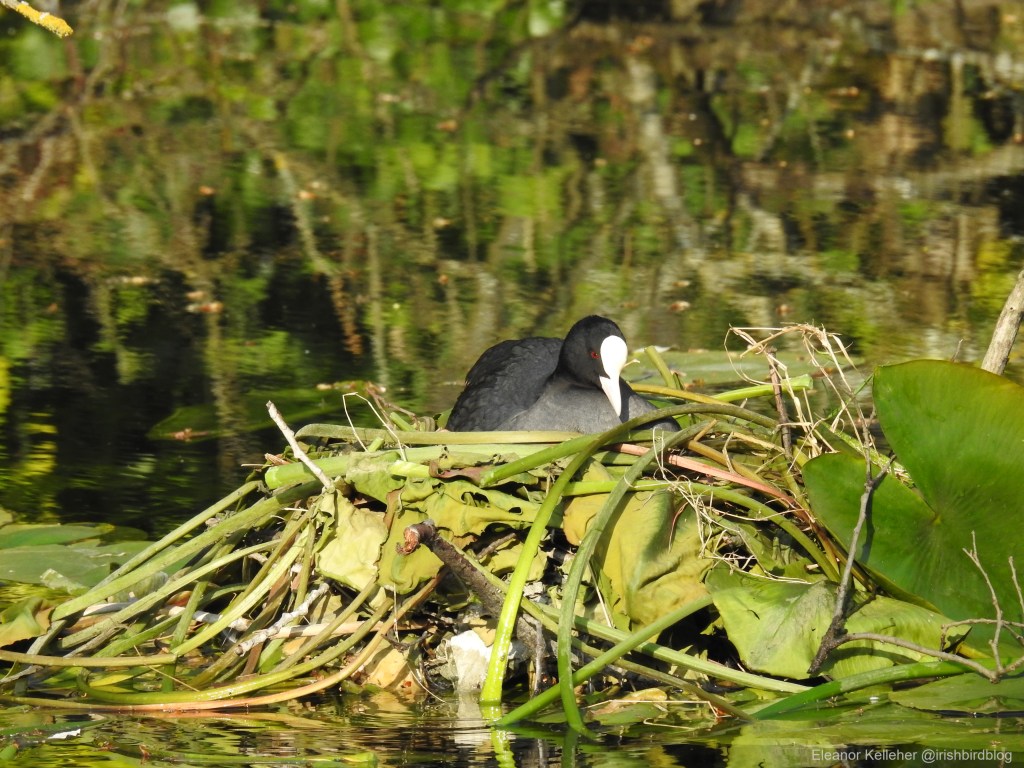
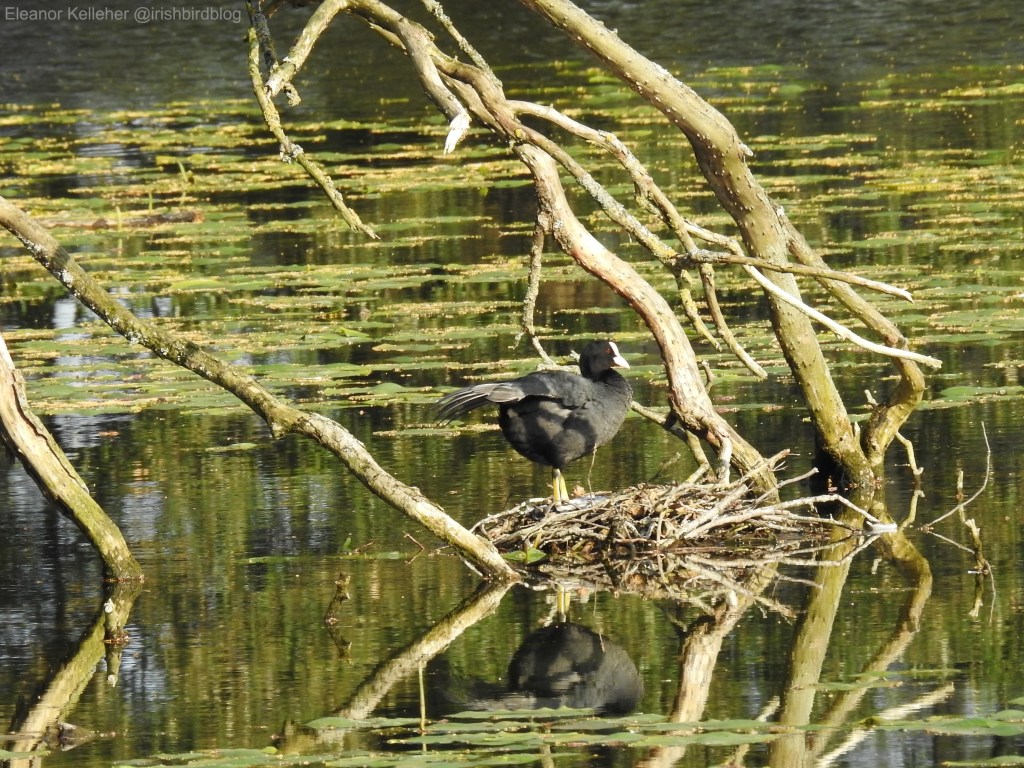
One of our local ponds is home to a few coots, and we’ve been lucky enough to see them build their nests, hatch their chicks, and get into a lot of fights against the other birds of the area. I don’t think I’ve seen many baby birds that I personally find very cute or appealing, but coot chicks in particular are a strange sight. They’ve got fuzzy, round, black bodies that look quite similar to a wad of dust, and bald, vulture-like heads framed with sprigs of yellow hair. It always amazes me how these unsightly little things can grow to look like their sleek parents. It may be one of my favourite miracles of nature.
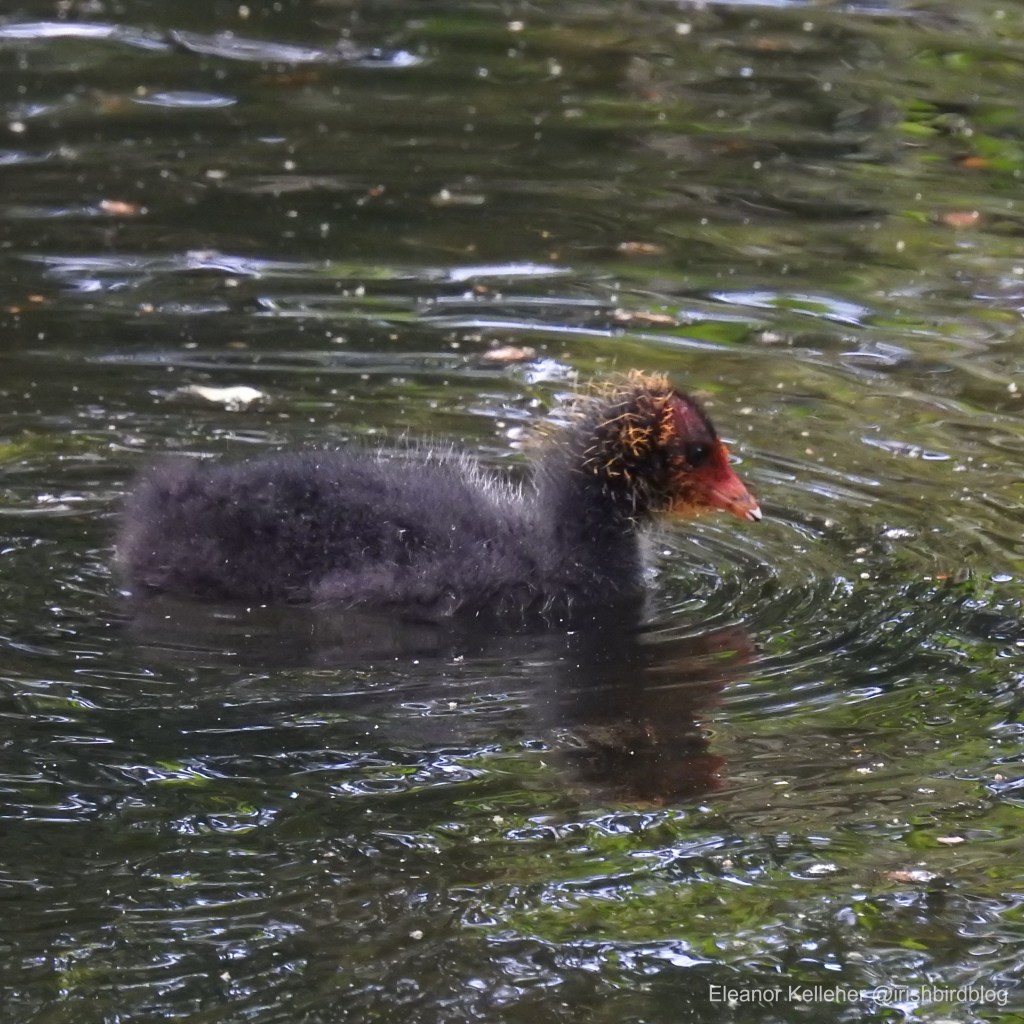
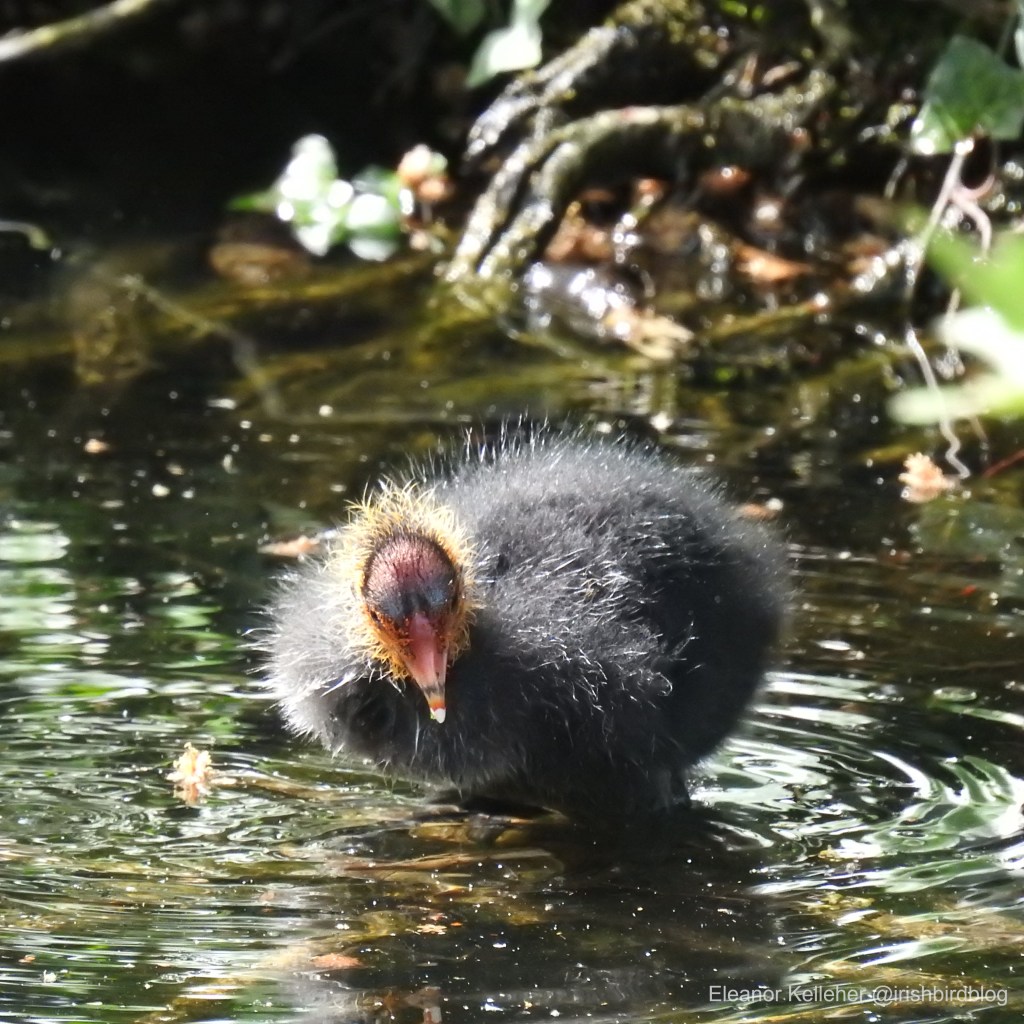
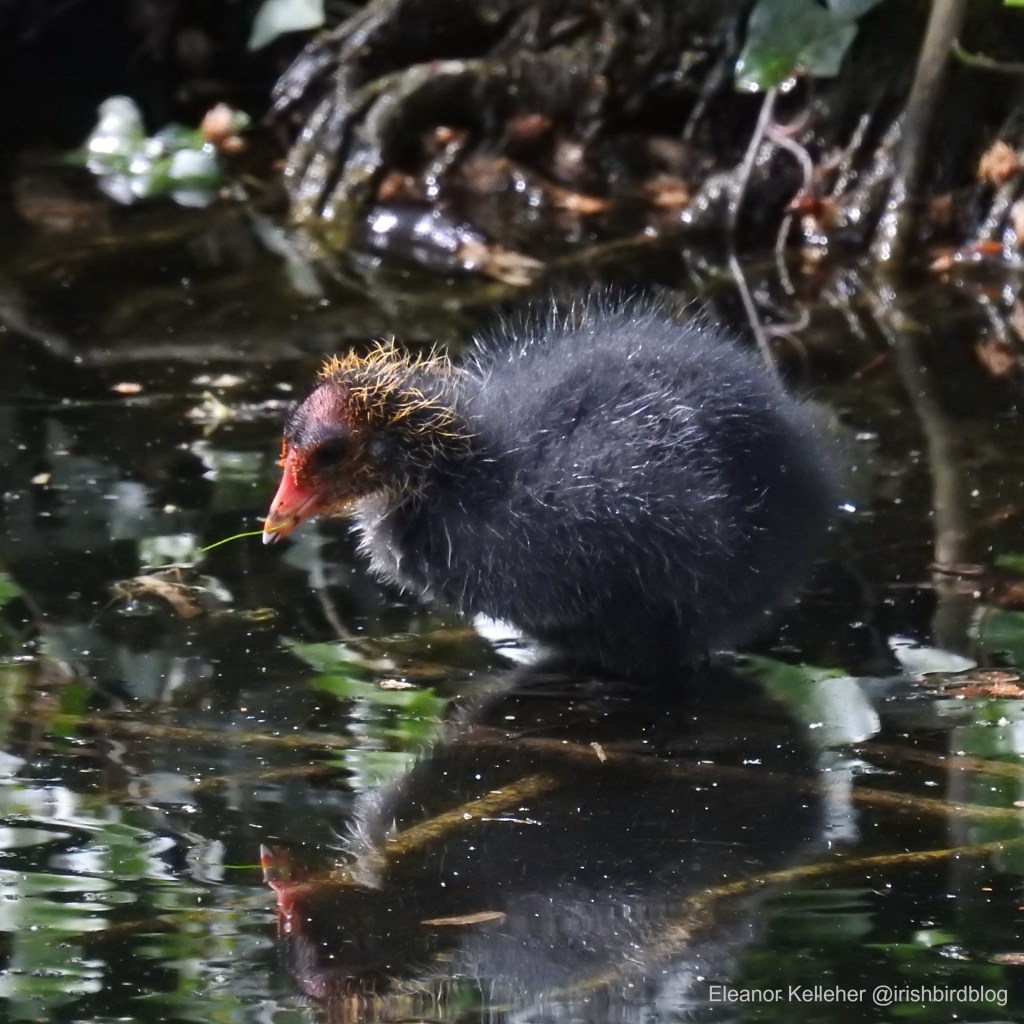
In Ireland, coots have been around for as long as we’ve had rivers, lakes, canals, and waterways. Much like us, they’ve given up trying not to get wet (although I prefer getting rained on than being ankle deep in water), and live their lives on that line between land and water. Head to your nearest body of freshwater to see a bald brazen bird with some fancy feathery feet.
 The Irish Bird Blog
[…] for mistaking the moorhen for its cousin, the common coot (who was actually the star of the first article we posted last year!), but these two birds are quite distinct. First off, the moorhen has a red […]
LikeLike