With all the gloomy wet weather we’ve had over March, we wanted to talk about a real sunburst of a bird that’s made a comeback in recent years to hopefully chase the grey skies away. This gorgeous bird is one of Ireland’s more colourful specimens, and they’re residents all-year round. This month’s bird is the European goldfinch (Carduelis carduelis), known as Lasair choille in Irish.
Goldfinches hold a special place in our hearts. Just before the pandemic began, we started hanging up bird feeders in the trees in the garden. Goldfinches flocked to them in droves, enticed by the sunflower hearts they were filled with. Their bright plumage set them apart from most other birds we were familiar with, and we ended up buying a field guide on Irish birds to identify and learn more about them. That inciting event has led us here, to our love of birdwatching and creation of the bird blog to share that love and knowledge with you!
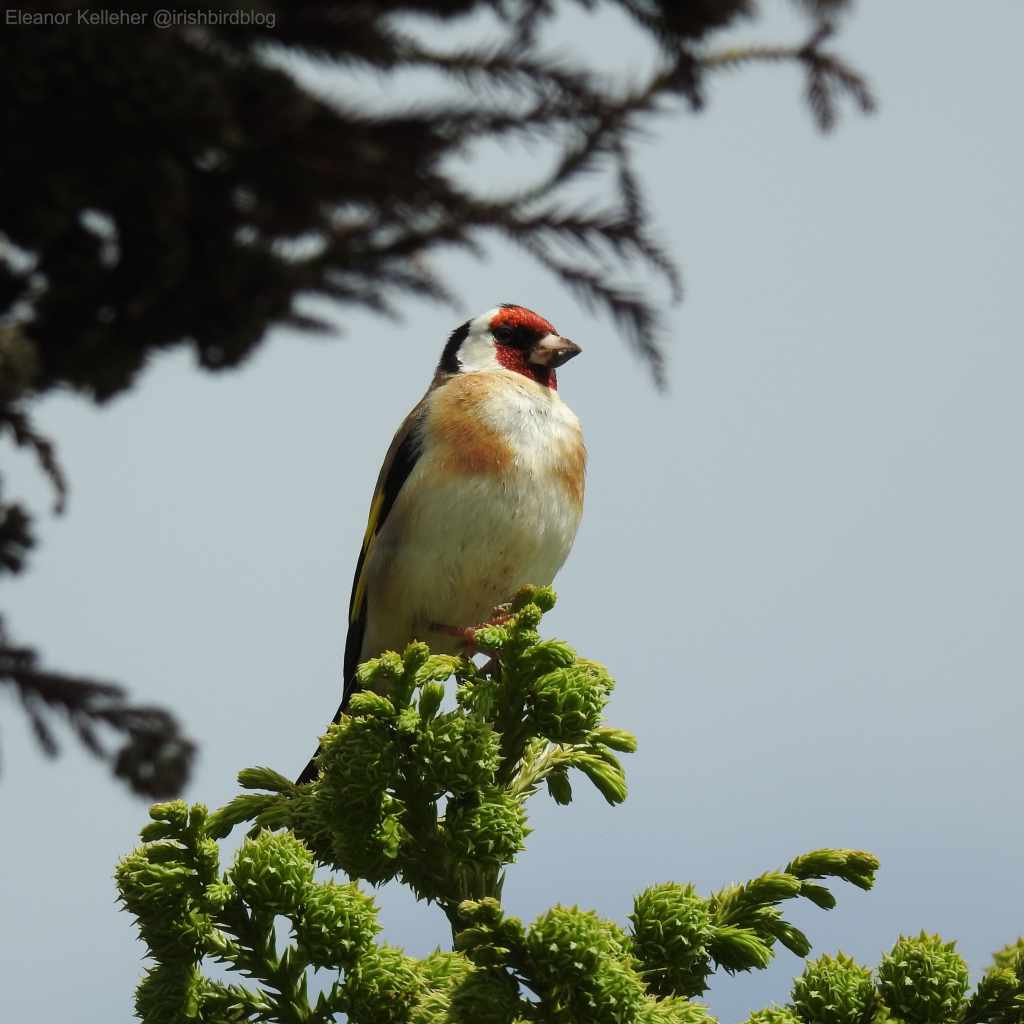
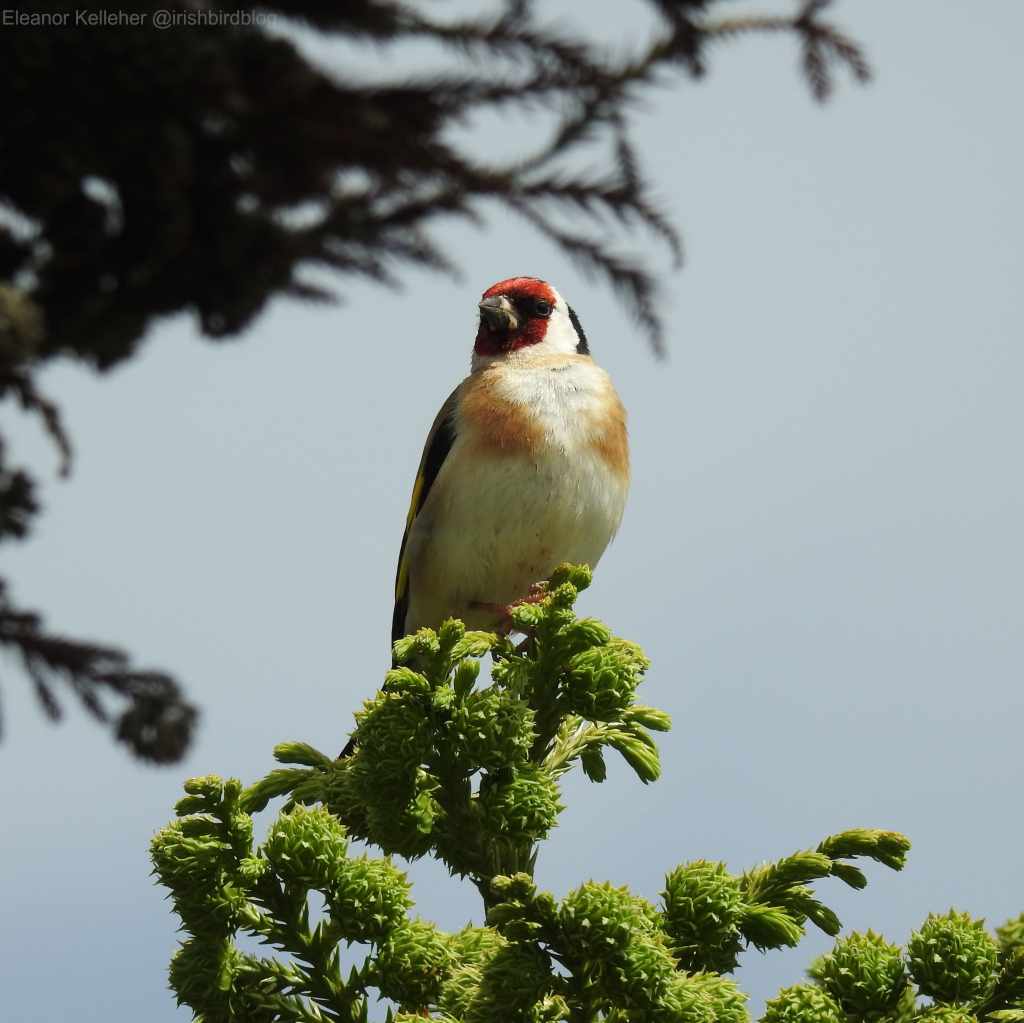
Goldfinches are charming little creatures – so much so that a group of them is actually referred to as a charm! They’re often seen hanging out in familial gangs, since they breed in loose colonies. They build these delicate, little, cup-shaped nests out of whatever soft materials they can find: moss, lichen, hair, wool, and feathers. The cups are deep, to protect the three-to-seven eggs that they will have.
Their favourite foods are small seeds; something we learned from our initial foray into birdwatching all those years ago when we made the switch to nyjer seeds in the bird feeders. Out in the wild, they are partial to dandelion seeds, but seem to be particularly fond of thistle seeds. In fact, their Latin name comes from the name Carduus, which is a breed of plumeless thistle. If you’re lucky, you can catch them perching on thistles and picking at the seeds with their wedge-shaped beaks, the best tools for seed-cracking.

Their preference for thistles has led to them becoming a prominent symbol in an unlikely place: Christian European Renaissance art. A Medieval legend tells of a goldfinch pulling a thorn from Christ’s crown of thorns, resulting in a splash of blood to its face that is supposedly the cause of its crimson countenance. There’s many examples of artists painting Madonna and and infant Jesus with a goldfinch, and it is thought that the bird represents the foreknowledge Mary and Jesus had of the manner of his death.
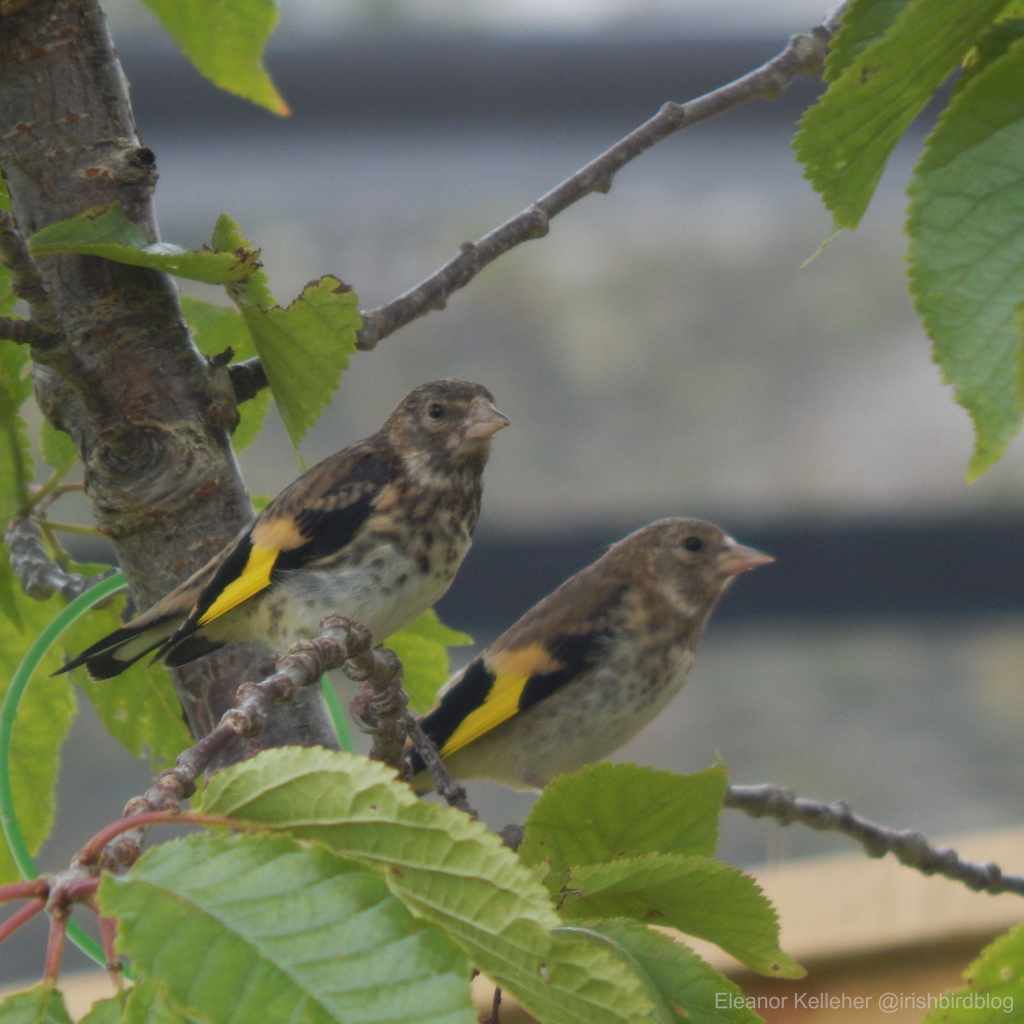
I find it interesting that the most notable feature on a bird called goldfinch is its bright, blushing, red face (the Irish name actually remedies this, the translation of lasair choille is ‘flame of the forest’). I suspect the name came about as a result of their lovely yellow wings, which are the first of their adult feathers to come in, with the scarlet face-paint coming about later on in the year.
As well as their gorgeous plumage, goldfinches also happen to have a beautiful song. It’s been described as a ‘tinkling medley of trills and twitters, but always including the tri-syllabic call phrase or a teLLIT-teLLIT-teLLIT‘. From personal experience, it is such a lovely, rich song, and I’m guilty of stopping abruptly while walking whenever I hear it. I can’t help it, I would spend hours listening if I could.
Unfortunately, people in the 19th century had the same idea, but were much less willing to go sit in a park. The number of goldfinches declined dramatically in the 1800s due to the popularity of trapping and keeping them in cages as songbirds. Interestingly, if they were kept alongside domestic canaries, they would abandon their own native tune and begin singing a song more reminiscent of their cage-mate’s. This apparently ‘detracts from the allure‘ of owning them and was considered undesirable. As much as I’d like to hope that that meant people would let them go free, the more likely story is probably that they would simply replace them with new ones.


As recently as forty years ago, goldfinches were still a rare sight and barely seen in urban environments. But according to this Independent article populations of goldfinches are booming! In the article, Kate Plummer, lead researcher from the British Trust of Ornithology (BTO), says that ‘Back in the 1970s goldfinches and wood pigeons were seen eating food in 10 per cent of gardens whereas now they’re in around 90 per cent of gardens which have food out‘ (come back next week for an article about the woodpigeon!).
The Independent talks about the British population of goldfinches, but our own Irish population is also going strong. Theories as to why they’ve seen such an influx of numbers include the fact that Celtic Tiger development inadvertently led to thistle and other small seedy plants being brought to the surface as soil was churned and tilled; and that the decline in greenfinches left a finch-size hole in the ecosystem that the goldfinch happily occupies.

While it’s a happy ending for goldfinches, I want to highlight that a lot of birds in Ireland are declining in numbers, and they need our help to be brought back. By putting out a feeder full of seeds, fat balls, peanuts, or whatever takes your fancy, you too can help contribute to thriving bird populations. You could help bring a bird like the goldfinch back from the brink. But if not for the conservation, do it for the birdsong. Trust me, it’s worth it.
 The Irish Bird Blog