As mentioned in our last post, this month’s bird can be quite loud, quite clumsy, and, to some folks, quite a nuisance. If you haven’t heard its mournful cries or the clatter of branches when it takes off from a tree, you’ve almost certainly seen its dopey, glazed-over expression. We’re talking about the common woodpigeon (Columba palumbus), known as Colm coille in Irish.
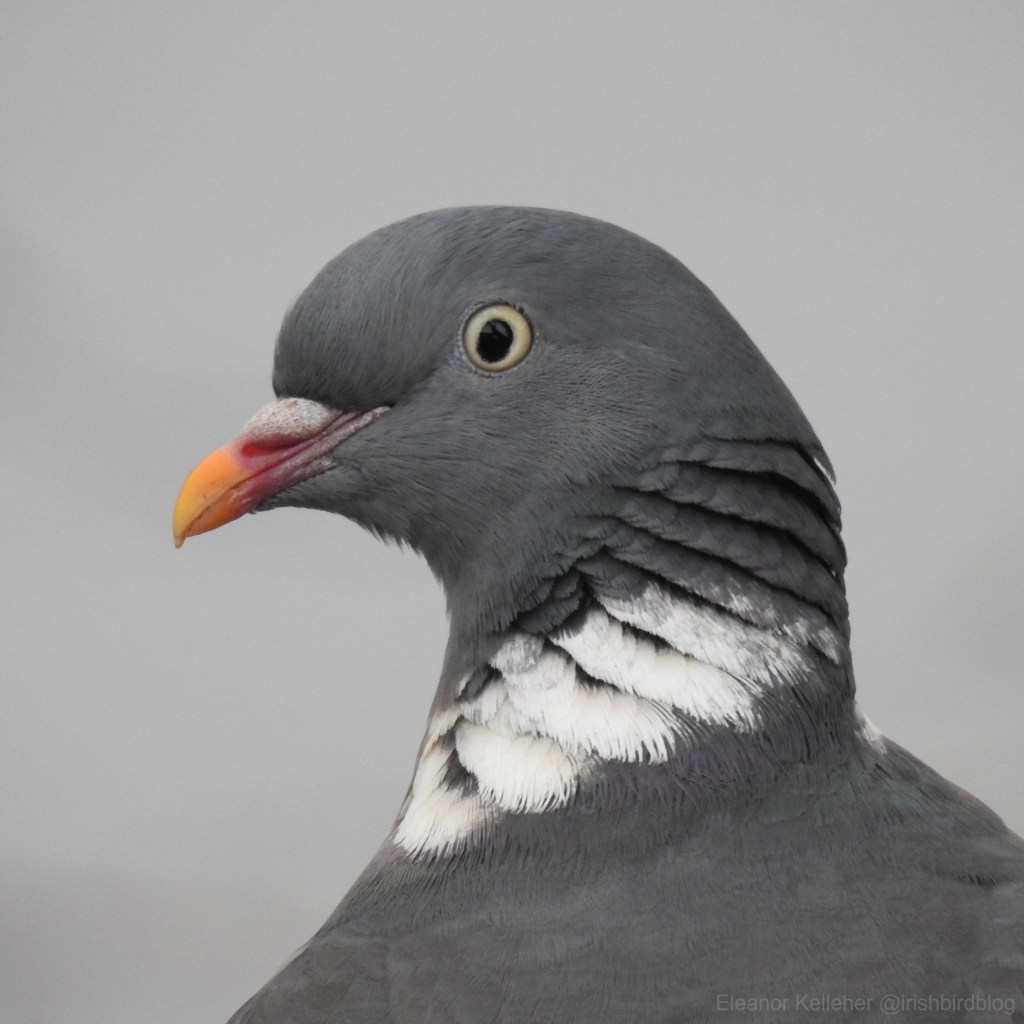
These big birds are the largest pigeons found on our fair isle. They have alluring patches of white and green on the sides of their necks that are reminiscent of the pearlescent feathers sported by their cousins, the town pigeons (technically they’re called feral pigeons, and they’re descended from the more hygienic and consistently-coloured rock doves). You can easily recognise them when they’re in flight by the bands of white on their upper wings.
Originally this pigeon was content to live in woodland areas, but has recently joined its city-dwelling cousins in populating the urban environment. You can now find them in parks, gardens, and even in town centres. They’re spread all over Ireland and can be found year-round, but in the colder months their numbers are boosted considerably by wintering birds from continental Europe, so look up sometime in autumn and you might spot a huge flock of them travelling overhead!
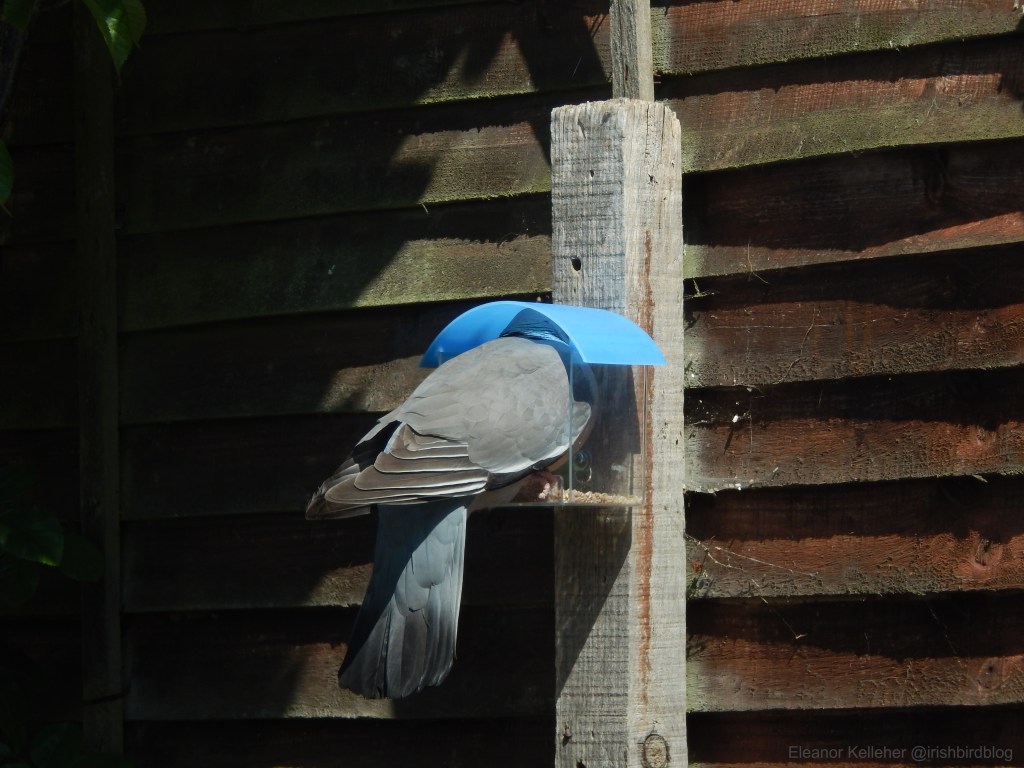
Not only are these birds big, they’re noisy. Even now, whenever I hear rustling when I’m out in some sort of natural area, for a split-second I think it’s some huge foraging animal, before I spot the glassy-eyed stare of a wood pigeon. And when they get spooked and take off from the trees with a chorus of wing claps, you will hear it.
It’s no wonder such a pronounced and noticeable bird has ended up collecting an array of fun nicknames throughout the centuries. For instance, historically they’ve been known as ring doves, a name I personally think we should bring back into circulation. They’re also called culvers in south-east England, and in rural Ireland, people may refer to them as wood-quests, or even simply quests!
The name quest may come from the Latin word questus which means lament, because oh boy, do these birds have a plaintive call. It’s pentasyllabic, a sort of coo-COO-COO–coo-coo – speaking of Latin laments, the ancient Roman poet Virgil mentioned the wood pigeon several times in his work the Eclogues. On the bird’s cry specifically, he wrote in Eclogue 1:
Here beneath high rocks
The gatherers of leaves, with cheerful songs
Fill the high winds. Meanwhile thy turtle doves
And hoarse wood pigeons from the lofty elms
Make endless moan
A moan is a very good way of describing it. I remember when I was younger and would spend quite a lot of time out in the garden, whenever I heard a wood pigeon’s call it would always just sort of bum me out; pull on my heart strings. It’s a mournful sound for sure, but very distinct to what you’ll hear from other birds. Nowadays I actually enjoy hearing the call, because it means there’s a wood pigeon around somewhere for me to find.
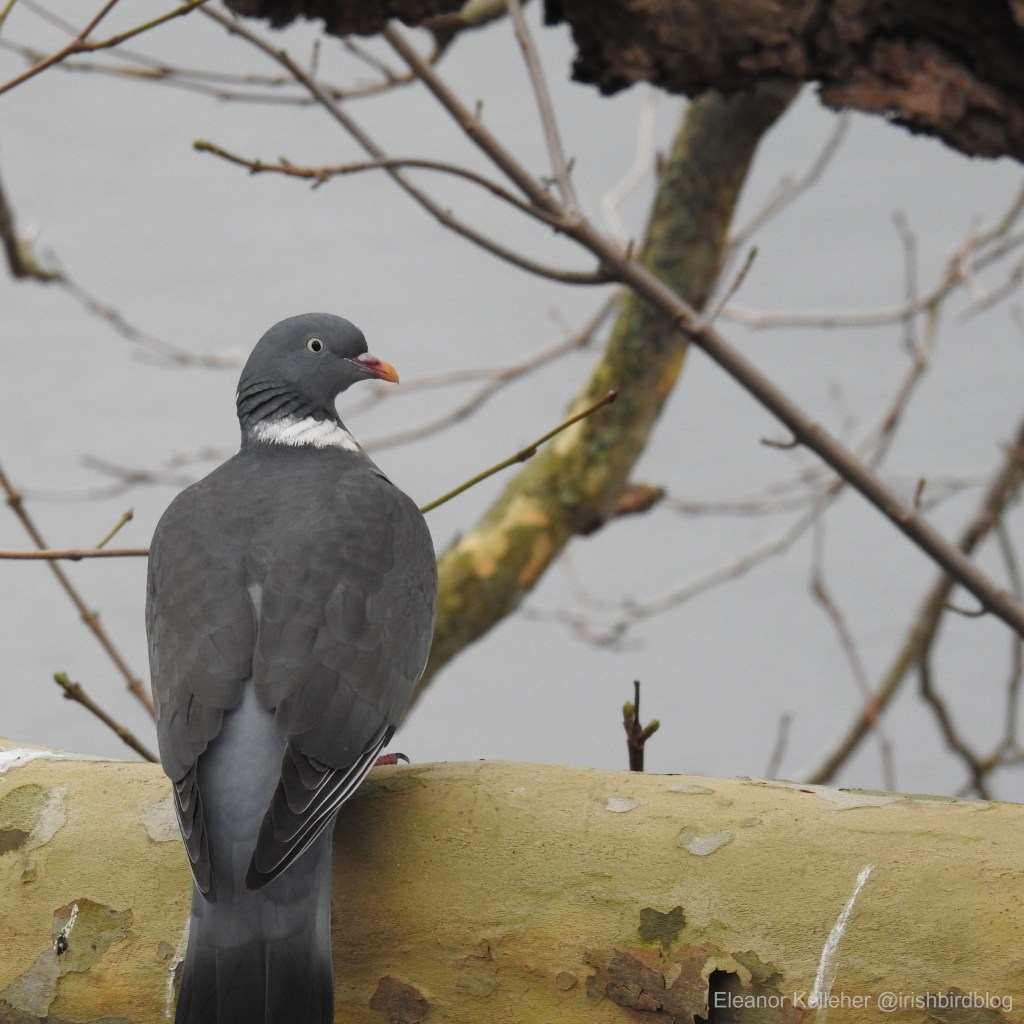
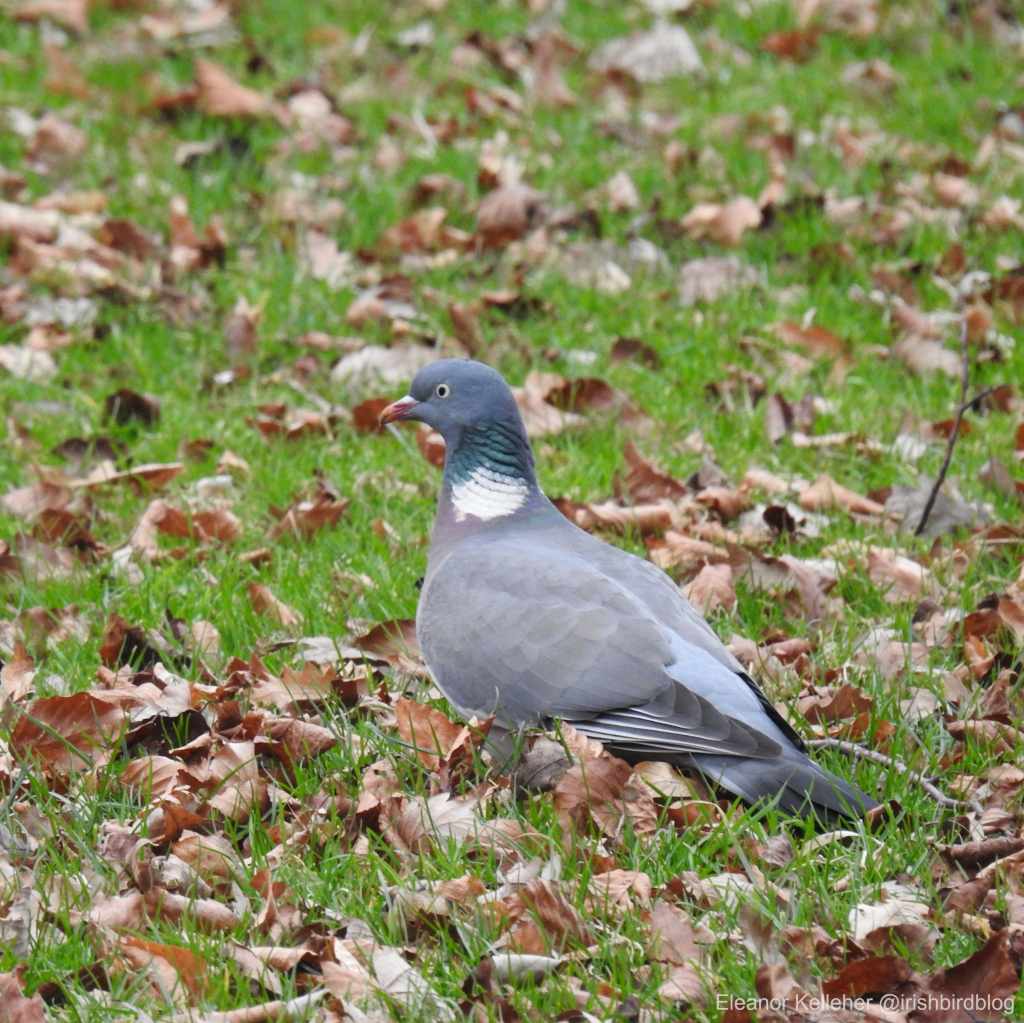
Wood pigeons are seen by some as a nuisance. Their diet consists of seeds, berries, leafy plants, and plant roots, so in rural areas they are categorised as pests. By default, all birds in Ireland are under protected status, meaning it’s illegal to kill them, as outlined by the Wildlife Act of 1976; however there are unfortunately some exceptions to the rule.
Between the 1st of November and the 31st of January each year it is legal to hunt and kill wood pigeons. The period of time between February and October is considered their maximum possible breeding period range, so they cannot be hunted recreationally during that time. But a special derogation (i.e. an exemption to the rule) has been put in place to allow wood pigeons to be shot if they “cause serious damage to crops, livestock, or fauna”. This derogation is due to expire on April 30th 2023, with no news on if shooting will be banned in the summer months.
This may sound like a fair rule, but many folks, including those at the National Parks and Wildlife Service (NPWS), are calling for an end to the derogation. They say that there is little evidence to suggest actual crop damage caused by wood pigeons, since a lot of the “proof” is anecdotal. In fact, they claim that the rules are being abused by sport hunters, who plant crops for the sole purpose of attracting wild birds to shoot. Not only that, but these hunters are trespassing on land, and causing harm to other wildlife.
I am not a fan of sport hunters, I think the practice is abhorrent and outdated. So I was already inclined to support the NPWS and others calling for an end to the derogation, but after reading this piece in the Irish times, my opinion was galvanised. It’s an opinion piece by a shooter who talks about killing birds to eat them, and implies that the laws are “wide enough” for people who enjoy doing so to be able to shoot birds during the banned time frame without facing consequences. That particular article may be quite old, but based on the backlash a minister received a few years ago from farmers and game clubs for banning the practice during summer months, (which caused her to reverse her decision), I am still inclined to believe that many sport hunters retain the same attitude from decades ago.
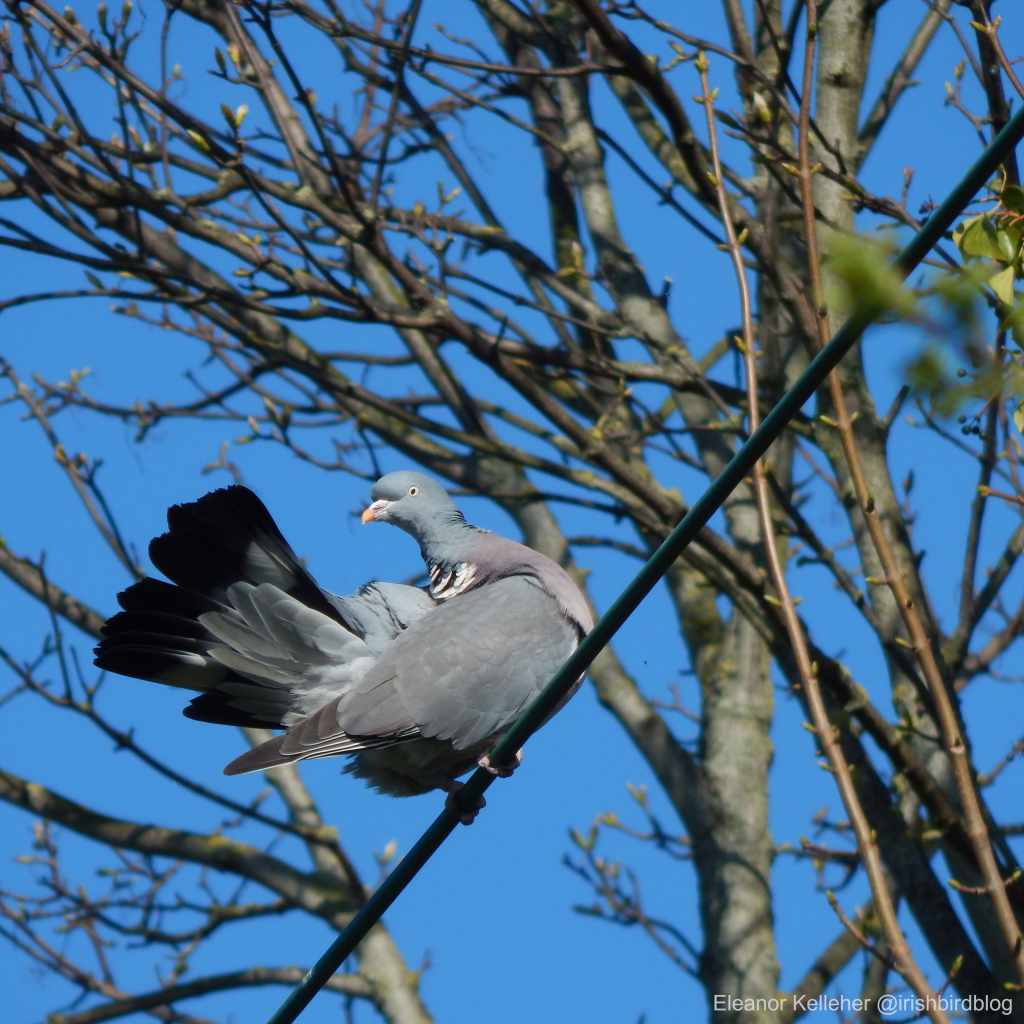
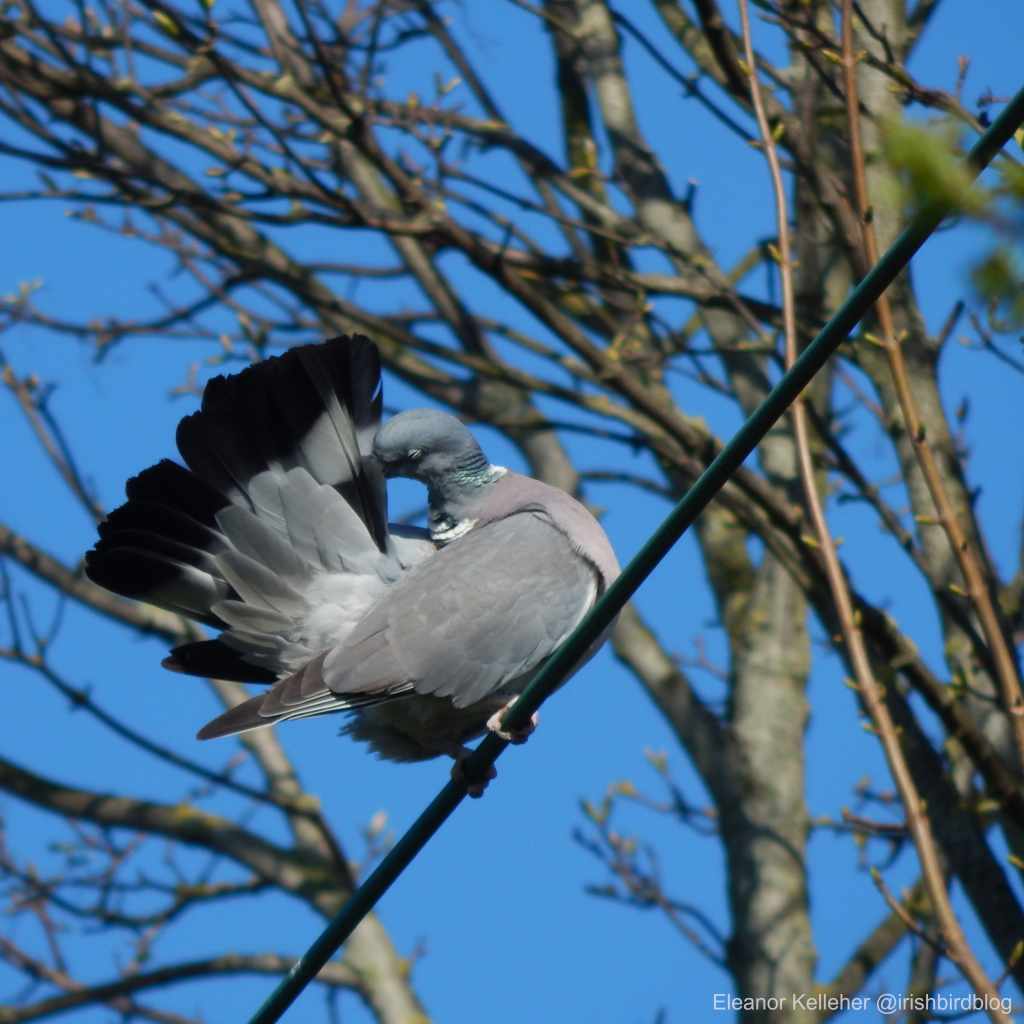
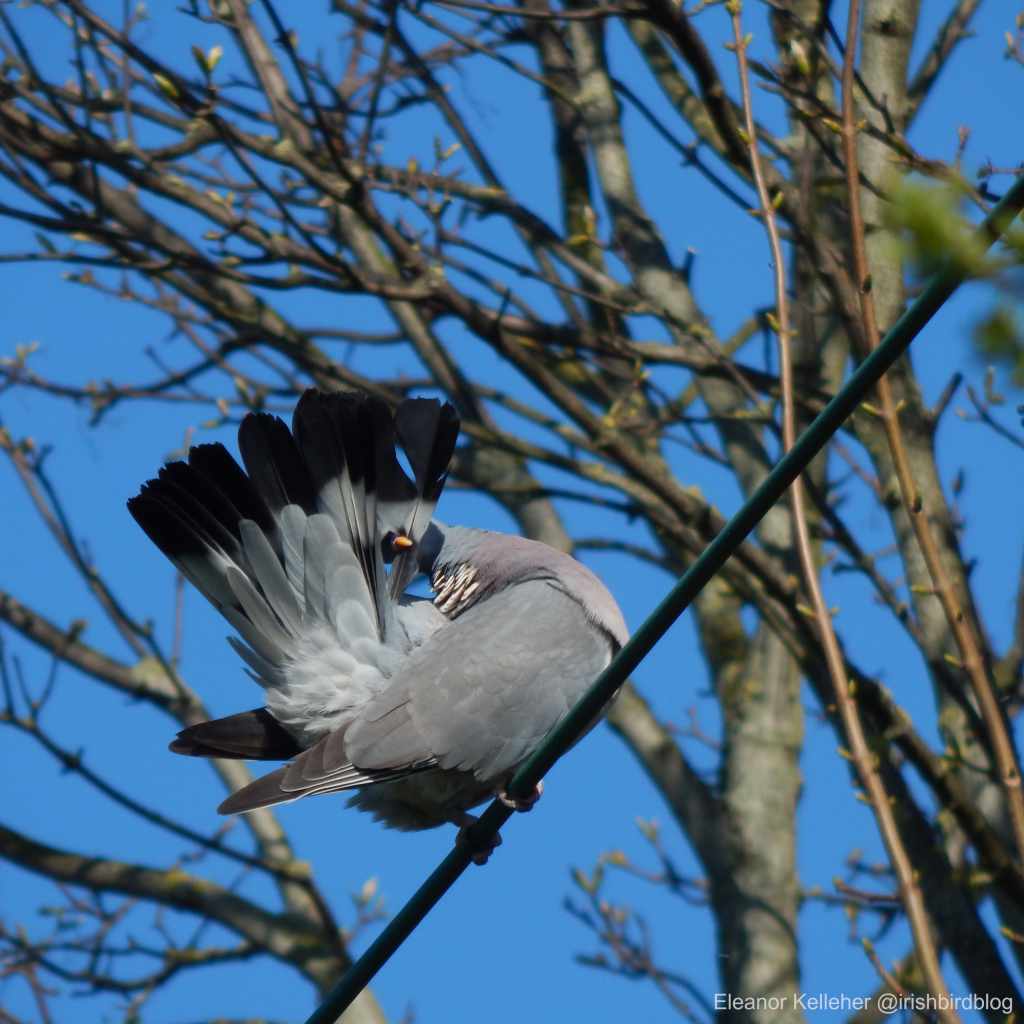
With these threats posed to the species, perhaps it is no wonder that they have found themselves moving into more urban areas. There, wood pigeons appear to be thriving and are among Ireland’s top twenty most widespread garden birds. They’ve become accustomed to living alongside us in both our towns and our parks, and their mournful song is emblematic of the dangers they face in the countryside. Like a lot of birds, they’re misunderstood creatures who deserve a break, so if you can, leave out some seeds for our biggest pidge.
 The Irish Bird Blog