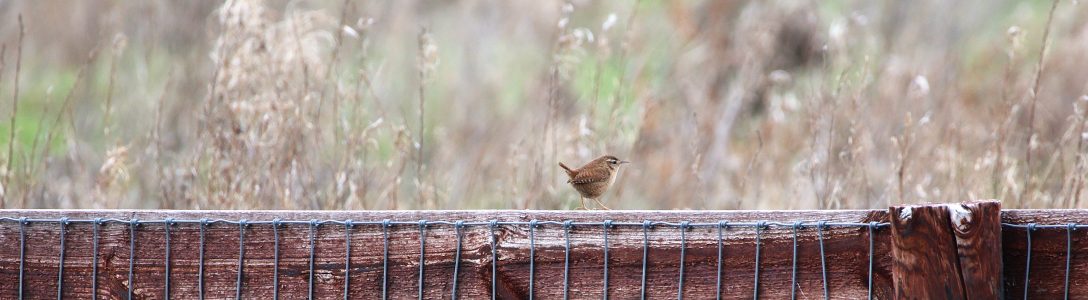
Happy first day of summer! I love June for all its bright colours – whether they be from nature or from people getting into the Pride spirit; not to mention the great weather we’ll get once students start the junior/leaving certs. Ironically, today’s bird is a monochrome monarch with a limited colour palette and a preference for cooler climates, but they have a lovey-dovey attitude that’s perfect for a month where we celebrate love. This month’s bird is the Black Guillemot (Cepphus grylle), known in Irish as Foracha dhubh.
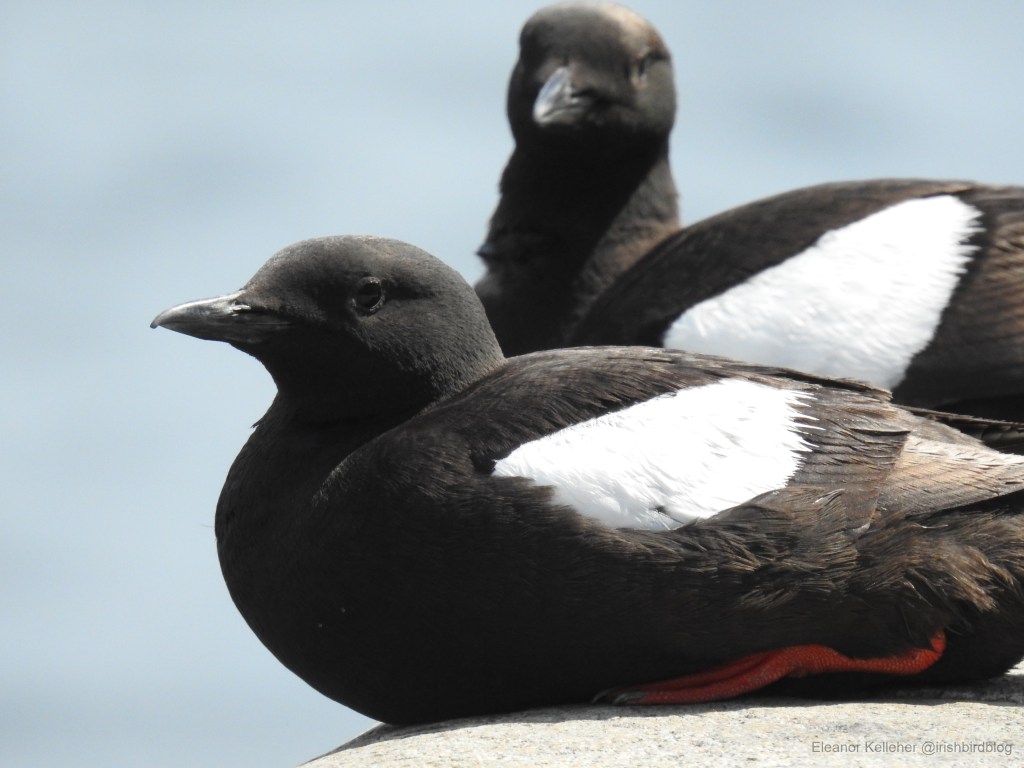
Long-term fans of the blog may remember that we posted about the common guillemot around this time last year (something about summer just gets me auk and bothered I guess). Black guillemots are a little more compact than their cousins – clocking in at 30cm tall, they’re 10cm shorter than common guillemots; they weigh half as much, at only half a kilo; one other difference is that it’s much easier to find black guillemots inshore instead of out at sea.
We had to sail 5km off the Irish coast to the Saltee Islands to encounter common guillemots, where we found a huge colony living it up on some rocks. Conversely, we’ve seen black guillemots just bobbing in the River Liffey, sometimes solo, sometimes in pairs, without a care in the world. They will nest in large colonies where they can, like up in the Arctic, but here at home they’re way more relaxed about nesting in smaller groups or even just as a singular pair. It’s probably down to the kind of habitat we can offer. We’ve an abundance of rocky cliffs but we also have quays and piers and black guillemots aren’t too fussy.
In Ireland you can find them on every part of our coast EXCEPT for the stretch between Wicklow and east Wexford. The reason for this is their hatred of caravans (source: trust me). They have the quite the range outside of Ireland. They can be found in Britain, Scandinavia, Greenland, and even the north-east of North America. Basically, they like it up here where it’s just a little colder.

Black guillemots, like their cousins, the common guillemots, are members of the Auk family, whose notable members include the beloved puffin. They’ve been likened to penguins before, and interestingly they do fill a similar ecological niche where penguins aren’t found. Auks stick to the northern hemisphere while penguins are only found in the southern one, so is the rumour true: does auks is penguins?
Well, no, but they are similar. Like penguins, auks are fantastic divers and the black guillemot is no exception. They can dive as far as 43m, though they usually stick to around 15-20m to catch their prey. These little creatures certainly take pride in their ability to turn themselves into tiny submarines, with oar wings to push through the water and rudder feet to steer. Smaller snacks are swallowed whole in the water, while larger meals are brought to the surface to soften in their bills before going down the hatch. Some of their unfortunate victims include sea sponges and jellyfish (a moment of silence for the Bikini Bottom ecosystem).
Guillemots are what we call single-prey loaders, which just means they catch one prey item to bring back to their nest during chick-rearing season. Due to this behaviour, they never stray too far from home, so if you see them hanging out in the Liffey like we did, it means they likely have a nest close by!

Those nests are important to the black guillemots, because they’ll usually stay around them and in the same area all year round. This, coupled with the fact that they nest in colonies spanning a particular biome, means they’re an ideal indicator species to track the health of marine ecosystems during the winter, when most other predators have migrated away or aren’t as active. In the US, researchers at Cooper Island in Point Barrow (the northernmost point of the United States) study the black guillemot over winter to track the quality and consistency of underwater species!
The only legend we could find about black guillemots also comes from North America, though we’re unsure of the group it originated from since the name attributed to them is “Hudson Bay Eskimos” – “Eskimo” being an archaic name given to indigenous people of the area by non-indigenous people (and has come to be viewed as a slur):
They tell their boys and girls when they see the funny little guillemots by the sea-cliffs and ask about them, that once a lot of children were playing near the brink of such a cliff. Their noisy shouts disturbed a band of seal-hunters on the beach below, and one of the men exclaimed, “I wish the cliff would topple over and bury those noisy children!” In a moment the height did so, and the poor infants fell among the rocks below. There they were changed into guillemots and dwell to this day on the crags at the edge of the sea.


That legend brings to mind the Irish legend of The Children of Lir, though you’d never find black guillemots acting out in a fit of jealousy because they’re loving partners and parents! Black guillemots love who they love and mate for life, taking turns in the nest to look after the chicks or going out to forage for food. When the partners switch places, they’ll move their heads side to side, call, and then touch their bills together in what ornithologists call a greeting ceremony.
The power of love usually triumphs all, but in these birds’ case, they are unfortunately vulnerable to predators, including great skuas, gulls, otters, and American mink – the latter being especially worrying as they are one of our most damaging invasive predators, now found in every county. As well as that, there’s the issue of humans.
Just a few days ago, there was an oil spill off the East coast that seriously impacted the wildlife in the area; with a significant number of guillemots being caught in it. Oil spills are fatal to birds as the oil can damage the structure of their waterproof feathers, leading to a risk of hypothermia and death. Birds that are lucky enough to be rescued will have a tough road to recovery, as it’s obviously a very stressful situation for them. Ireland doesn’t have a formal national oiled wildlife response plan, despite members of the Oiled Wildlife Response Network (OWRN) calling for an establishment of one for years. It’s inevitable that something like this will happen again and it should be on our government to formulate a response, not generous volunteers.

Let’s not end this post on a sad note. Pride used to be a protest and now it’s also a celebration of what can be achieved by fighting for what you believe in. Our black guillemots deserve better, all our birds do. So please do whatever you can to help the species impacted by climate change , whether that be petitioning your government or hanging up a feeder in your garden. And if you’re in town for any Pride events this month, see if you can’t just spot a couple of black lovebirds bobbing along the Liffey.
 The Irish Bird Blog