Summer is finally in full-swing and that means folks are flocking outdoors! While you’re enjoying fish and chips on the pier or a sambo in St. Stephen’s Green, I’m sure you’re keeping your eyes peeled for any crafty gulls trying to sidle up to you to nab a nibble. We’re all well accustomed to herring gulls the size of cats and little black-headed gulls with their summer facepaint; a sufficiently aggressive snap of the wrist in their direction is enough to deter them. But something lurks further out at sea, something big bad and bold that’s not long for our city’s bins. Consider this post a warning of what’s to come, because this month’s bird is the Great Black-Backed Gull (Larus marinus), known in Irish as Droimneach mór.

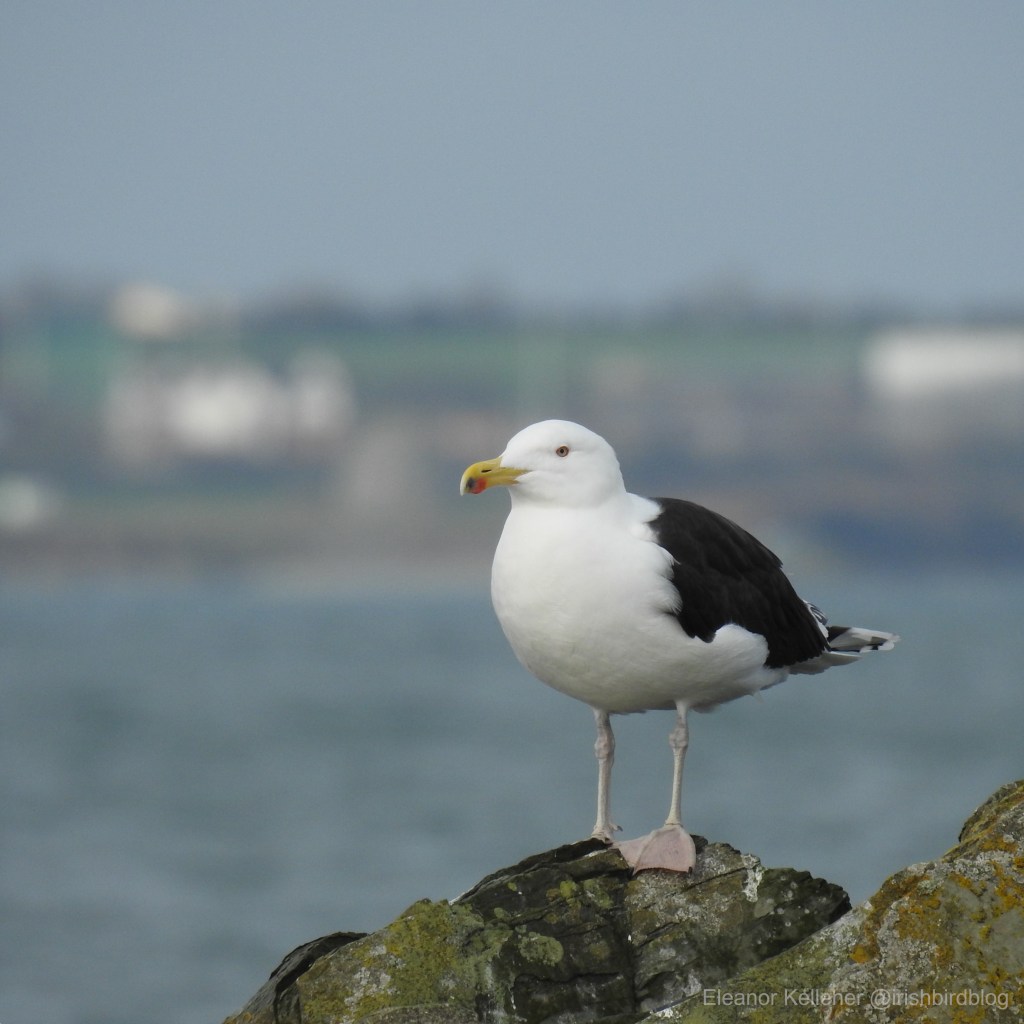
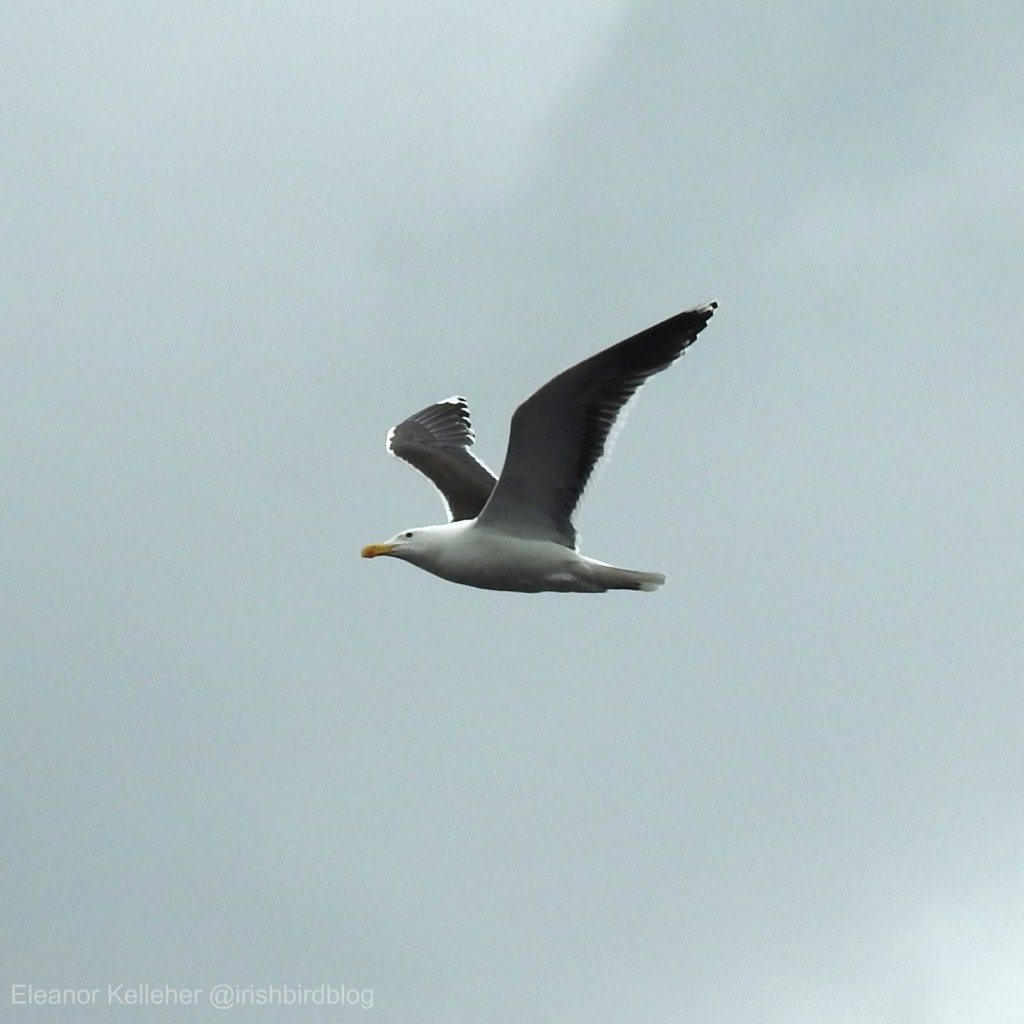
The great black-backed gull, proclaimed king of the Atlantic waterfront by the Cornell Lab of Ornithology. Looking out across the water you see a flash of white and black, but this is no pirate flag, it’s the great black-backed gull in flight – the biggest gull in the world. Its wings are black as sin, but outlined in white like the aura of an oncoming storm. Their bright yellow beaks are marred with a blood red spot and their eyes are red-rimmed after too many rounds of rum.
They tower over the common gulls and coastal birds that brave the beaches despite the human invasion. With a wingspan that is longer than I am tall (up to 1.7 metres in length), it’s no wonder they have a lot of bulk to keep themselves upright. They regularly weigh in at around 2 kg – a bag of flour – but some especially brutish birds have been found to weigh 2.5 kg.
Their size and shape should be enough to help you pick them out of the crowd, but if you need some help distinguishing them from their cousins, the lesser black-backed gulls, take a look at their legs and feet: lesser gulls have sunny yellow legs while the great gulls have the dusty, pinkish-grey legs of a creature that has spent too long in cold water.
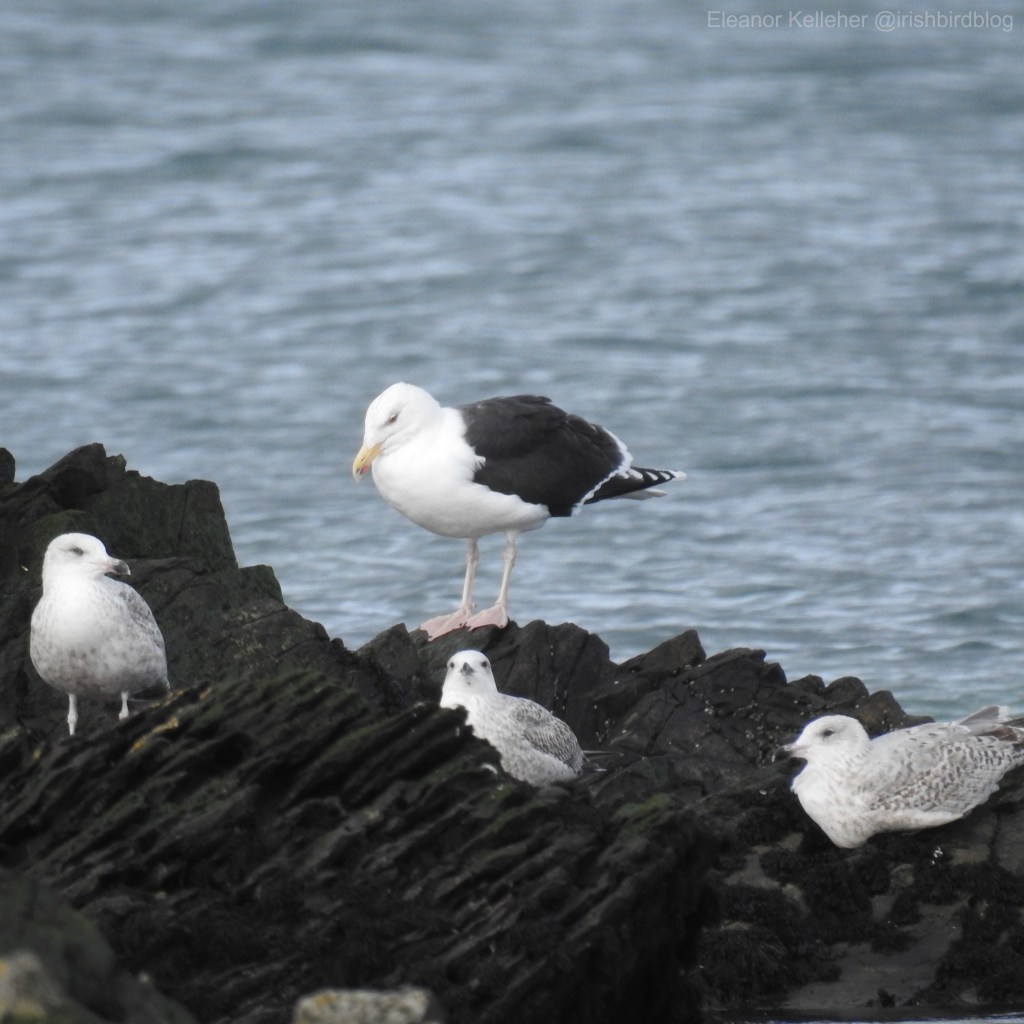


As king of the Atlantic waterfront, the great black-backed gull commands an impressive but predictable kingdom that spans the north-eastern coasts of North America and the north-western coasts of Europe. Historically, they have not been seen inland except for during, or just after, a large storm that forces them away from the coast. But we’ve personally found that some have claimed lakes close to the Kildare border, a good 20km or so from the east coast of Dublin, and we can only imagine that they’ll continue to move further inland as their food sources are depleted. Let’s hope they don’t take over Dublin Castle proper.
Their natural diet consists of fish and crustaceans, small-fry that is easily dealt with and turned to chum to feed to their young. But I won’t bullshit you, these are gulls. Mean gulls. And they are not afraid to steal, scavenge, and pillage. So will you see them ripping open bags of rubbish on the street? Yes, not as often as you’ll see herring gulls doing it, but still yes. In fact, our refuse makes up more than half their diet, so we can assume a good portion of their heft is made up of our discarded chips.
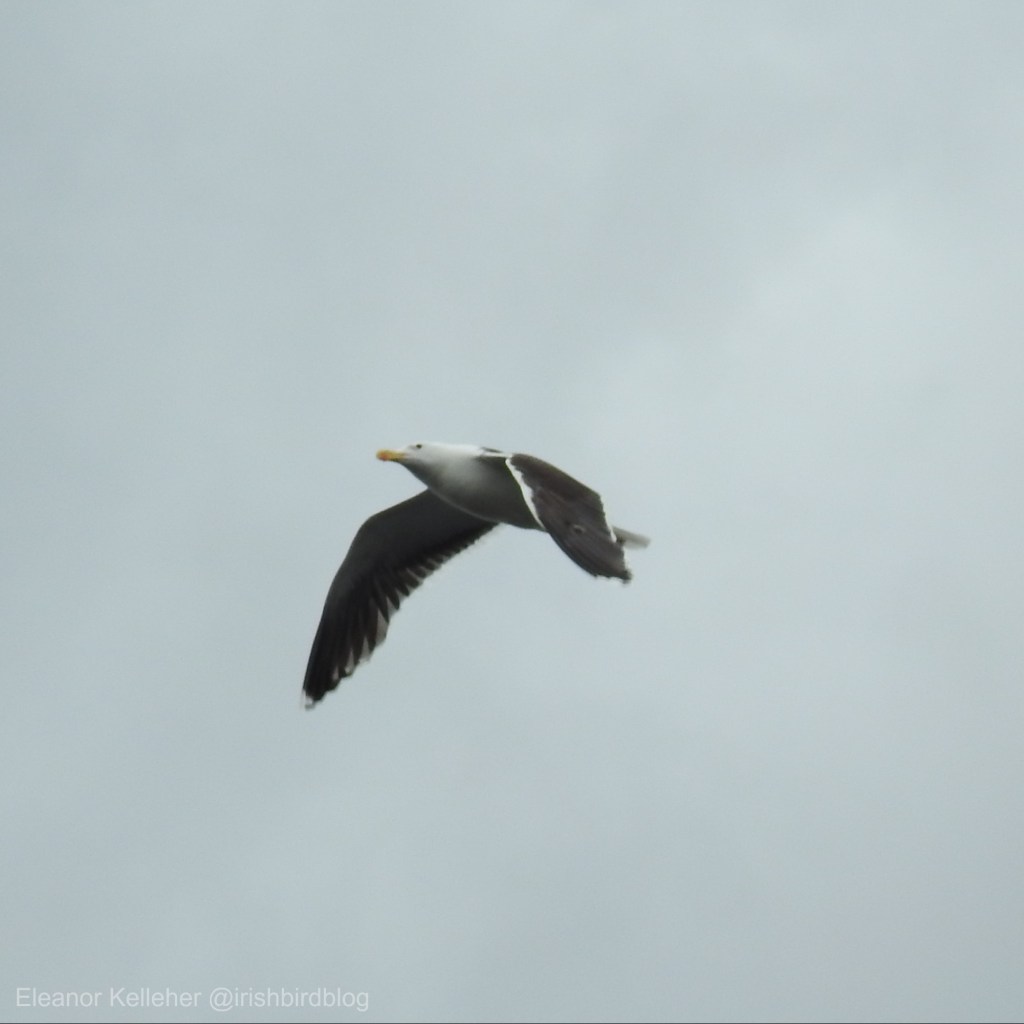
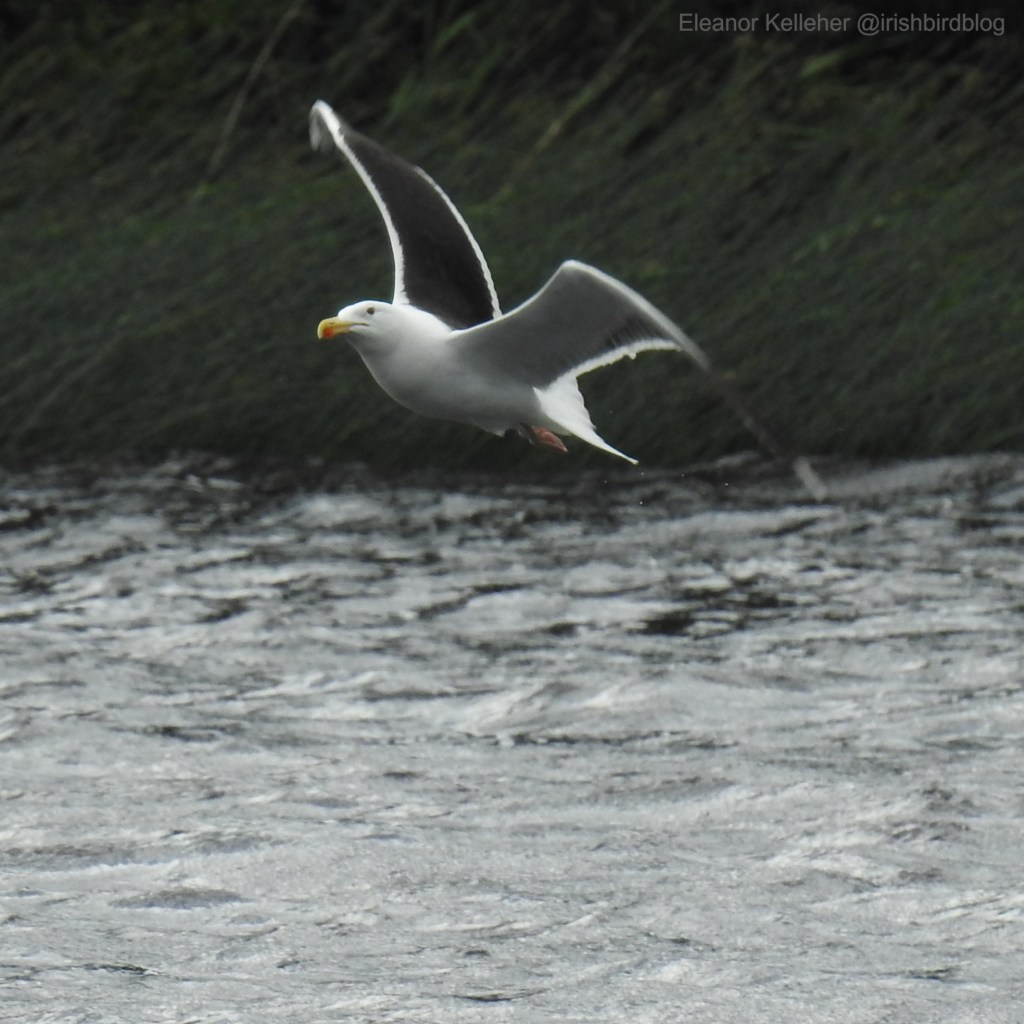
While the bin rummaging is annoying, it’s by far the least violent way these gulls get their meals. They won’t hesitate to attack and eat other birds. We once witnessed the onslaught of a humble pigeon by a great black-backed gull. The unassuming pigeon was walking along a path when it was dive-bombed viciously, over and over again, until the gull had managed to peck a hole into their neck. Such gore and destruction, and this was right in the middle of town.
They’ll also prey on rabbits, rats, and steal the eggs of other birds for that all-important protein – something you’d expect from a bird of prey, not a bird of the bay. Speaking of, these birds will punch way above their weight and steal food from other birds in a behaviour known as kleptoparasitism (word of the day). The most notorious instance of this has to be when a great black backed gull was seen stealing a dead gadwall (a duck, slightly smaller than a mallard) from a peregrine falcon – the fastest bird in the world.
Some birds of prey do manage to get their revenge on these gulls. Three eagle species will regularly predate their nests: the bald eagle, the white-tailed/sea eagle, and the golden eagle. Of this list, the latter two have recently been reintroduced to Ireland. They, alongside numerous non-bird animals, keep the great black-backed gulls in check by stealing eggs and plundering nests. But the gulls won’t go down without a fight, they’ll engage in aerial combat and sometimes manage to succeed in driving away any would-be predators.

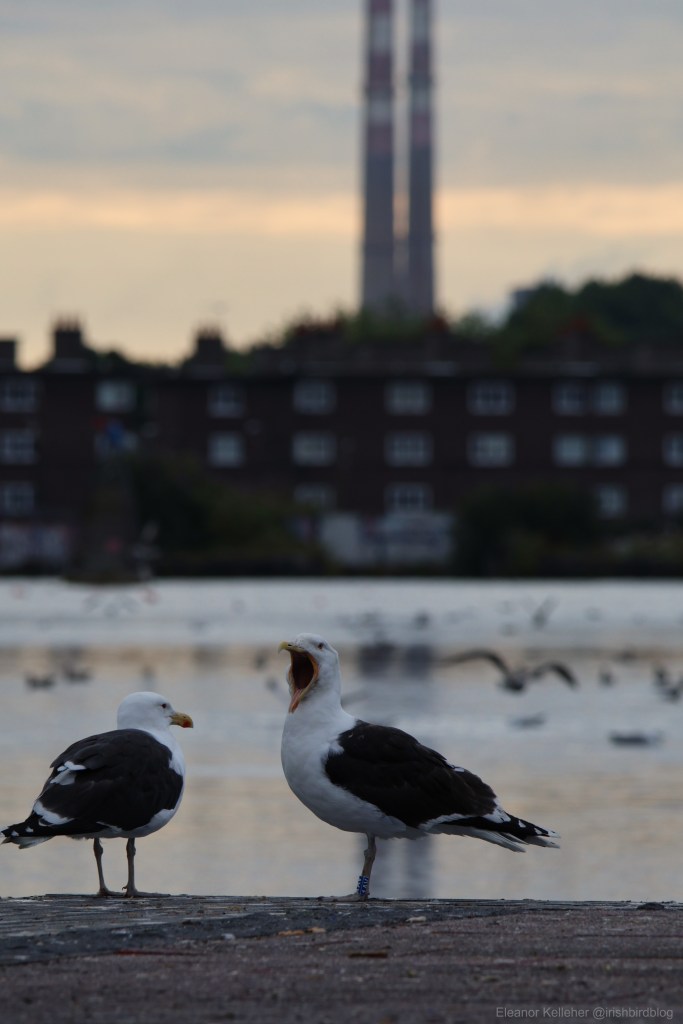
Despite their violent disposition, they can often be found roosting communally with other, smaller gulls, and can often be seen hanging out with herring and black-headed gulls. Is it a protection racket? Are they teaching the smaller gulls how to fight or are the small gulls teaching them how to rip open bags of rubbish? Perhaps they just like being in a gull gang? We may never know.

They may be big, bad and bold, but great black backed gulls are still seen as pesky gulls overall, pests that infest our cities and make a loud racket. I must emphasise again that they were here first, and they wouldn’t have to nest so far in the city if we weren’t overfishing their primary food source. Also, it’s illegal to injure or kill any gull, or to destroy any active nest or its contents.
There’s something really marvellous about their ability to adapt, not only by learning to scavenge bins for rubbish but also that they can kill pigeons for a quick and easy meal. But I know I’ll never be able to convince some people to look upon them favourably, so I’ll offer this warning to you instead: next time you’re out near the water, keep a close eye out for a pair of dark wings, lest you lose your hard-earned lunch.
 The Irish Bird Blog