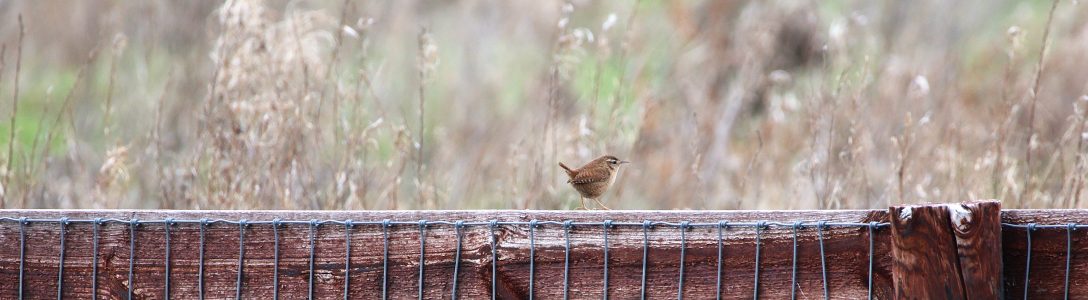
Before we close out the year we get to enjoy (or endure, depending on your view) a month of holiday cheer, and personally I’m looking forward to seeing the decorations lighting up these dark December evenings. The bird we’ve picked to end the 2024 Bird Blog calendar is something of a festive fan themselves, with feathers as black as a winter’s night, a song as sweet as silver bells, and eyes as bright as stars. This month’s bird is the Blackbird (Turdus merula), known as Lon dubh in Irish.


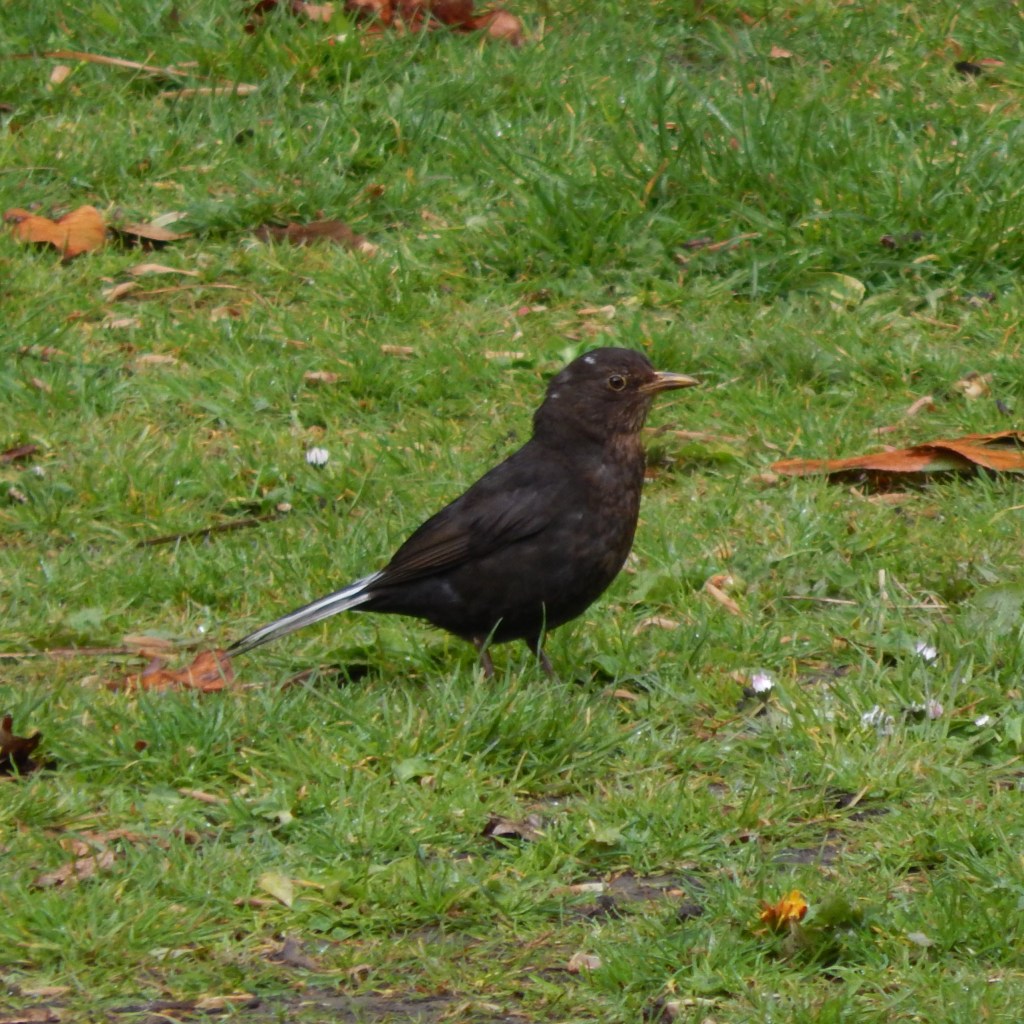
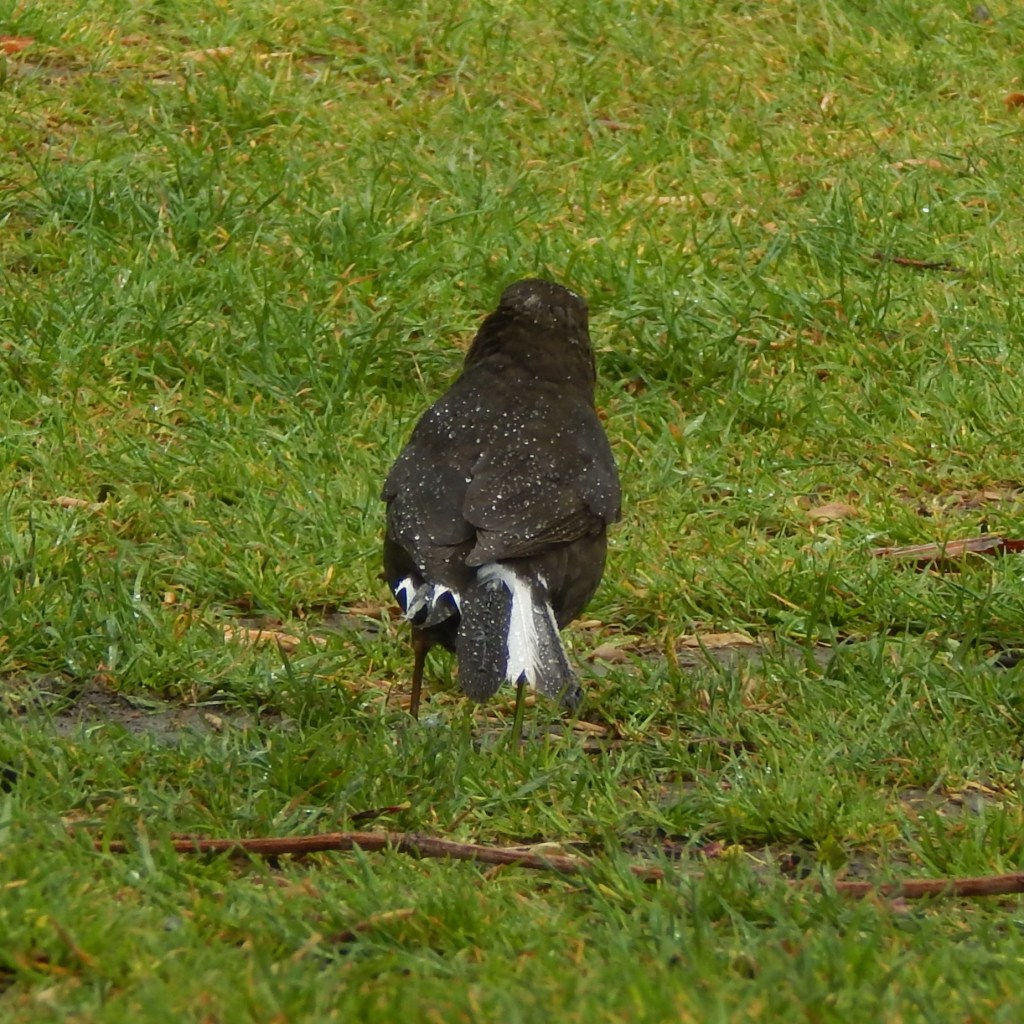
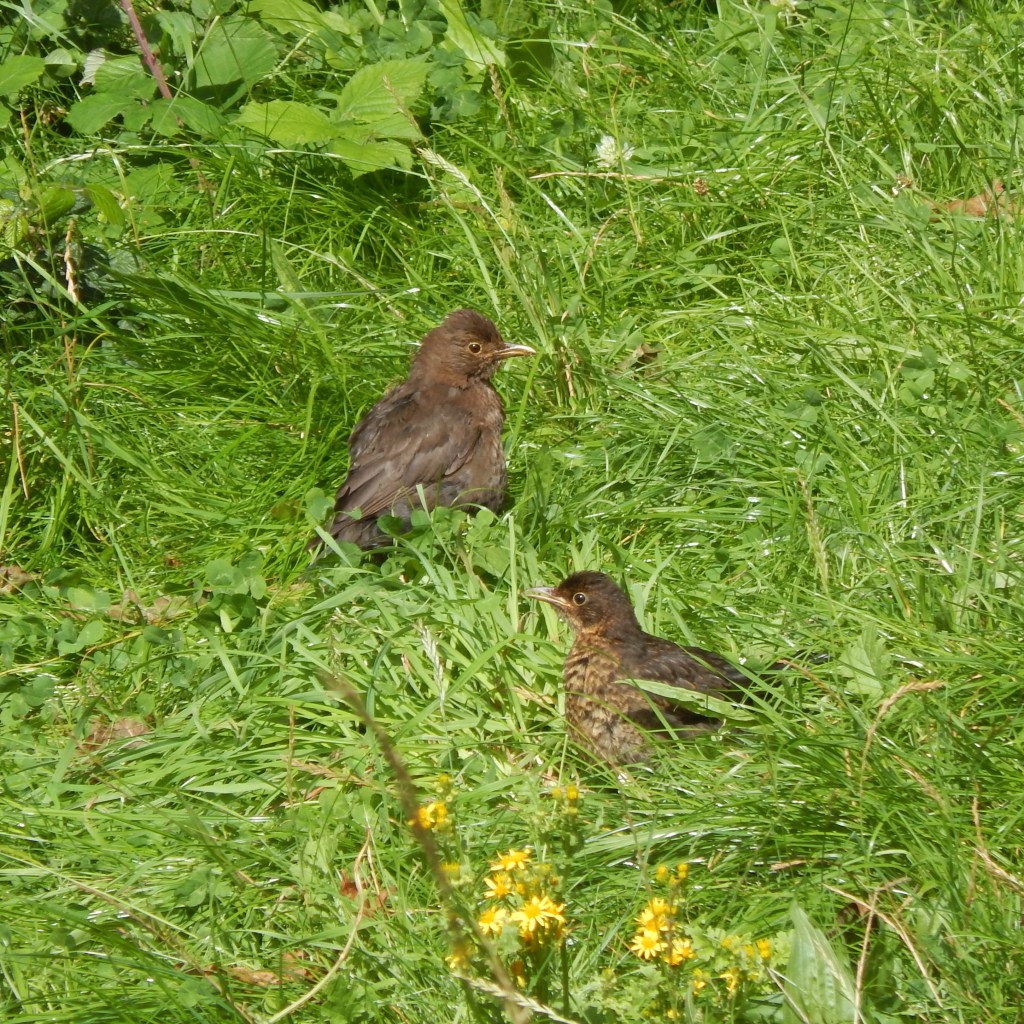
Oh there’s no mistaking that distinguished gentleman. Probably one of the most aptly named and well-recognised birds around, male blackbirds are jet black with bright orange beaks and a golden ring around their inky black eyes. Female blackbirds are actually brown, so I’ve taken to calling them “brownbirds” when I see them. Though they aren’t as striking as the boys, you’ll find that sometimes the ladies have a speckled pattern on their breast, an ode to their family, Turdidae, the thrush family.
Once upon a time, these birds were known by a different, albeit more fun to say, name: Ouzel. This word interestingly has the same origins as the German word for blackbird, Amsel. While this word lost its relation to blackbirds sometime in the 17th century, it’s still retained in the names of some other birds, like the ring ouzel, who is also a member of the thrush family, and the dipper, who is sometimes known as “the water ouzel” even though it’s only superficially similar to blackbirds and even more distantly related.


Though their appearance is striking, blackbirds are probably more well known for their beautiful singing voices. To the untrained ear it can be difficult to tell their songs apart from robins or other thrushes, but I truly believe blackbirds are unique in how silvery their music sounds. It’s almost like a stream of water, waves of notes unrepeated that rise and fall, interspersed with plenty of beepcheeps that tether you to the knowledge that such sweet music was created by a bird and not a symphony orchestra.
They start singing as early as January to define their territory and continue on until summer. When you wake up early and everything is quiet and dark, you’ll probably hear the silence being broken by a blackbird spearheading the dawn chorus. It’s a flex for them, since singing is a dangerous game – it gives away your position to predators, after all. Most birds will wait until they have enough light to see any threats to start singing, but the blackbirds big peepers allow them to see with less light, so they feel safer singing in relative darkness.


We’re fortunate that a bird with such a lovely song really seems to like it here. They’re one of Ireland’s top 20 garden birds, and according to the Irish Garden Bird Survey of the winter of 2020/21, blackbirds were found in 99.1% of gardens. We get an influx of visiting birds from northern European countries every winter, here to gorge themselves on winter berries and fruits. They seem to have a particular fondness for apples, which is lucky for the apples, since it means their seeds get eaten and, ahem, deposited somewhere else in a nice package of fertiliser.
In the summer, blackbirds are more focused on getting those gains via high protein insects. They are by far the best pest controls for slugs and snails in your garden, I highly recommend trying to attract them if you can. Leave out a large flat stone for them and you’ll find them smashing open snail shells to get to the gooey morsels inside. The shells can be used in compost for your garden, but if you don’t feel like handling them, never fear, blackbirds also act as a cleanup crew and will return to eat the shells later in the season to boost their calcium before they start laying eggs.
When they’re not hanging out in our gardens, you can usually find them in any deciduous woodland that has dense undergrowth. They like to snarfle around on the forest floor, foraging for insects. They’ll dive head first into a pile of leaves and start throwing them up around them, hoping to reveal a hidden bug. From far away, it looks like they’re throwing leaves around like confetti, celebrating the mouthful of grubs they’ve just found.
Singing and foraging aren’t all those beaks can do. Forget peak performance, for blackbirds it’s all about beak performance. The orange-r your beak, the more aggressive other males will be towards you in their territories. Female birds don’t care much for the colour, but they do prefer a shinier beak in a potential mate. Once a couple of birds pair off, they mate for life, so it’s safe to let your beak game slip. Until then, you want that thing looking like a polished clementine.
It’s fitting that a bird with such a melodic voice is only made more famous through human song. There’s three major instances of blackbirds we could find:
- “Blackbird” by The Beatles – A song about the civil rights movement in the US and describes a blackbird singing in “the dead of night”, which is almost right. Interestingly, blackbirds have been known to sing at night in urban areas because light pollution messes with their sense of time.
- Sing a Song of Sixpence – An English nursery rhyme dated from the 18th century in which “four-and-twenty blackbirds” are “baked in a pie”. In the 16th century, the noble circles of Europe took part in something called entremet, which was real or fake food served between meals as a form of entertainment and illusion. One famous example is live birds bursting from a baked pie, which may be the inspiration.
- 12 Days of Christmas – The Christmas carol that mentions “four calling birds” . This was originally “four colly birds”, colly was an old English name for blackbirds that meant “black as coal”.
And of course, we have a religious story as well to really get into the holiday spirit. Saint Kevin of Glendalough, founder of the iconic monastery in Glendalough in the 6th century, is closely tied to blackbirds and often depicted with one in his hand. The legend says that during Lent, the Saint was studying alone and lifted up his hand towards heaven out the window. A blackbird perched there by chance and mistaking his hand for a nest, laid an egg. The patient Saint then decided he would remain in that pose, with his hand held out the window, until the baby bird hatched.

If you’re not too keen on the festive cheer, I hope this article at least brings you a bit of hope for the brighter days that are coming, borne on the dawn chorus lead by the blackbird’s silvery song. We’ll start hearing them soon, and with their voices comes the slow crawl towards spring. Until then, keep an eye on your garden for them, maybe leave them out some peanuts or mealworms on a feeding table if you’re feeling generous. Happy holidays from us at the bird blog, and we’ll see you in 2025!
 The Irish Bird Blog