Lá Fhéile Bríde shona daoibh; Happy Imbolc! The razor sharp wind and dreary grey skies may not seem very festive, but the worse the weather is on Brigid’s day, the shorter the period of time before spring is finally here (or so we hope). In honour of our principal lady saint, we’ll be talking about a bird with close ties to her—in more ways than one. This month’s bird is the Oystercatcher (Haematopus ostralegus), known as Roilleach in Irish.
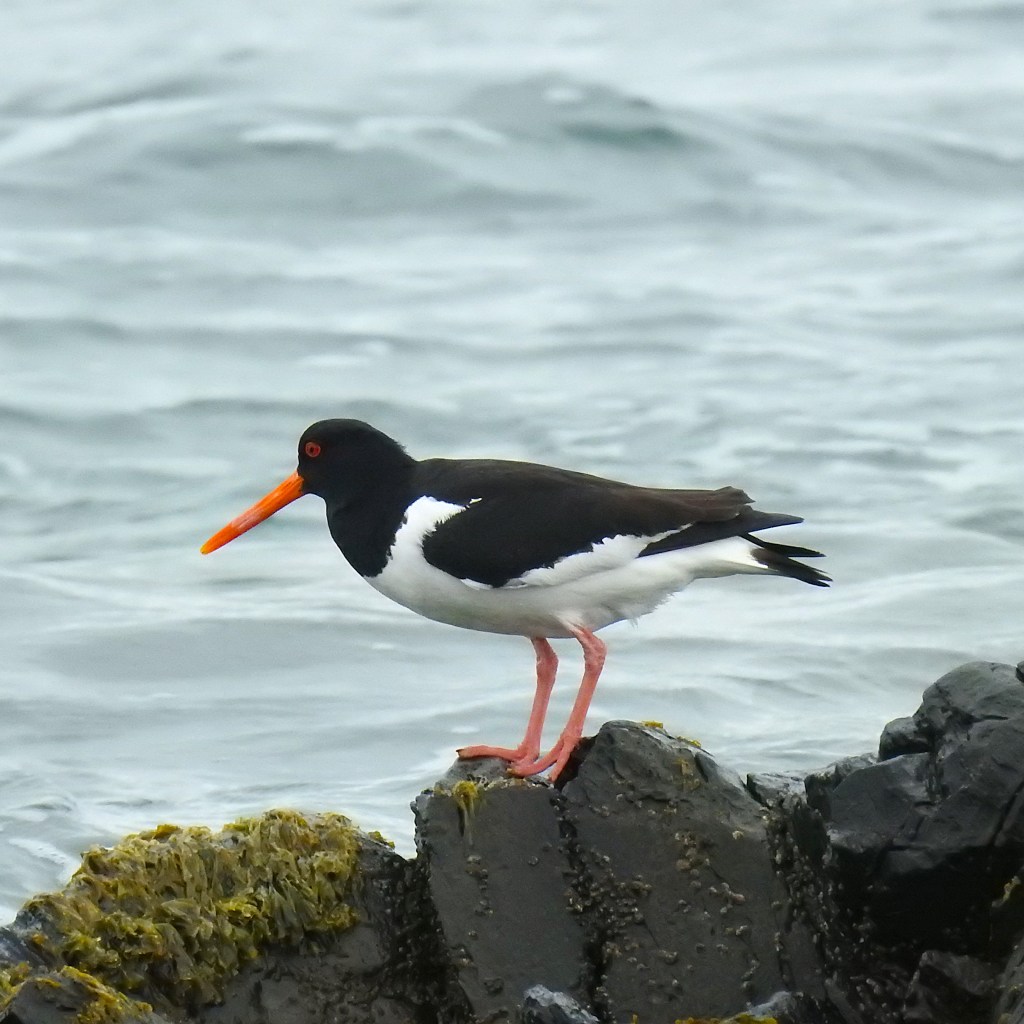
Standing on the seashore surrounded by the calming wash of waves, you may have your soundscape infiltrated by a high-pitched beeping. What initially sounds like a dog’s chew toy will actually turn out to be a wading bird with bold tuxedo plumage, strawberry summer smoothie legs, and menacingly blood-red eyes. As they take to the skies—fluttering at first, then soaring high above the water—you see a flash of white on the wings and rump, and watch as the sun catches their bright orange beak.
Their bicolour feathers have earned them the nickname “pied oystercatcher” (as in magpie and pied wagtail); a name that’s come full circle, since this bird was originally known as “Sea Pie” but was renamed in the 18th century, when they were observed to be eating oysters (I personally prefer the rebrand, you are what you eat after all). Yet in a shocking case of mistaken identity, not unlike that of Saint Brigid herself, you’ll be amazed to learn that “oystercatcher” still isn’t their true name. You see, English speakers of Europe call these birds “oystercatchers”, but in reality, “oystercatchers” are a group of 12 waders that make up the family Haematopodidae—we just aren’t bothered by that because we only have the one bird.
If the Haema part of their family or genus name made you think blood, congrats, because you’re right! The other part of their genus name, pus, is in reference to the Latin word pous which means foot. Put them together and you get blood foot, which sounds unpleasant and also not totally accurate because to me, their legs are more of a salmon pink. I don’t know why they didn’t go for the word for eye instead, those peepers are raw.
But though they may look like they’ve caught a nasty case of conjunctivitis, their eyes are still as sharp as ever, as evidenced by their role in a legend of St. Brigid. Let me set the scene: A woman flees towards a beach, glancing back in terror at the band of men chasing her. Their weapons are sharp, the gleam in their eyes deadly. She tears across the sand, ignoring the salty spray in her face and her hair being whipped by the coastal breeze. Her eyes dart from side to side and she realises in sudden horror that there is nowhere to hide, and the men are closing in. She turns around in despair, and sees a flock of black and white birds flying towards her with seaweed clutched in their shiny orange beaks. They saw her plight, saw what the men would do to her, and came to help. Working fast, they cover her from head to toe until she’s encased in a green cocoon. The men see nothing but a pile of old seaweed and run past her, eventually disappearing beyond the dunes. As thanks for saving her life, the saint blessed the birds. That’s why one of the names for the oystercatcher in Irish is Giolla Brighde, “Servant of Saint Brigid”.


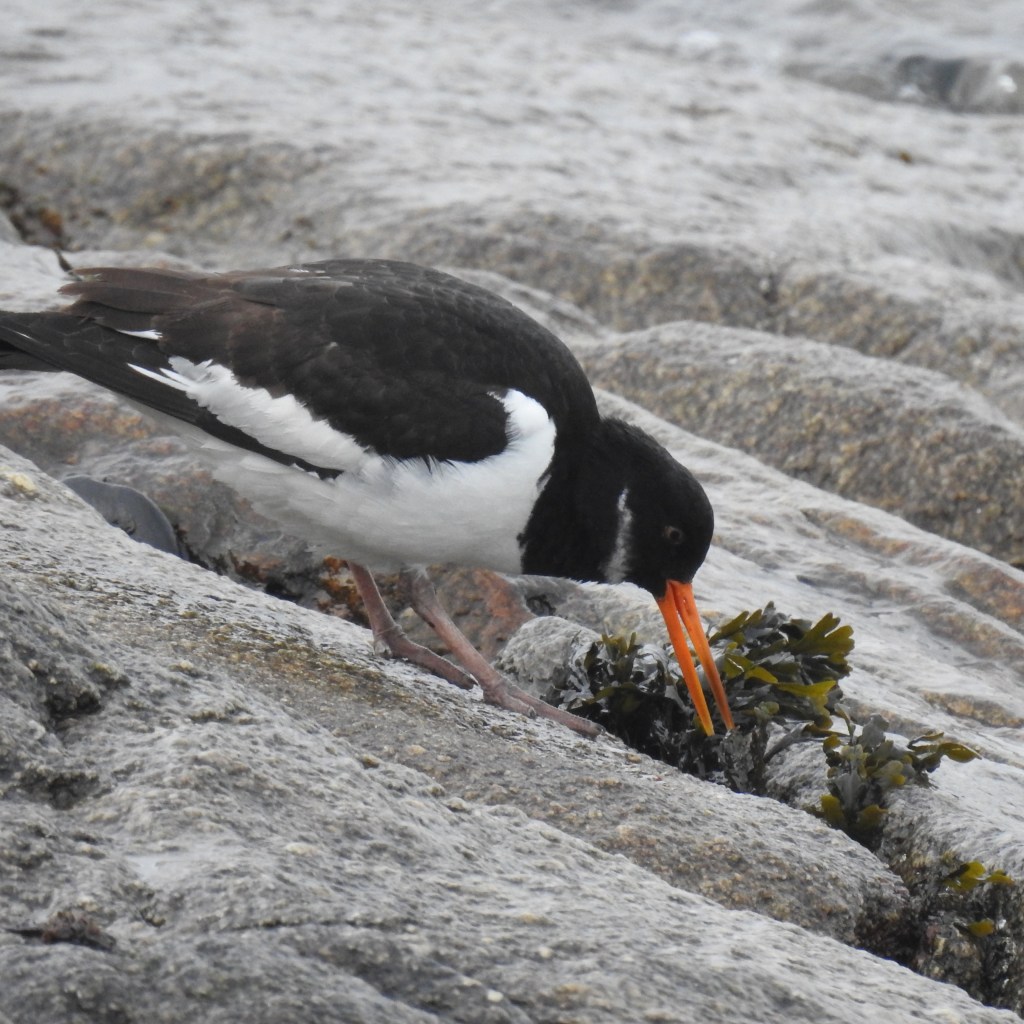
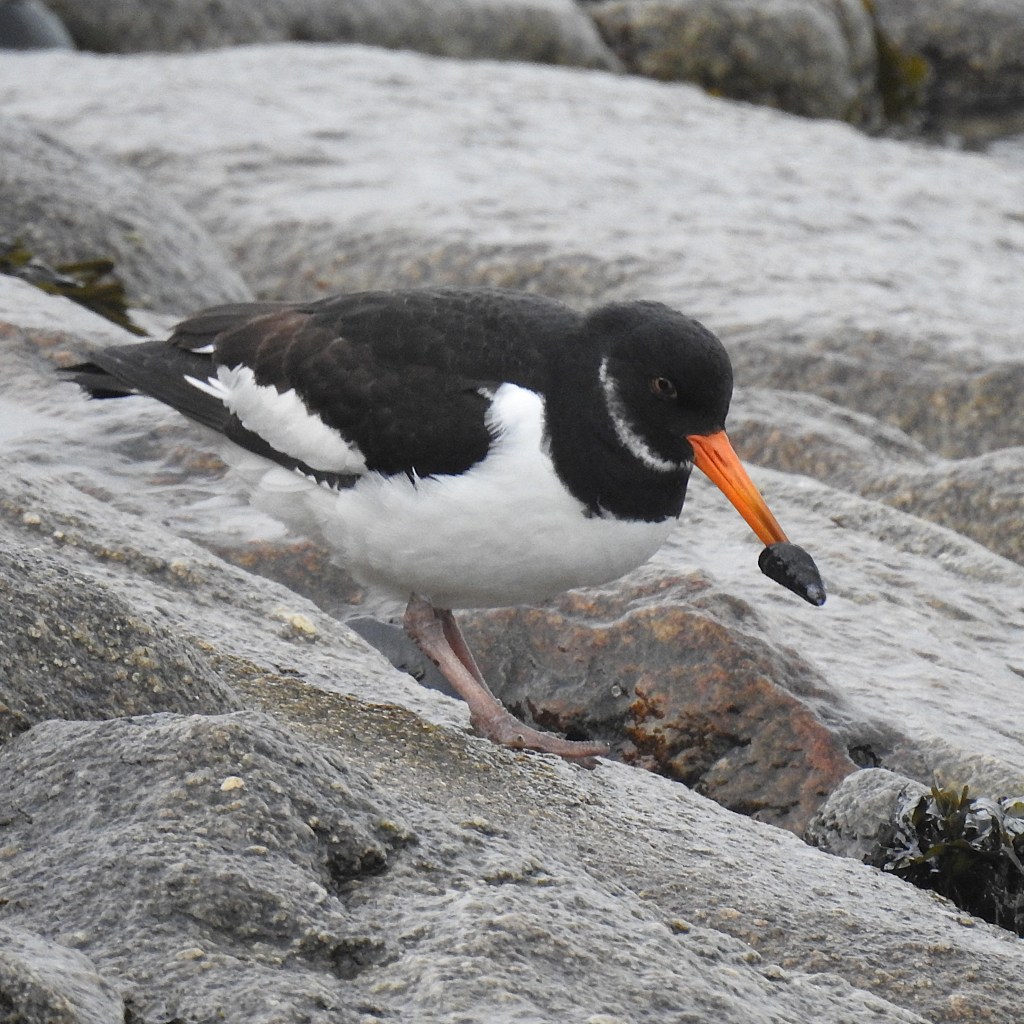
So I know I just said they got their name changed to oystercatcher because someone saw them eating oysters, but actually, oysters aren’t their favourite food. If I were to sort their menu tier-list style, it would be cockles and mussels (alive, alive, oh) in S-tier; various worms such as flatworms and earthworms in A-tier; then oysters in B-tier, if even. Maybe whoever changed the name thought oystercatcher had a better ring to it than cocklecatcher? Honestly a more apt name might be shellbasher, for how they pick up shells in their beaks and hammer them against rocks to break them open; or maybe dirtprober for how far they’re willing to sink that thang into sand or soil in search of a tasty little treat.
Though we’ve often seen them at the various beaches and shores that we frequent for birdwatching, I’ve also seen them on the grounds of a school. I was meeting someone and happened to hear one outside her office, and reflexively said ‘Oh, an oystercatcher!’ The person I was meeting was amazed I could tell what bird it was just from hearing the call (I’m actually pretty bad at that, the oystercatcher just has a really unique peep). We ended up talking about it for a bit so we looked out the window to try find them and eventually spotted one on the rugby pitch of the neighbouring school. On the grass you don’t really have to compete with other waders for the same food buried under the sand, so it’s a smart play on the oystercatcher’s part. Every time I’ve been back since then I always see one without fail; the school should adopt them as an official mascot.

Though February is now entwined with St. Brigid, it’s not the only month to see Brigid’s bird—because you can see oystercatchers at any time of year! Ireland (and the UK) is lucky enough to boast the perfect climate for both the overwintering and breeding seasons. Our oystercatchers have the largest range of any in the family, flying to Scandinavia, central Russia, and north-east Asia in winter; and migrating to China, India, the Middle East, and North Africa in the summer, but they chose us. That impressive 86cm wingspan is wasted on them because they just love to stay home.
We even have birds who hatched in Scotland, Iceland, and Norway flying over here for the great opportunities that Ireland affords for the younger generations. Once they arrive, they’ll be here for around 30 months, during which they’ll be able to enjoy our lovely temperate climate and comparatively easy access to resources. They can find their sweetheart and get hitched for life, as these birds are monogamous, like many other waders, and then start a family. The female lays a clutch of mottled green eggs right on the mud/shale/gravel, and the pair take turns incubating until the chicks hatch. The babies are precocial but choose to stay with their parents over the summer, until they’re old enough to join their own flock and spend winter with them.
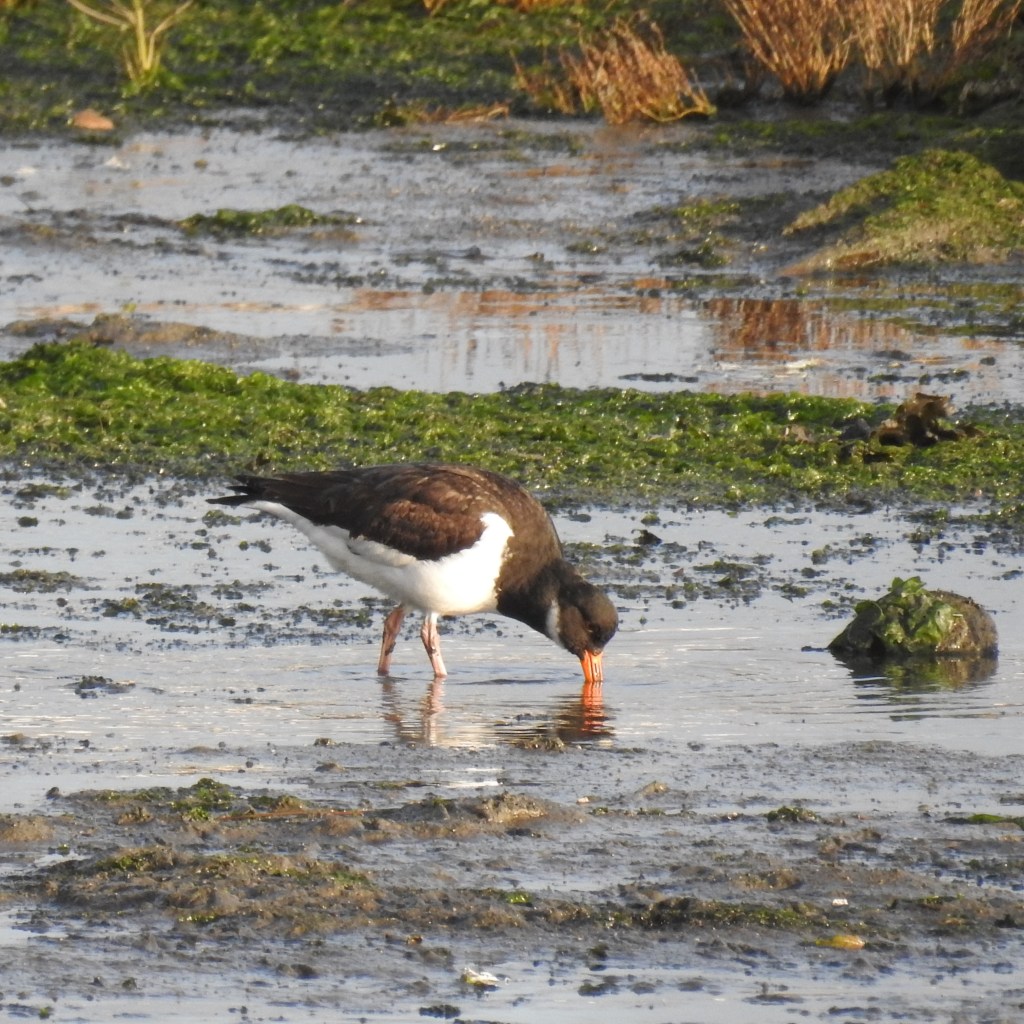
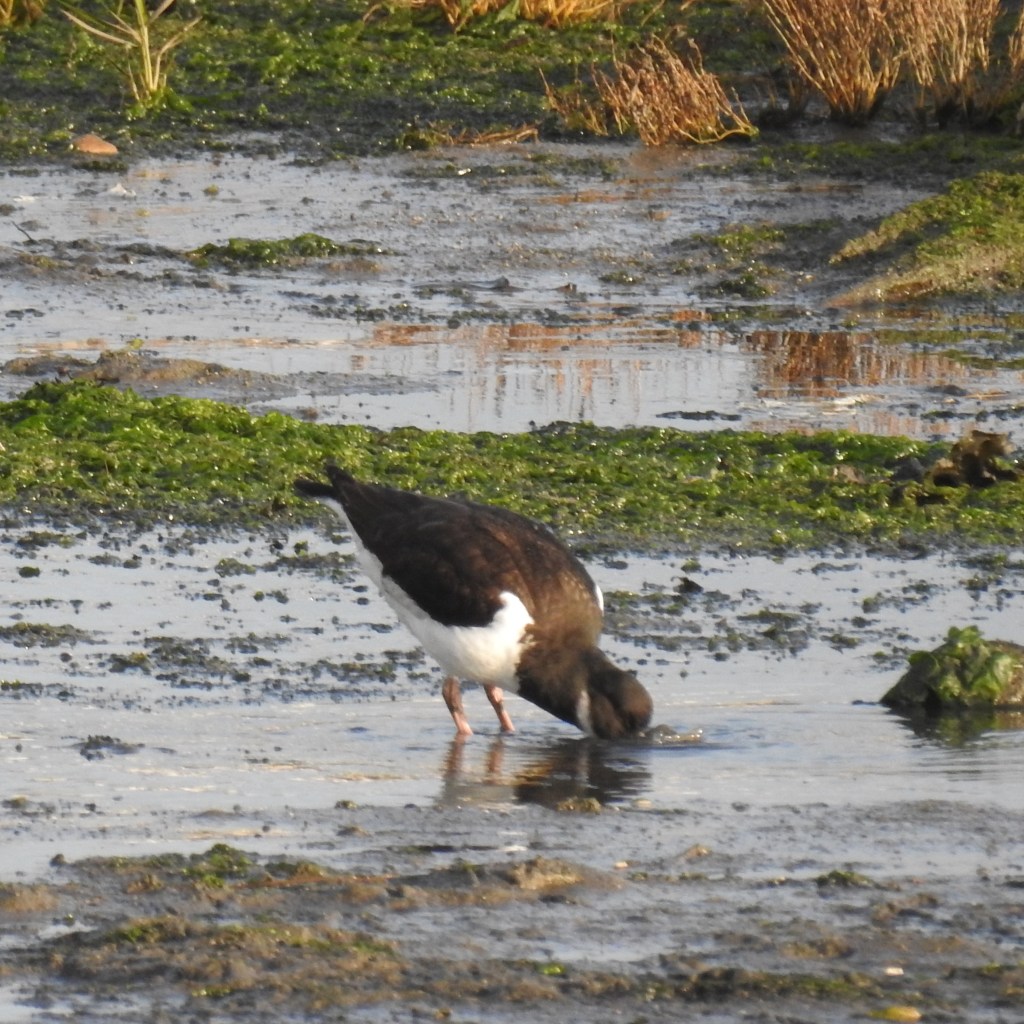
In winter we do get an influx of migrants from Iceland and Scandinavia, taking the total up to about 60,000 oystercatchers spending the season on our coastlines. That number looks impressive, but it’s actually a decline of about 28% from what it was in the early 2000’s. Oystercatchers live for an average of 12 years (the longest living one recorded was just over 40), and lay one to four eggs per year, yet they’re currently listed as having a red conservation status.
Oystercatchers are an important indicator species because of their iconic call and easily recognisable plumage. They can give us a pretty good indication of the health of the ecosystem that they’re congregating in, and declining numbers spell trouble for their Irish habitats.
In 1913, the last specimen of Canary Islands oystercatcher was collected, and by 1940 it was reported to have disappeared entirely. They’re now considered extinct. Overharvesting of the intertidal invertebrates they depended on for food and human meddling were probably to blame, though predation by invasive rats and cats has also been implicated. As well as that, their eggs were collected due to their supposed “exquisite taste”. Our Eurasian oystercatcher travels far and wide and is spread across half a dozen countries, but their red status and declining numbers indicate that they may be heading in the same direction as the Canary Islands oystercatcher.


Imbolc was a disappearing holiday until it was lucky enough to be revived as a national holiday in 2023. Now, there are traditional celebrations all across the country, ranging from parades to workshops that teach you how to weave St.Brigid’s cross. I hope that the oystercatcher can be brought back in a similar way. Who knows? Maybe the blessing of the saint will bring Brigid’s Bird back from the brink.
 The Irish Bird Blog
[…] a line-up, you gotta look for that matching beak-and-boots combo. Some birds may have a red beak (oystercatchers) and some may have red legs (turnstones), but only the redshank has both. They also have a sneaky […]
LikeLike
[…] a line-up, you gotta look for that matching beak-and-boots combo. Some birds may have a red beak (oystercatchers) and some may have red legs (turnstones), but only the redshank has both. They also have a sneaky […]
LikeLike