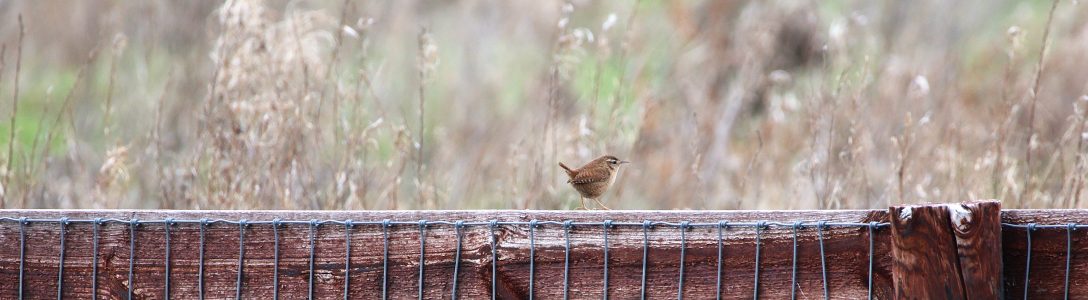
Daffodils, show me your sunny crowns! That 10-day period of no sun had me brooding and contemplative, to the point where even writing felt like a colourless activity. It’s also not the best weather for birdwatching, but I must say the twittering symphony of birdsong has helped me keep it together while waiting for the sun to return – and she’s finally back! So I invite you to take a firm step into spring time with me and this little bird, who is also shaking off those cold winter cobwebs and taking flight in search of fresh baby caterpillars. This month’s bird is the Meadow Pipit (Anthus pratensis), known as Riabhóg Mhóna in Irish.
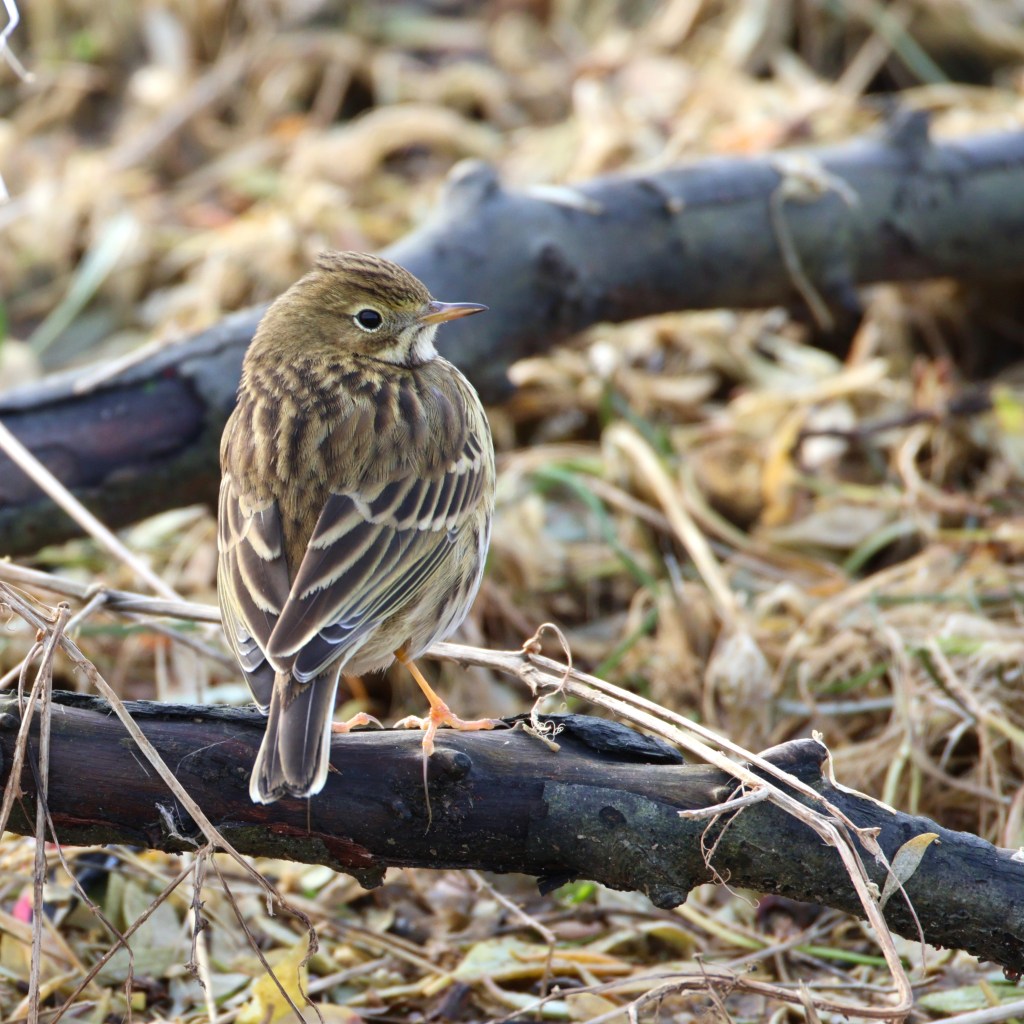
Looking out over an Irish field, you’re sure to see cows lazing or grazing away in the distance on a carpet of bright green. Closing your eyes against a precious beam of sun on your face and tuning-in to the score of birds singing, you gradually become aware of a percussive chirping that sounds very much like a default bird noise. Try to find the source, and you see a small tawny-brown bird with a speckled breast perching on a blade of tall grass. To the untrained eye, it might be dismissed as “some boring brown bird”; to the inexperienced birder, mistaken for a skylark or a thrush.
Meadow pipits slot nicely into the category of Little Brown Jobs (LBJs). Defunct folk names for them include Chit Lark, Peet Lark, and Tit Lark, a clear attempt to brand them after their similarities to larks. It doesn’t help that they exhibit that same strange summertime behaviour of flying high up into the air and twittering and peeping as they descend. But meadow pipits aren’t larks, they’re actually in the same family as wagtails!

Of the forty species of pipits, we have 2 in Ireland: the rock and the meadow. Oddly enough there’s a resident pipit in south and east Asia called the paddyfield pipit, which I was bewildered about because paddyfield sounds like something that could be used derogatorily against an Irish person, if said with enough malice. But then I realised it probably comes from rice paddies, so no squaring up against Asia today.
Rock pipits are slightly more grey with darker breast streaks, but I’ll be honest with you, trying to tell our pipits apart when it’s overcast is a Herculean effort. Especially since our meadow pipits happen to be slightly darker coloured than the ones in other areas (adapting to our commonly grey weather I fear). You could assume that if you see one in a pasture or upland area that it’s probably a meadow pipit, since rock pipits mostly congregate near the coast. In fact, their Irish name Mhóna references the bogs that these birds love to frequent. (The Latin name literally just means “pipit of the meadow” so I don’t have anything clever to add to that.)
Would you be surprised if I told you that pipits are one of the most common bird species in Ireland? If you live in an urban area, like I do, you’re not going to get a glimpse of this bird in your garden. Rural folks would probably be more familiar with them flying low over their fields or perching in hedgerows. But that doesn’t mean you aren’t able to see them—head to your local park or nature reserve and you’ll be sure to find one.


You can tell their pointy beak was made for spearing, hence why they enjoy spaces that are more likely to provide an ample supply of grubs and bubs. We first encountered them on North Bull Island in spring time, flitting between budding bushes with beakfulls of bugs. As soon as the insects start to wake up, they’re under threat of predation by these skilled sweepers. They’ll take their spoils back to their nests for their hungry chicks, but when they arrive home, they may be greeted with a dreadful surprise.


Have you ever heard of Changelings? For the uninformed, they’re substitute children left behind after a baby is kidnapped. It’s often assumed they’re supernatural creatures, and the Irish version of this myth asserts that they’re Fairies. A dark folktale for us, but a harrowing reality for the meadow pipit.
Cuckoos are birds that are considered brood parasites. This means they lay their eggs in the nests of other birds so that their offspring are raised by those unfortunate parents. In different regions, the cuckoo will fixate on specific species’ and have evolved to lay parasitic (or memetic (word of the day)) eggs that match the appearance of the target species. Here in Ireland, the cuckoo’s unfortunate target is meadow pipits
But the pipits don’t take this behaviour lying down. If they see a cuckoo in the area, they’ll mob and harass them in a desperate attempt to drive them away. And if they do happen to infiltrate a nest, pipits will abandon it if they happen to notice something off about the eggs.
For the ones that do end up raising the child of deadbeat parents, it’s unclear why they do it. Prevailing theories are that 1) the cuckoo chick has learned to mimic the sound of a hungry brood of pipit chicks, and 2) that there is an evolutionary drive on the pipit parent side that instinctively motivates them to feed the chick as if it were their own. I think maybe there’s a sunk-cost fallacy aspect to it too; they spent all that time and effort prepping the nest and laying the eggs, might as well raise a baby, even if its freakishly larger than their own bodies.
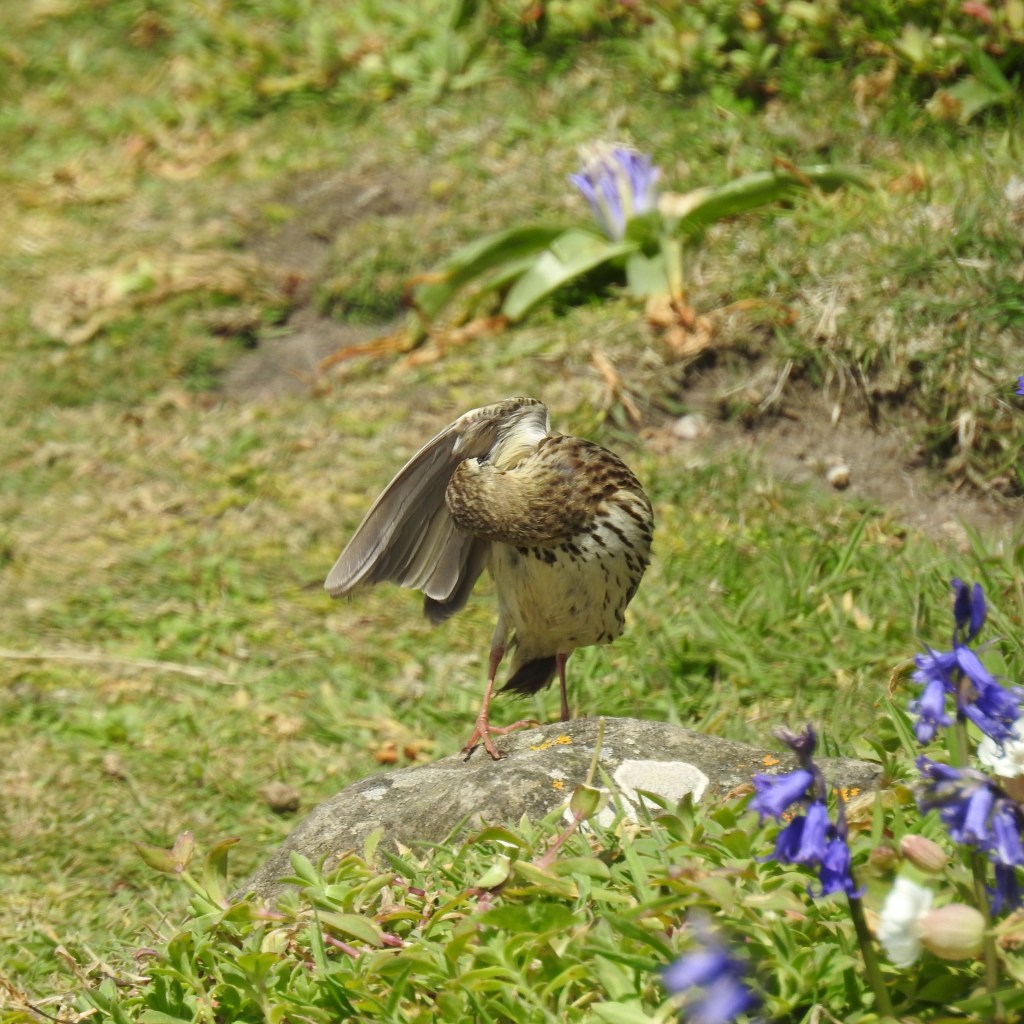
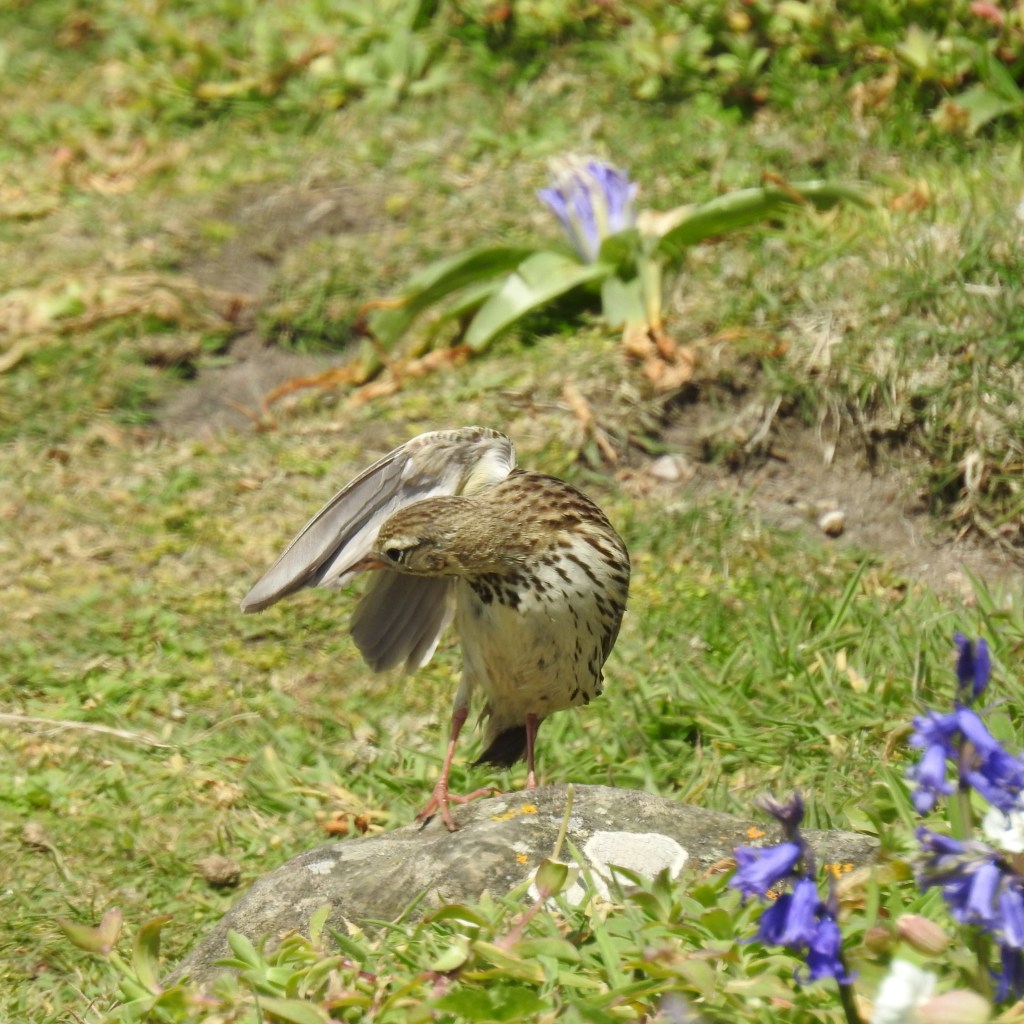
Though pipits are migratory, the Irish population seems to be sedentary, and our numbers are bolstered by winter visitors. Throughout the year, we can have anywhere between five-hundred thousand and one million pairs. But their numbers are steadily decreasing for reasons we don’t quite understand. If I had to guess, I would blame the vanishing insect population. (My favourite guy, Dave Goulson, has written a lot of lovely books about insects and what their disappearances means for us.) We can only hope that they recover in time as we make moves to restore the insect population. In the meantime, see if you can’t just spot them next time you’re out at a park. But try not to attract the attention of any Changelings and Fairies.
 The Irish Bird Blog
Thank you for the informative write up!
It’s crazy to think of the Cuckoos as manipulative bad guys but the more I hear of them, the more ugh yucky they are.
I will keep an eye out for this LBJ next time I am in the Bull Island area.
Love the article, as per usual.
LikeLike