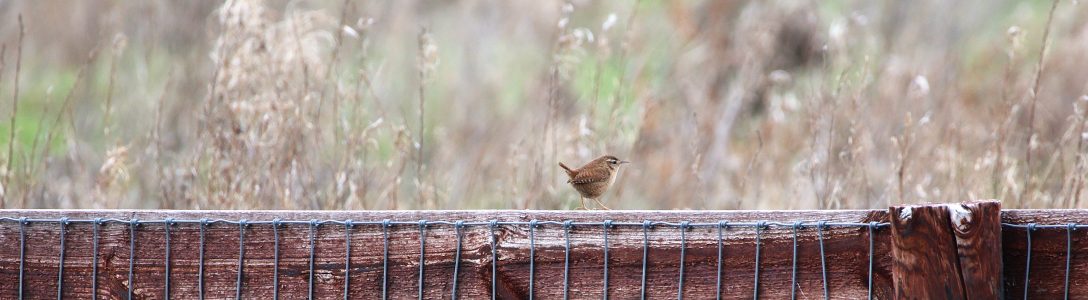
Lá Bealtaine shona daoibh; Happy Beltane! The hazy sun and dried grass have me itching for a cold drink, sunglasses, and some tunes. What a time to be welcoming the summer solstice. Traditionally this holiday has ties to the robin, but in light of an ghrian ag scoilteadh na gcloch, we’ve decided to talk about a bird that’s fiery-er, more rugged, and the picture of summer. This month’s bird is the Stonechat (Saxicola rubicola (hibernans)), known as Caislín cloch in Irish.
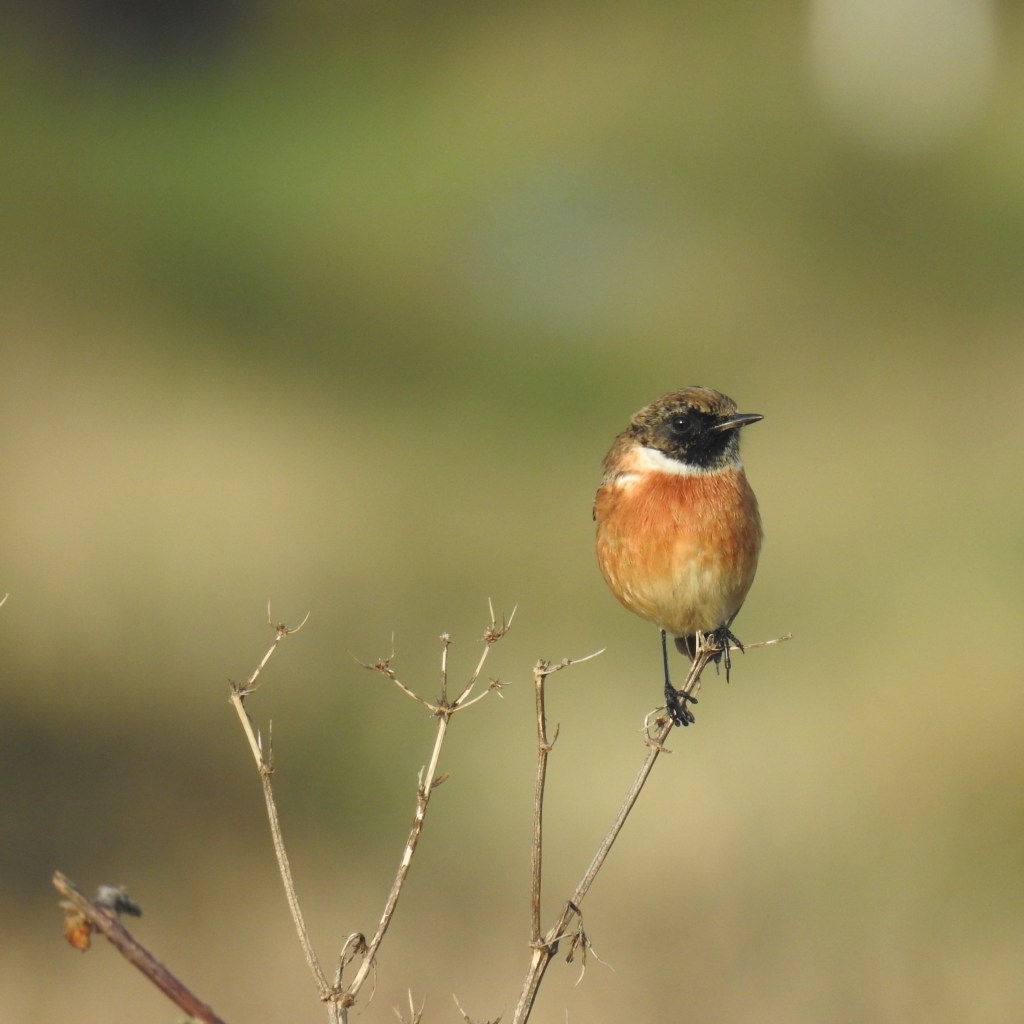

Walking along the coast on a sunny day, you have to hold a hand up to shade your eyes against the sun. The dazzling waves mirror the cornflower skies above, their blue depths cresting and falling against the breakwater. Flies seem to hang lazily in the heat haze around you, and before you can swat them away, a bright orange shape darts past and snaps one right out of the air. Gripping hold of a branch that sways in momentum, the little bird looks like a robin. As you walk past, you see their breast is not that classic red but more akin to the golden brown of the beaches below you. Their dark face is sooty, trimmed with a white collar, and their legs are pitch-black, so they look like the ones you’d draw on birds as a child. As they open their beak you hear a delightful, sharp peep, followed by the extraordinary sound of two pebbles being knocked together.

Stonechats to me look painted, especially their lovely ruddy chest feathers. They could be watercolour with the way the oranges bleed in to one another. But their beautiful plumage is beaten out by their unique call, from which both their English and Irish names are derived. If you picked up on the hint in the first paragraph, congrats! Gold star for you! A secondary school Irish teacher would be very proud. Cloch of course means stone, and their call does sound like two stones being clacked together. For any other nerds out there, I feel like it’s similar to UI sounds from Skyrim or Fallout New Vegas, a very menu-clicking noise.
Saxicola in their Latin name means “rock-dweller”, while rubicola means “bramble-dweller”, an ode to the habitats where stonechats can be found. (I was going to make a joke about being a “basement cola”, but I go outside (to get pictures of birds).) Personally, we’ve always found them perched loud and proud on the tallest thorny branch sent out by a prickly bramble bush, surrounded by rock and scrub. They’re no litorecola (“beach-dwellers”) yet they do seem to be more prevalent on our coastlines — a perfect one to look out for when you’re down by the beach this summer. North Bull Island in particular is teeming with stonechats, you’re sure to find them flitting from bush to bush all along the causeway.


Though stonechats aren’t present in Irish mythology, there is one thing about them that made me think they’d be fitting for our Beltane bird. The ones we get in Ireland are part of the “hibernans” subspecies — named after our humble little island. And in true Irish fashion, you can find them across the continent in northwestern Europe, southwestern Norway, Britain, and northwestern France. “Common stonechat” is now being considered a catch all superspecies for a number of similar-yet-still-distinct subspecies. The African stonechat, which shares the same Latin name as common stonechat, looks very similar to our European birds, but their plumage is way more vibrant, standing out brighter against the golden brown hues of their homeland. This follows Gloger’s Rule, which asserts that birds living in hotter, more humid environments near the equator have more saturated feathers than their colder cousins.

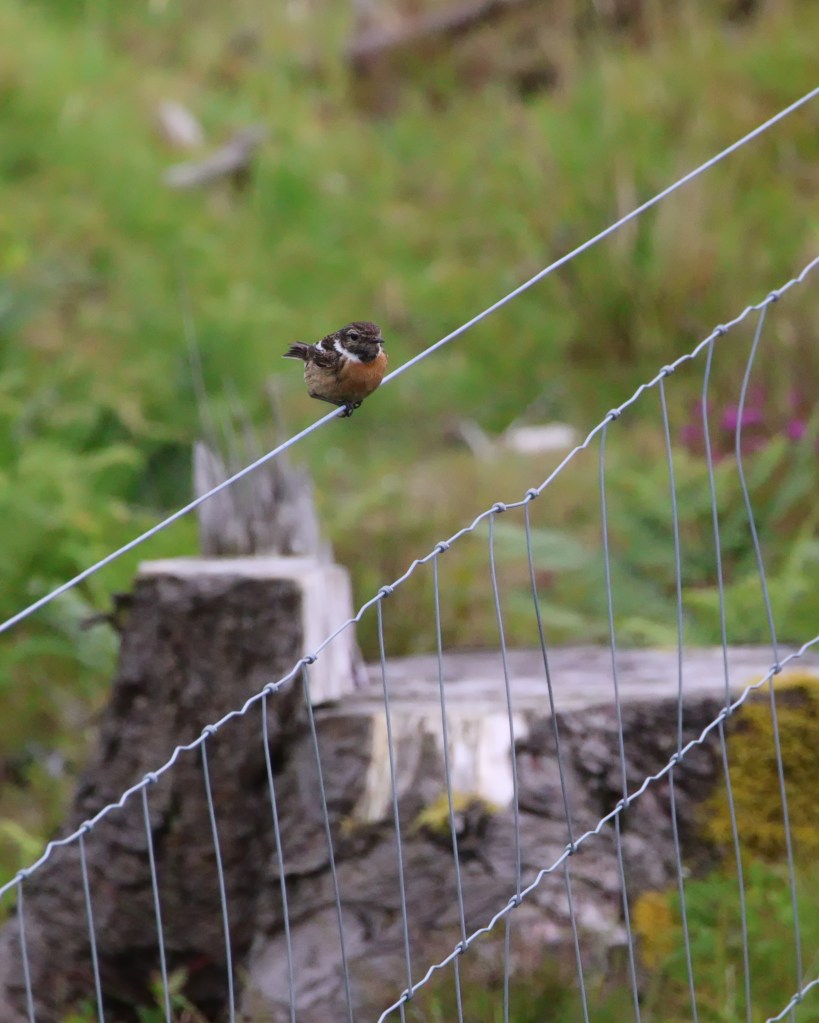
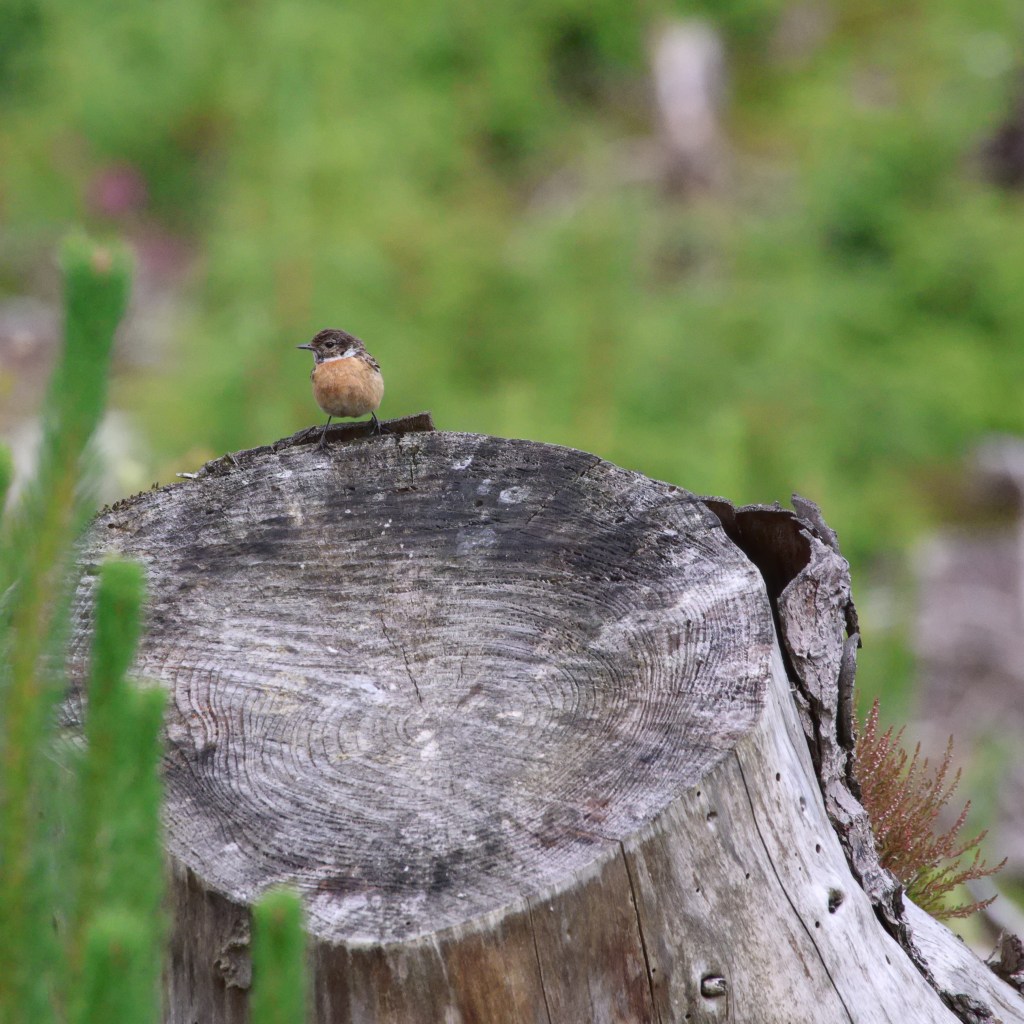
The upgrade of common stonechat to superspecies most likely came about because of this bird’s meandering taxonomic history. When first classified by THE Carl Linnaeus (of binomial nomenclature fame) in 1766, stonechats were slotted into the wagtail family. They were later classed as chats, which were considered members of the thrush family. Then, very recently, genetic and DNA testing informed us that they belonged in the Old World flycatcher family, which happens to be the same one that robins are in. This change is so recent that our ID book (The Birds of Ireland, A Field Guide by Jim Wilson and Mark Carmody) that was published in 2018 is now out of date! So if you’re looking for that book maybe go with the second edition.

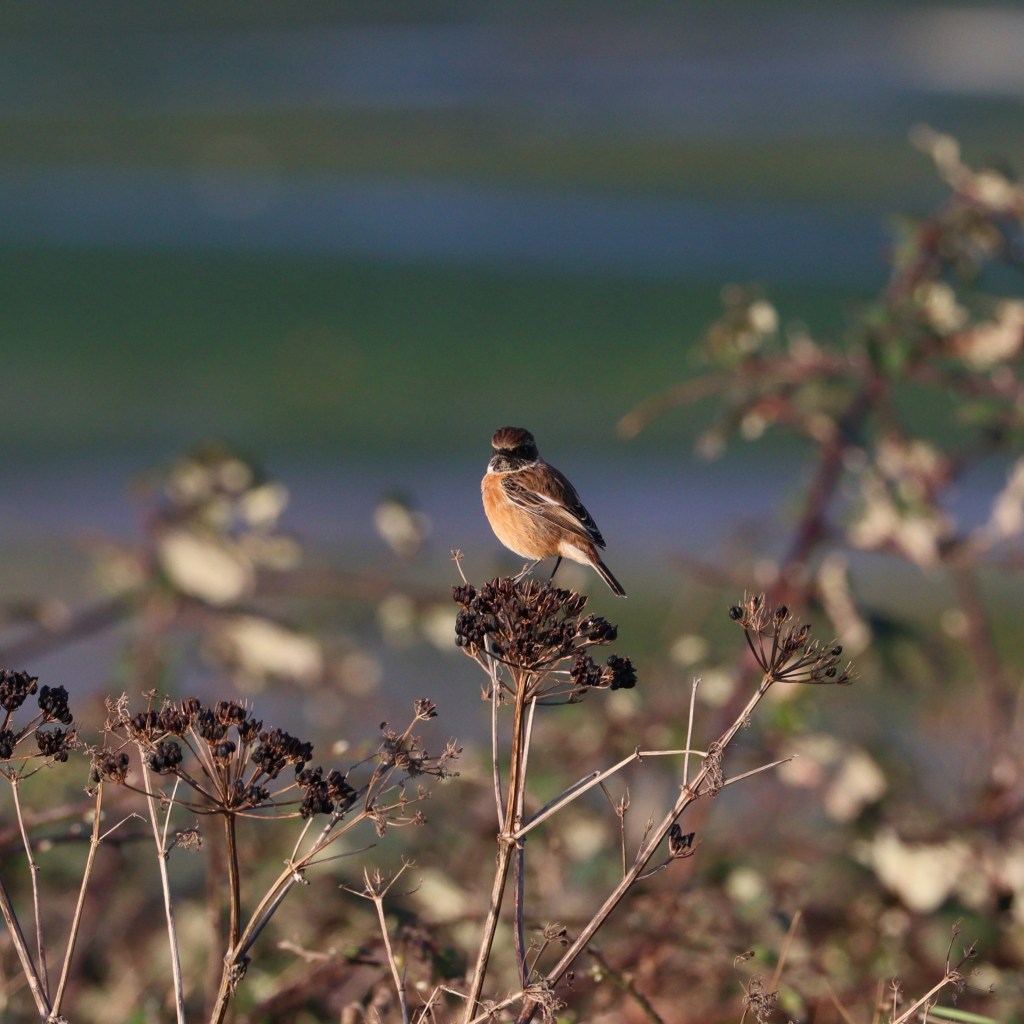
Being a flycatcher means stonechats are lethal at catching a range of insects, from your flyers to your wigglers. It’s not uncommon to see them perched aloft on a branch, brandishing their sharp beaks full of bulging bluebottles, witless worms, and corpulent caterpillars. Their shorter beaks give them more control over their jabs, and they can be seen relishing in this fact by spearing blackberries off the brambles they live in. A bird after Cú Chulainn’s heart.
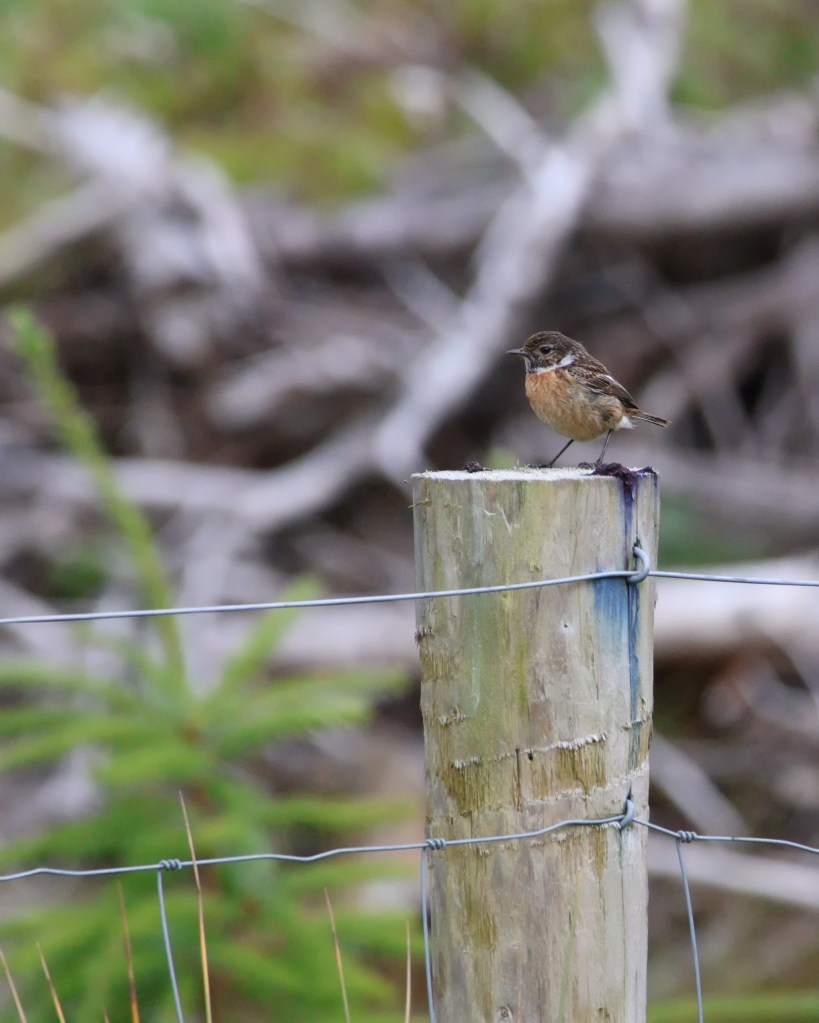
Though these birds are skittish, they don’t seem to hide, and with a weapon like that on your face, why would you? The first time I saw one, it was stood, spread-legged, on a fence post in a nature reserve. He seemed to be calling at us for walking through his land. His majesty did deign to give us a little show by fluttering down to a puddle and taking some sips, before flying back up to the barbed-wire fence and watching us with those glittery black eyes until we were out of sight. (But not before we took his picture.)

As important as it is to bring awareness to our struggling birds, it’s also important to highlight when birds are doing well, and the stonechat is doing just fine. They’re lucky we have so many unkempt brambles all across the country, though I’m sure they’d find some way to adapt if they had to. They learned they could chow down on blackberries after all. So if you’re out this May day, near a coast or a thorny thicket, see if you can’t just spot a strange robin with a fiery gleam in their eyes.
 The Irish Bird Blog