Happy Tuesday; happy July; happy birthday to me! My birthday wish this year was to write about a bird I really like for my birth month’s bird blog — which meant hoofing it to get pictures of them in time for the big day. Though their shape is iconic, they are nimble fiends that never stay still for long (as you’ll come to find out in a bit). This month’s bird is the Long-tailed Tit (Aegithalos caudatus (rosaceus)), known as Meantán earrfhada as Gaeilge.
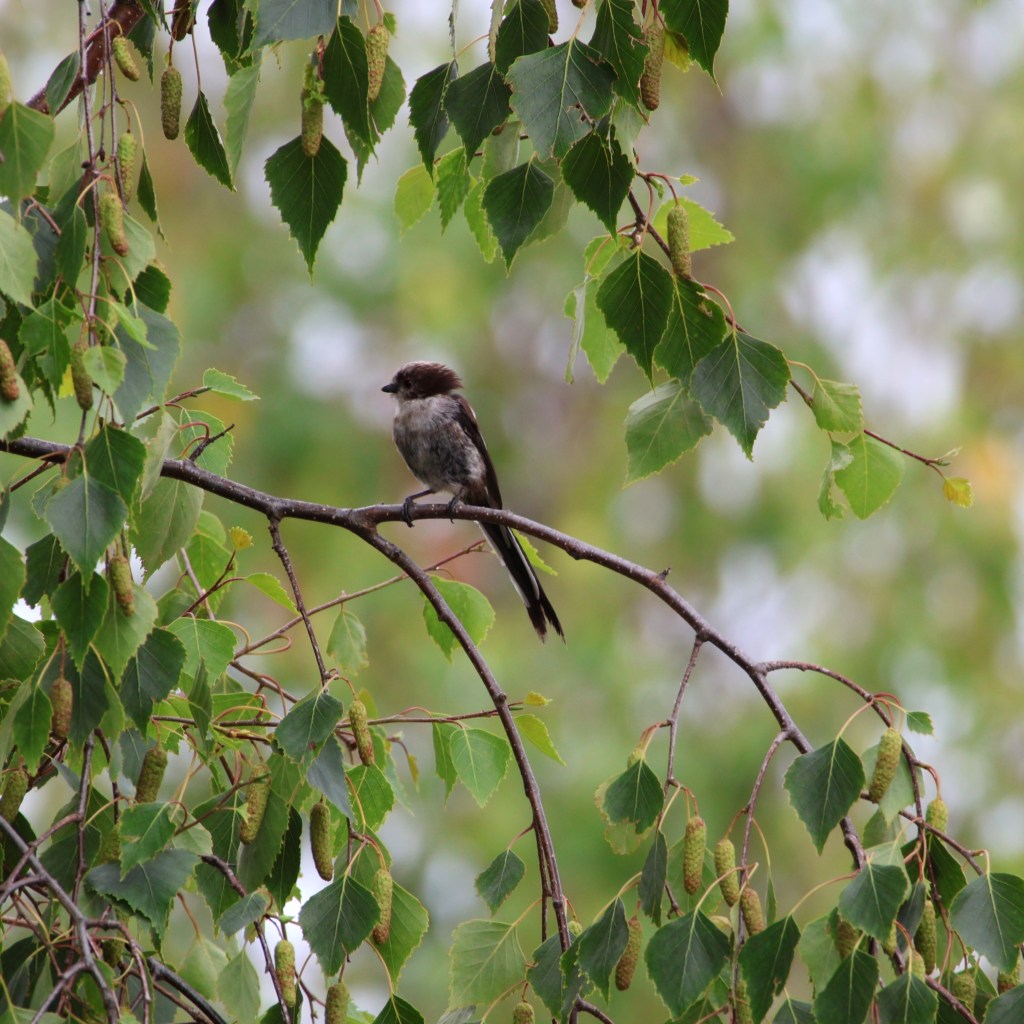

Standing at a bus stop under the shade of broadleaved deciduous trees, the dappled light wobbles and shifts as if the sun is shining through water. Through the lazy droning of insects and the far-off grumbling of a lawn mower, you hear a high-pitched sound. It perches right on the edge of your ears, sweet like bells, almost achingly so. Looking up into the trees, you see a little face peering down at you between the budding seeds, a round bird on a long stick-thin tail. Then you spot another, and another. A cloud of puffballs like blossoms in the trees, filling the air with their song.
Oooooh I have been itching to talk about these sweet strawberry songbirds. While there are many subspecies of long-tailed tit, our subspecies rosaceus has an eggshelly-rosy tint. This particular kind can be found here in Ireland and across the sea in the UK. But long-tailed tits in general have an impressive range that encompasses Europe, Asia, and even Japan and Siberia. You may have seen pictures of the famous Asian subspecies with the pure white face, dubbed Shimi-Enaga in Japanese, or “snow fairies” in English. A strong contender for most adorable bird in the world.
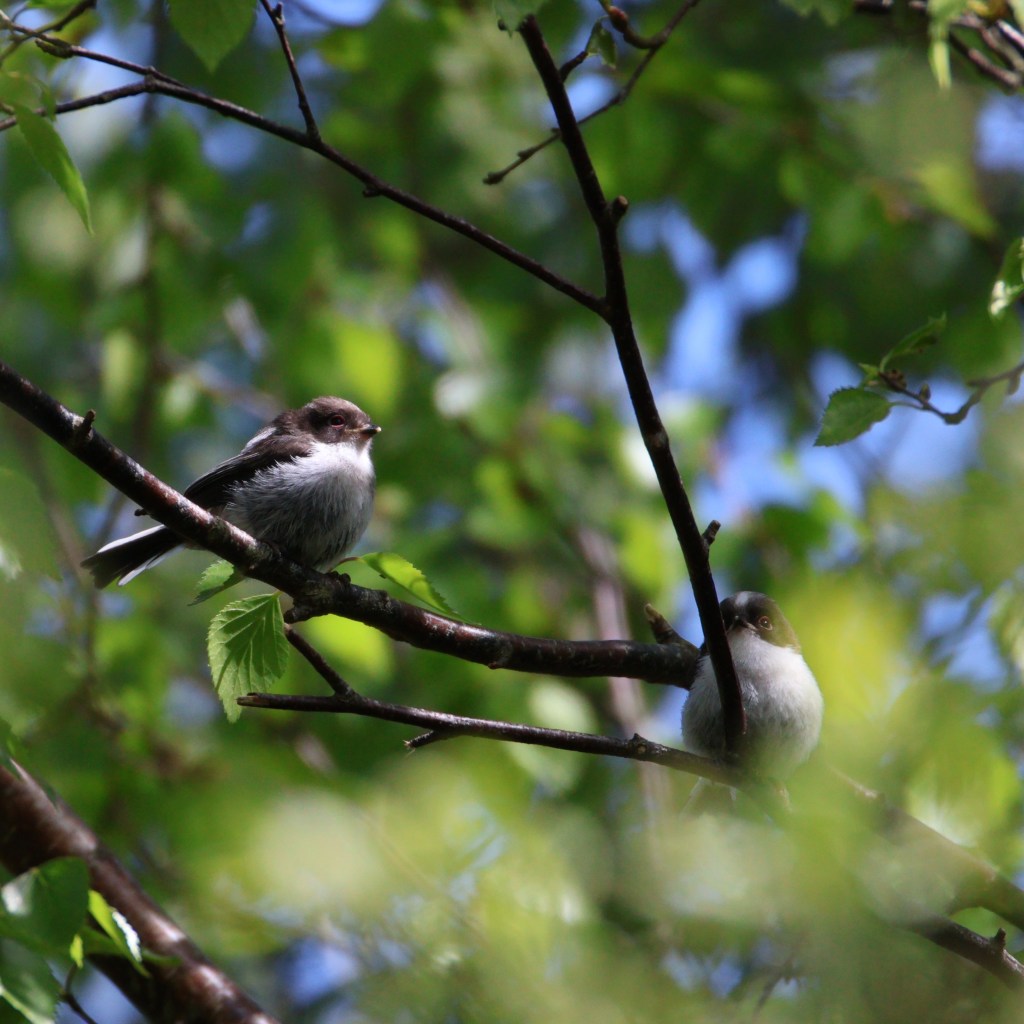
Apart from their lovely pink plumage, you’ll be sure to recognise these birds right away by their namesake long tail; which can reach up to 7cm in length, longer than their actual body! Their tail has the daintiest little fork in it, and should you get close enough to see their face, you may be able to spot their apricot eyeshadow. There has been debate over whether they have a white Mohawk on a black head, or thick black eyebrows on a white head. Review the Bird Blog pictures and let me know where you stand on it.
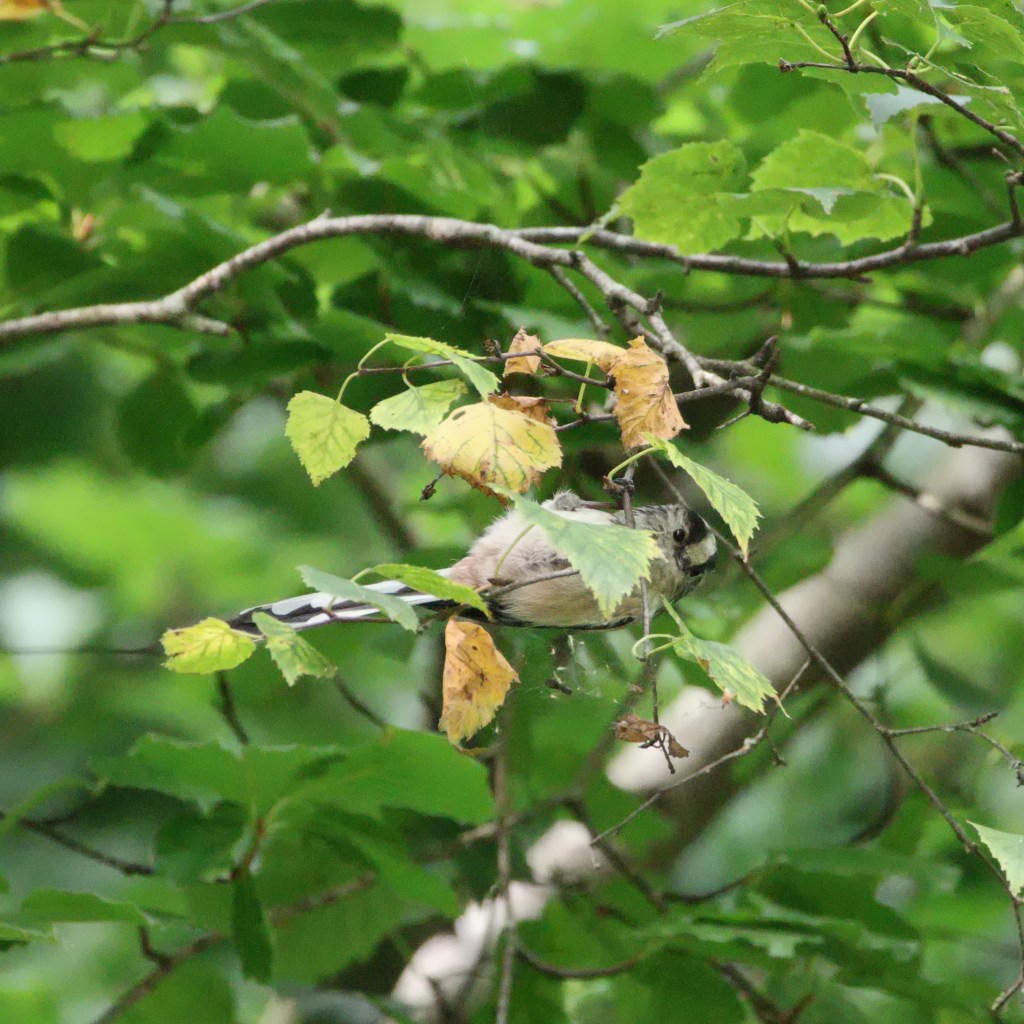
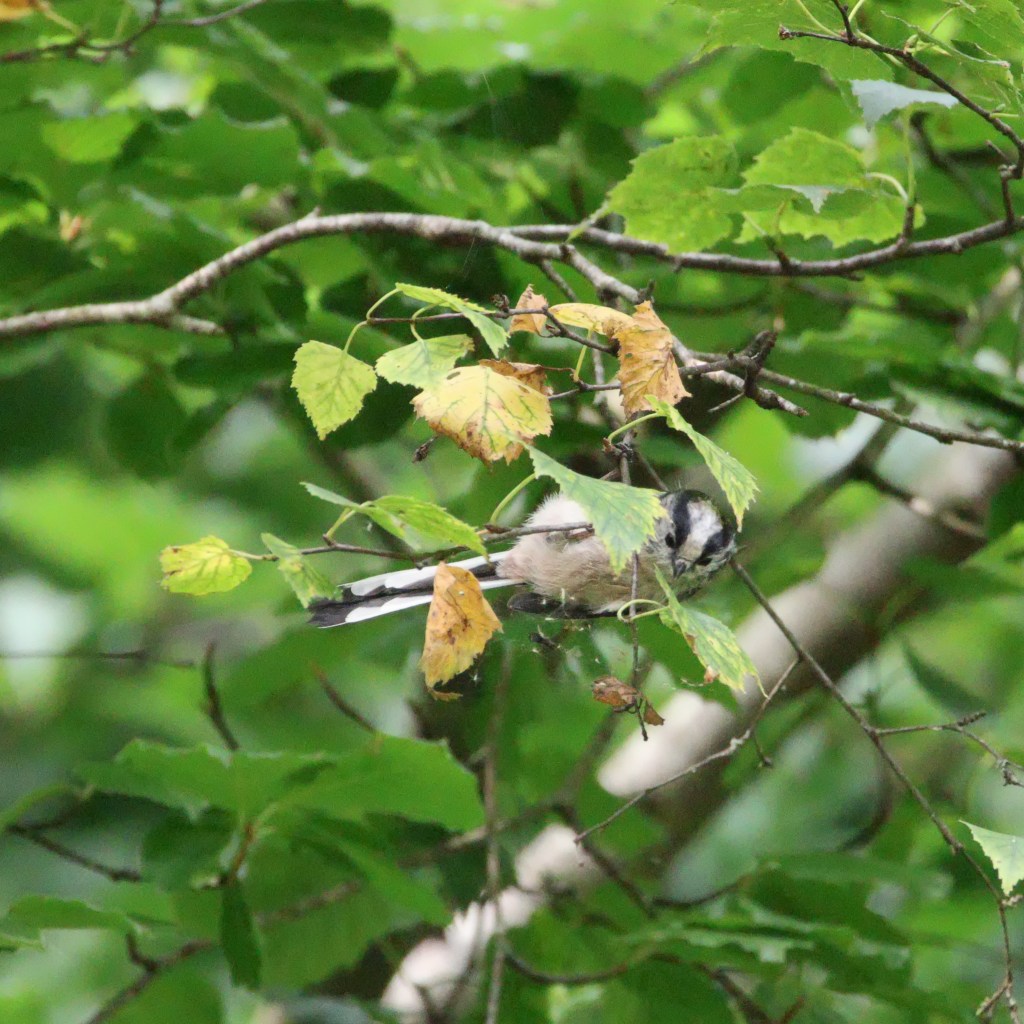

Despite the name, long-tailed tits are not actually tits like blue or great tits. They belong to the bushtit family; characterised by long tails, and small pointy beaks, which they use to stib-stab at insects and their eggs. Long-tailed tits in particular enjoy the eggs of moths and butterflies. I suppose if you must eat insects, you may as well eat the prettiest ones.
And in a more goofy case of faulty names, long-tailed tits were historically known as “bumbarrels” or “bum-towels”. I have no clue why, but if anyone out there has any idea what this inside joke is referring to, please explain it to me. I’ve heard them being called “flying teaspoons” since that’s the shape they make when they take to the skies, but a few other monikers include: bottle-tits, mumruffin, and poke pudding. There’s some free nicknames for your groupchat if you want them.


I first saw these birds while waiting at a bus stop. There were five or so flitting about in the trees above my head, and I was so excited ’cause I’ve never seen pink birds in the wild in Ireland before. (No disrespect to our brown and grey birds, I don’t have the visual capacity to appreciate you.) Since then it’s been a trend to always find these birds in clusters of at least three, though they can flock in numbers as high as 17 or so birds. Their tight-knit bird families are made up of parents and adult children of previous breeding seasons, as well as other parents who helped to raise a brood. It takes a village? No, it takes roughly ten long-tailed tits.
Helpers are common in long-tailed tit families. They’re usually adult birds who failed to raise any offspring in that season, most likely from predation of their nest. Rather than trying again, they’ll choose to help other adults raise their chicks. Heartwarming, isn’t it? But they aren’t just doing it out of kindness — being a helper grants experience and clout that carries over to the next breeding season, giving them access to better mates and territory. A third bonus is that it makes it easier for people like us to get pictures of them. Individually, they all move so quickly from branch to branch, sometimes it’s easier to zoom out and look at the bigger picture (metaphorically and literally).
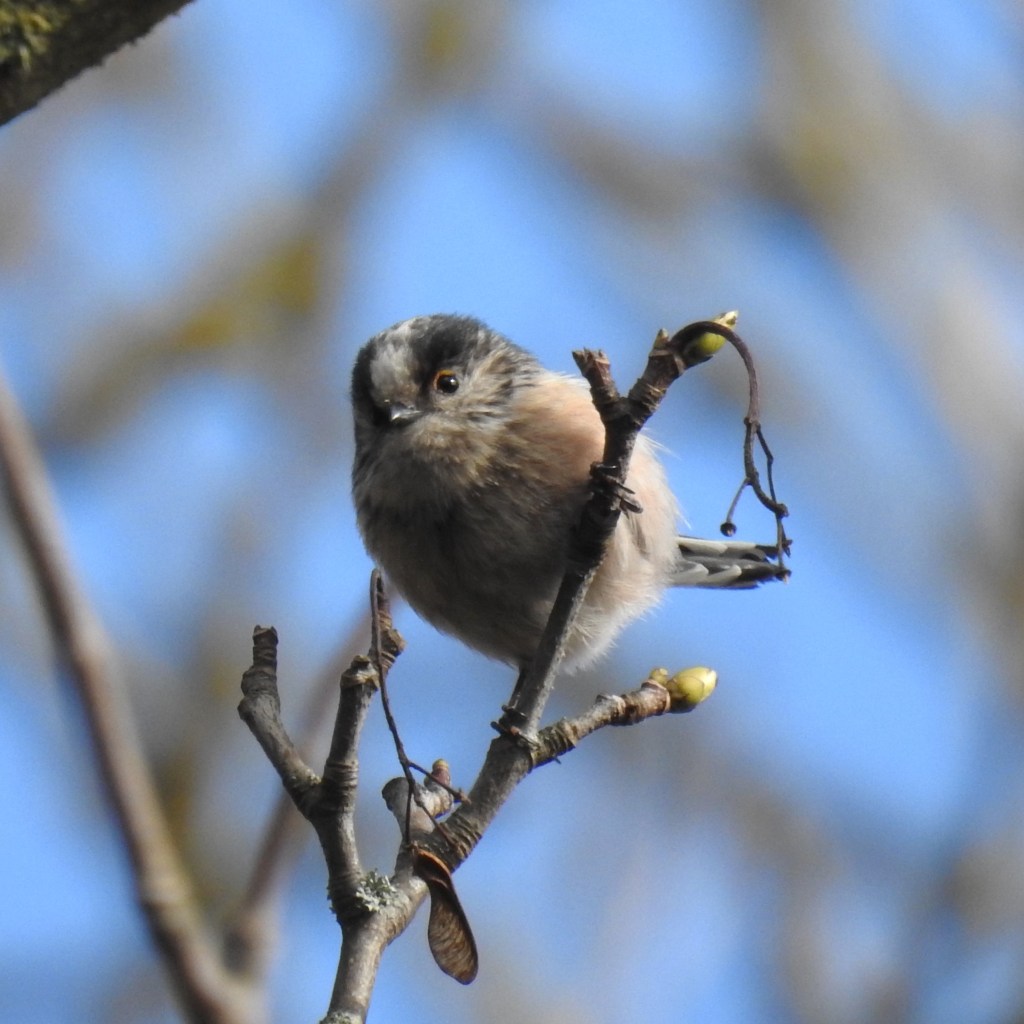

And while we’re on the subject, let’s talk a little bit about their nests. Long-tailed tit nest are some of the most complex engineering found in the Irish bird world. They gather four materials: lichen, feathers, spider egg cocoons, and moss; reminiscent of some sort of hag’s potion. They need a lot of these materials, usually collecting over 6,000 pieces for a typical nest. They then construct a small round sac with a small round opening at the top. (I think it looks like a long grey egg with a hole in it, if that helps you visualise it better.) These nests are suspended low down in the gorse or bramble bushes, or up high in the forks of trees. They create an intricate mesh using spider silk and moss, where the tiny leaves of the moss act as hooks to the spider silk’s loops, creating a natural Velcro that gives the nest stability. The outside is lined with the lichen to provide camouflage, while the inside is lined with feathers (more than 2,000) for comfort and insulation. These nests can take around three weeks to build and their stretchiness allows for the fledglings to grow without damaging their titular tail feathers. It really sounds so comfy. Some outrageous glamping company should start a service that lets you camp in bird nest recreations, because I’d like to sleep on the human equivalent of 2K worth of feathers. (Do not say mattress.)

So there you have it, one of Ireland’s cutest birds, and one of my personal favourites. For my birthday I’m planning to paint my nails pink in honour of their rosy cheeks. Let me know if you find any out there in the wild, I’d love to hear stories of encounters or see any pictures, no matter how grainy. I’m gonna need a flying teaspoon for my birthday cake after all!
 The Irish Bird Blog
love, happy birthday ❤
LikeLike