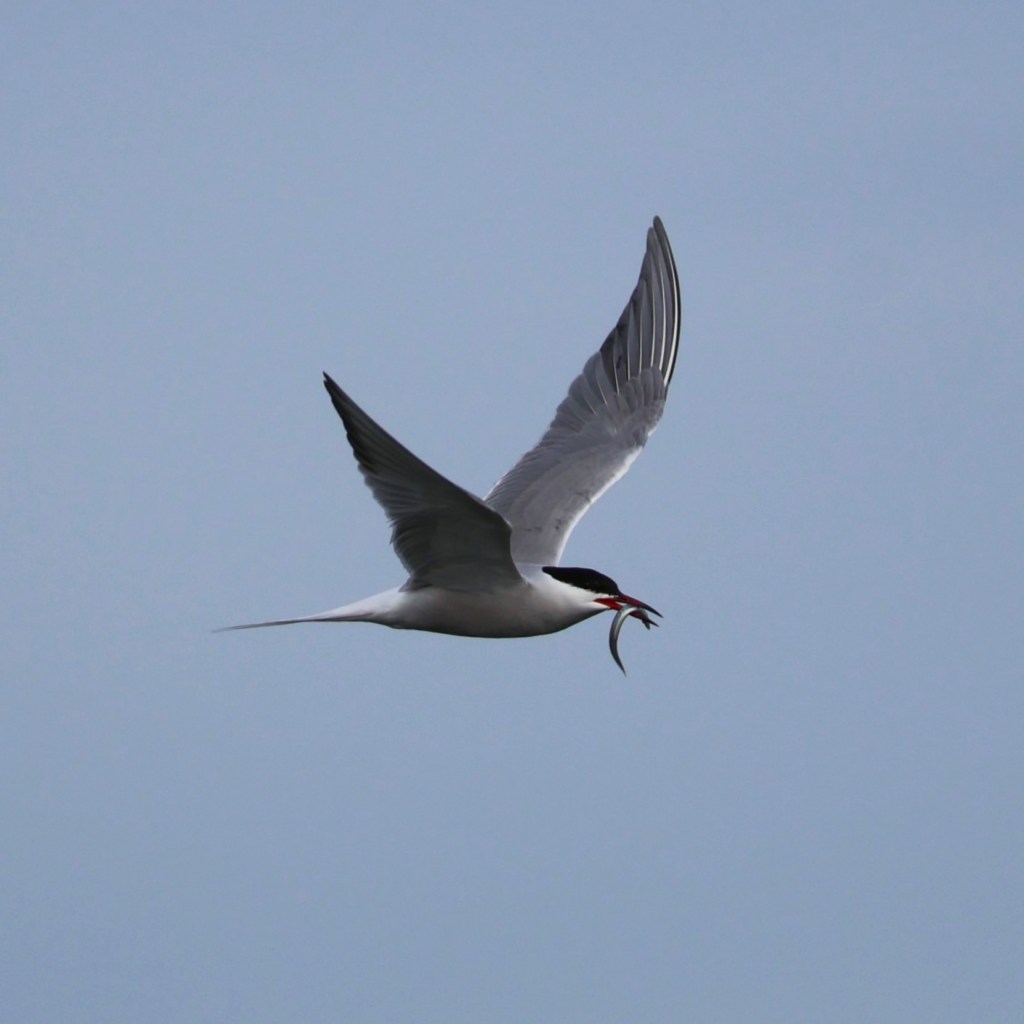
It’s been quite the summer so far. Heatwave after heatwave interspersed with storms; Dublin has been glistening in the humid air. For a nice cooldown, let’s talk about a bird you can see while having a sneaky drink out by the Bord Gáis theatre. They’re a stealthier summer sign than some of our other seasonal visitors but truly a delightful spectacle to watch against a big blue sky. This month’s bird is the Common Tern (Sterna hirundo), known as Geabhróg in Irish.
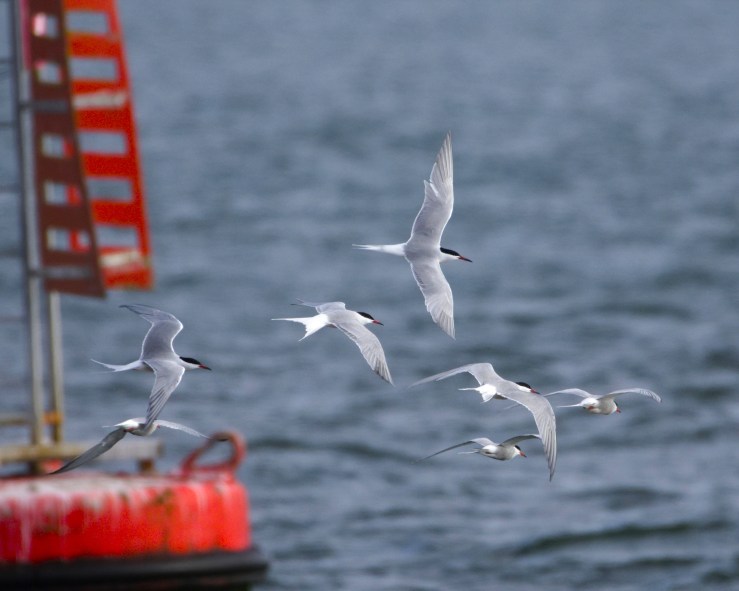
Standing on the uneven cobbles of the lengthy seawall, you see Poolbeg Lighthouse sticking out like a cherry-red sore thumb on your right, and the stripy Poolbeg Chimneys rising into the air on your left. With nothing to buffet the sea wind, it blows right through you, threatening to push you over. Nevermind the beaming sun, you wish you had a beanie and some gloves. Looking out across the water, you see a floating lump of concrete; a square of chocolate on a bathroom rug. There are bright silver shapes taking off and landing from it, sharper than gulls, though they make the same trilling sound interspersed with bright peeps. Their bodies are framed against the massive hull of an industrial tanker, hastening into port.
There’s a time limit on getting to see terns, so I’m thankful I managed to catch them in person, (though my ears almost froze and dropped off my head when visiting in a colder month earlier this year). They visit from March till October, at which point they jet off to chase the sun in west and south Africa. This nautical, globetrotting behaviour is captured by their binomial name Sterna—derived from the Old English word Stearn, which appears in the ancient poem The Seafarer. Their Latin name hirundo alludes to the adjective hirundine, which means swallow-like, describing their similarly forked tails but also their synchronised summer schedule!

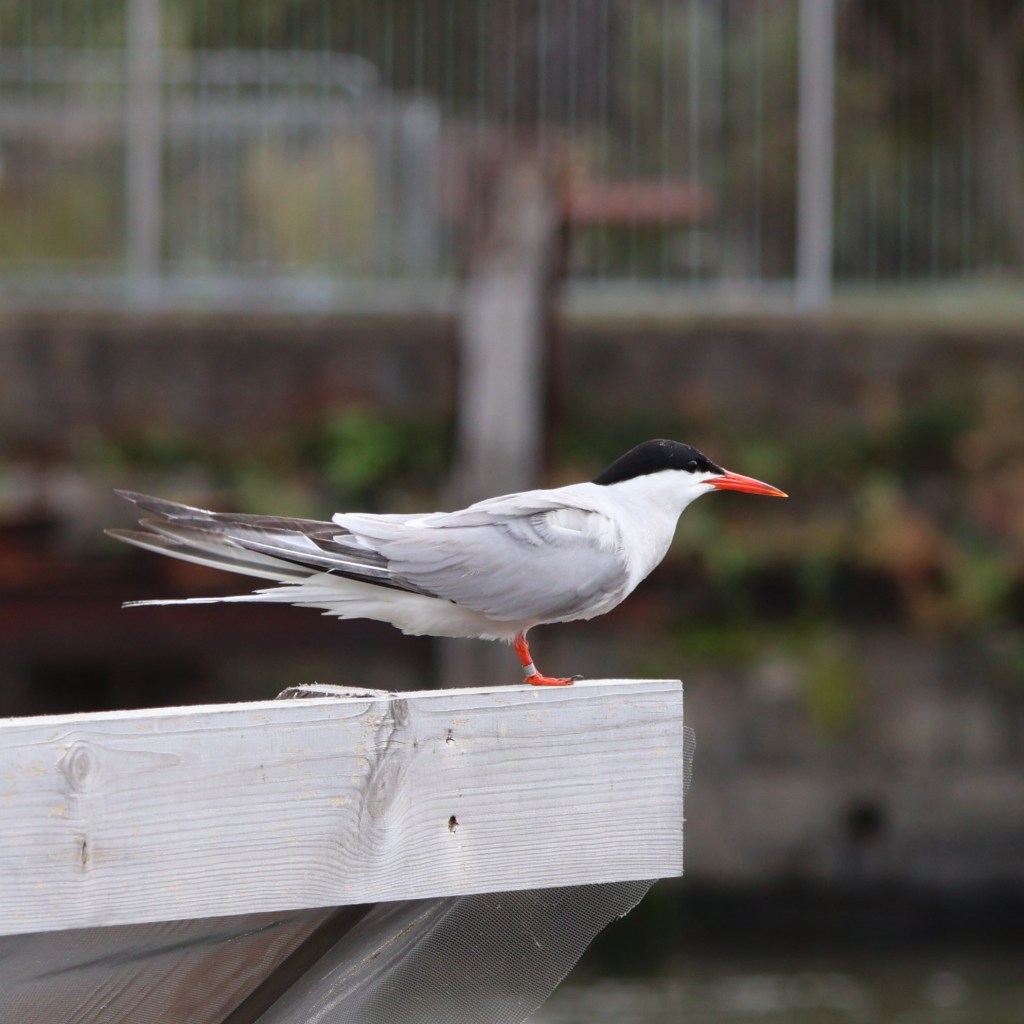
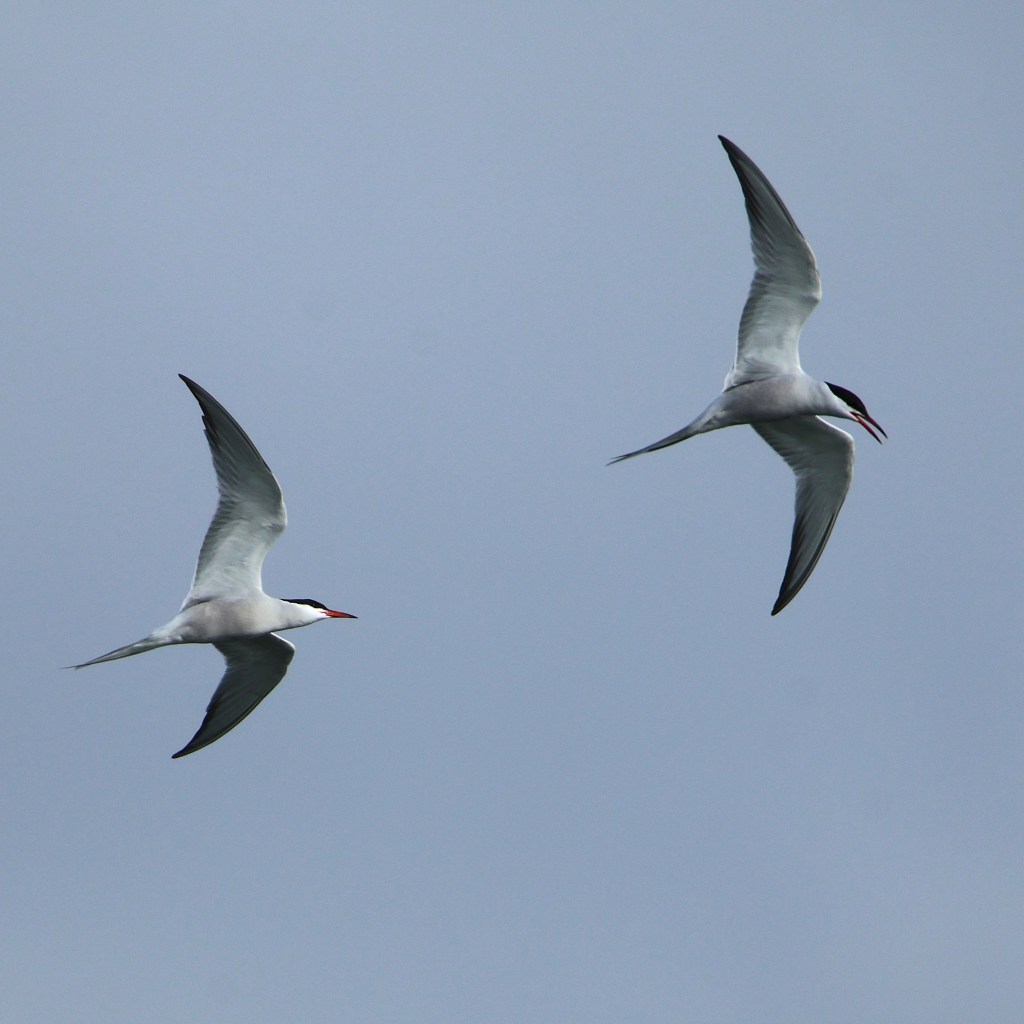
Seeing them in the sky with those long ghostly tails streaming out behind them, I understand how some people believe that dead sailors are reincarnated as gulls. Their overall shape reminds me of stealth bombers, very sleek and aerodynamic, and they love to show it. They’d twist and nip around each other, sometimes pausing to briefly hover over a spot where they think there might be prey before spiking into a dive.
While we were out looking for them we found both common and arctic terns. It’s difficult to tell these cousins apart, especially when they’re zooming past in flight. Commons have a black tipped beak, shorter tails (compared to their wing feathers), and legs situated roughly in the middle of their body. But the easiest way I always pick them apart is by looking at the beak; arctic terns look like they’re wearing bright red lipstick, compared to their common cousins’ orange and black. If you’re a more visual learner, here’s a guide to telling them apart by Birdwatch Ireland.


We spotted them in Dublin Port, where a floating platform serves as their breeding grounds. Common terns breed in colonies of up to 2,000 pairs, though occasionally there’s been colonies that exceeded 20,000. We’ve never gotten crazy numbers like that in Ireland as far as I’m aware, and certainly not in the port. Here, over 500 common and arctic terns nest on the man-made pontoons, rearing their chicks to a background of passing freighters and ferries. The 2024 BirdWatch Ireland report details a largely successful season, with >1 chick fledged per pair of terns on average, which is above the level needed for the population to remain stable or grow. This was a sigh of relief after an avian flu outbreak in 2023 decimated seabird colonies. The number of common tern pairs who returned to breed at Dublin Port declined by 50%, the lowest amount in 19 years. We’ll have to wait and see what 2025’s report brings us, but since there was no avian flu detected at any stage of the season, I’m hoping their numbers will bounce back.
A large part of the terns’ breeding success here comes from the work done by the Dublin Bay Birds Project team. They handle counting and ringing the birds, among other things, and spend time watching over the colony. Because of them, we’ve learned a lot of fun tidbits about terns. Like, did you know these birds don’t build soft nests for their chicks? The eggs are laid on a mound of shale and gravel called a “scrape”, and they like to decorate these scrapes with shells and crab carcasses! Talk about a rough start. But at least they don’t have to worry about being eaten by rats or otters before they can even poke their heads out of their eggshells, thanks to the anti-predator barriers that the team has installed on the pontoons. There is unfortunately still the aerial threat of birds of prey, like the peregrine falcon, or more opportunistic feeders, like the hooded crow. But the terns are pretty formidable and have been seen fighting these birds off.
We also know what birds come back year after year thanks to their funky little leg bracelets. There’s a common tern whose had a 16 year streak of returning to Dublin Port to breed, and another who returned in 2024 that was ringed 20 years ago. (The average lifespan of a tern is 12 years, but the oldest recorded in Europe was 33!)
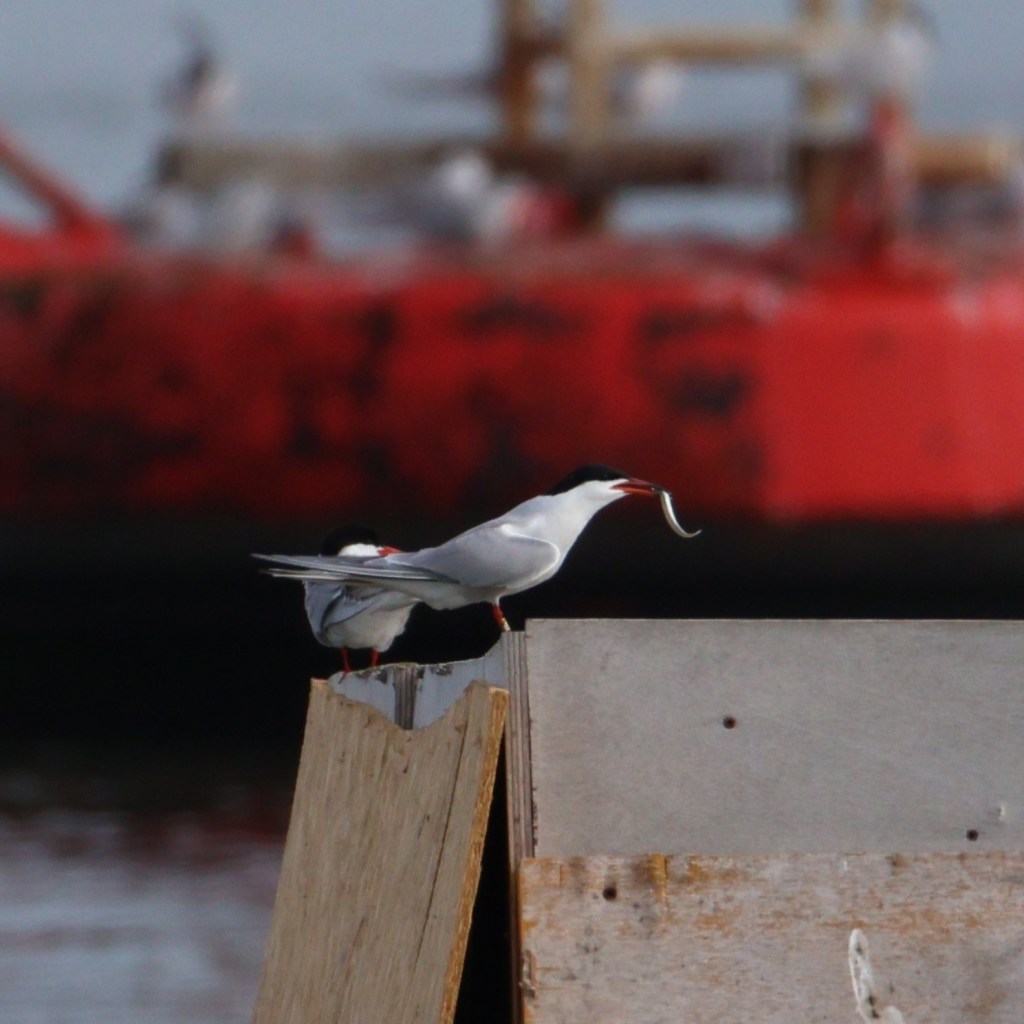

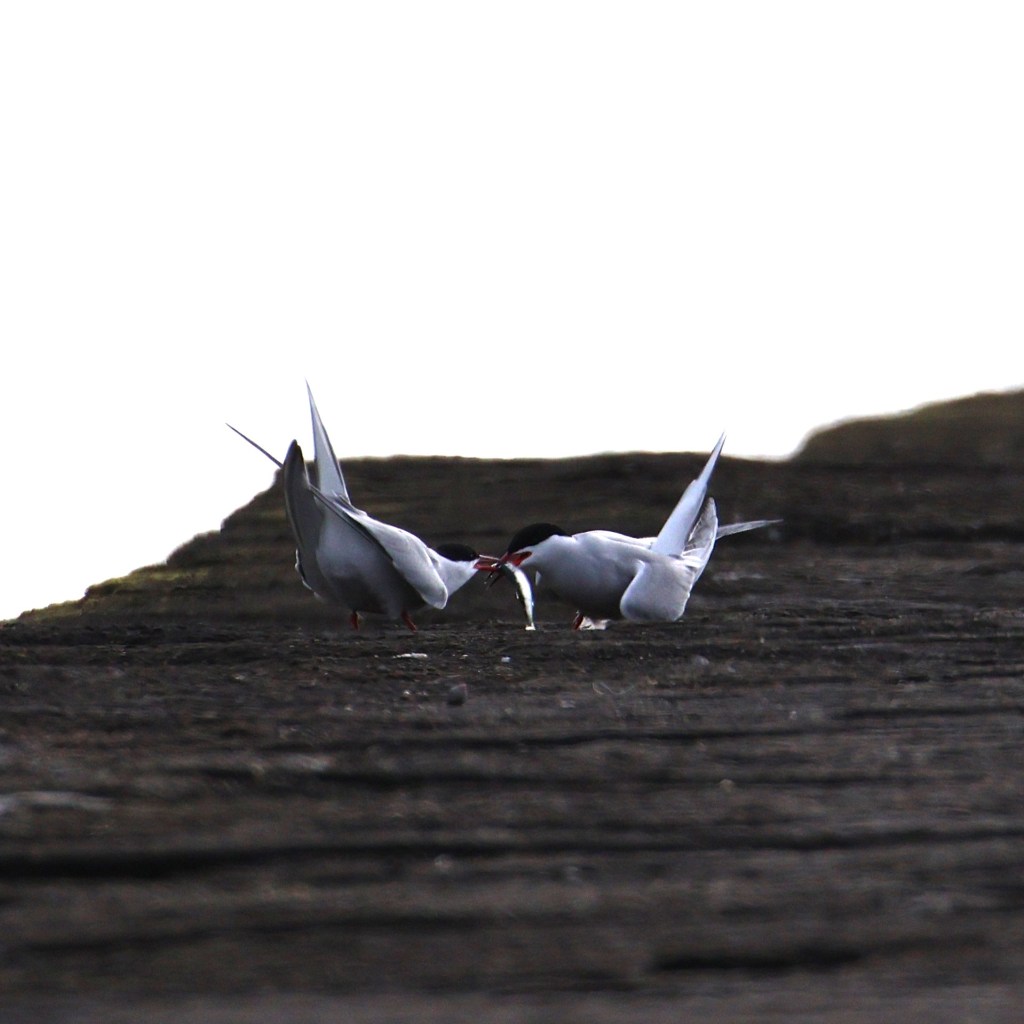
One interesting bit of behaviour that terns exhibit is leaving piles of uneaten fish near their nest. They prefer to feed their babies only the finest, most calorific diet of sandeels and sprat. If these fish aren’t available, the parents will resort to catching lower quality fish: latfish, pipefish, or shrimp. The chicks can’t grow as quickly on these fish, and in some cases, may not be able to eat them at all—hence the discard pile. I hear that as these piles grow, so too does the smell, until it’s nauseatingly stinky. And while we’re on the topic of diet, let me tell you how these birds drink water. Terns will normally drink while in flight, preferring a gulp of seawater to freshwater if both are available. They’ll absorb the water and secrete the salt in a concentrated solution from specialised nasal glands, like runny salty snot. I hope they aim and fire it at people; these birds remember faces and will attack someone they recognise and hate, much like corvids are known to do.
And finally, my favourite thing about these birds is the dread. Sometimes during the early part of the breeding season, most or all of the terns in a colony will without warning go flying silently, low and fast, out over the sea. Eventually they return and act as if nothing happened. We don’t know why they do this, it’s a behaviour that’s been observed even if there are no predators around, so it’s a mystery phenomenon that’s been dubbed a “dread”. I’d like to think there’s something they see or feel out there on the open waves, some primal thing not meant for us land creatures.

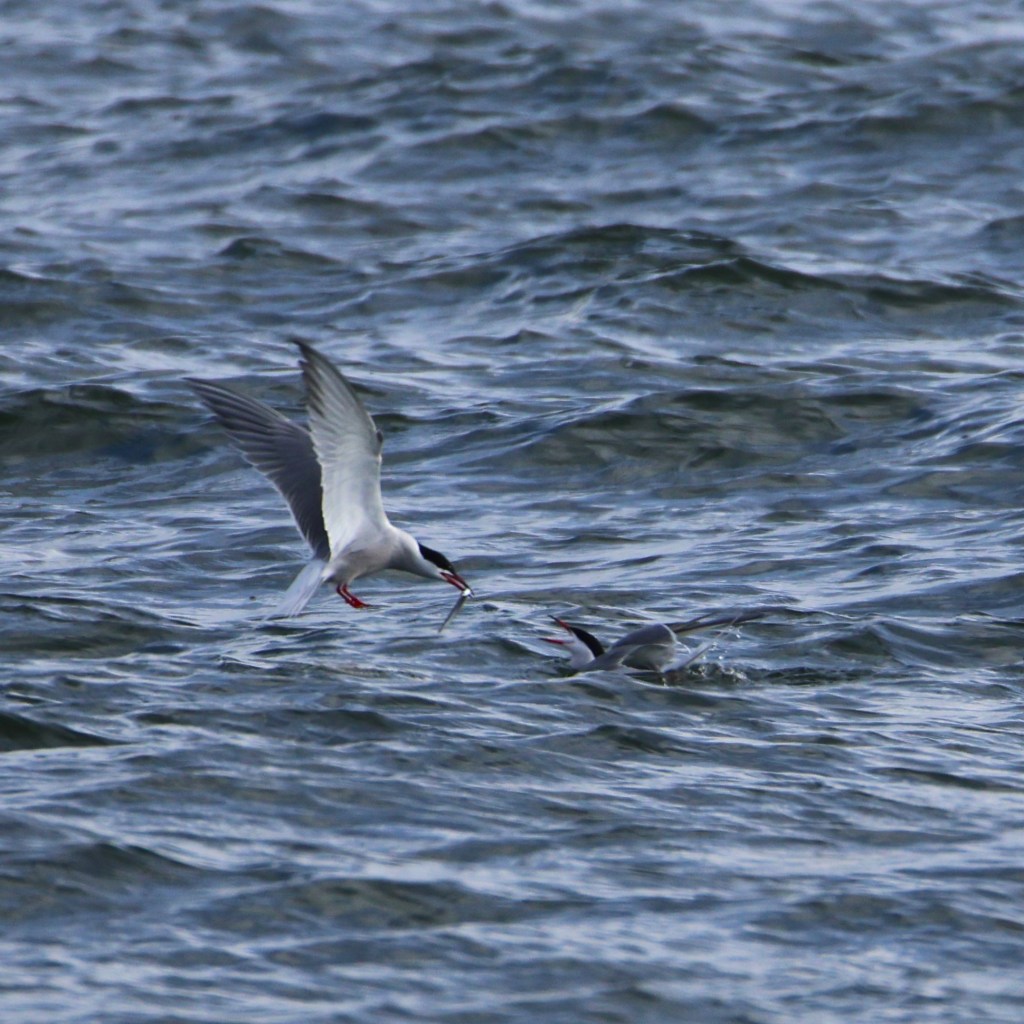
These silvery, high-flying, low-diving beauties are currently amber listed, most likely due to a loss of food and habitat. That’s why the work being done by people like the Dublin Bay Birds Project team is so valuable, it gives us a chance to help in what little ways we can. If you’d like to appreciate their work and see the terns for yourself, get out there before they leave at the end of summer. I’m sure the sea spray will be a welcome reprieve from the July heat.
 The Irish Bird Blog