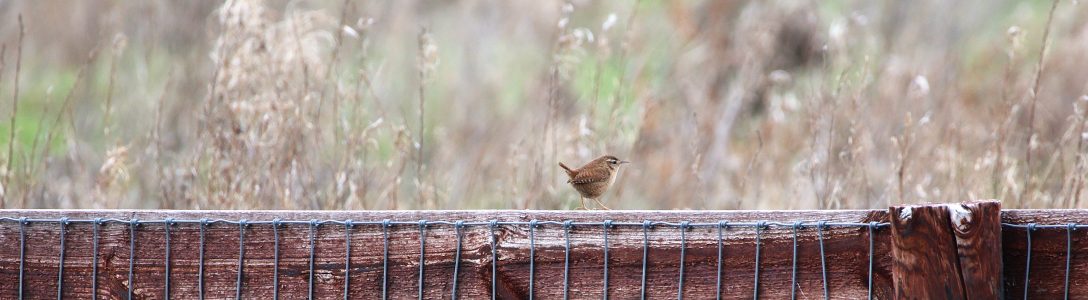
Can you feel that chill in the air? The hazy season of magic is almost upon us; the veils between worlds are beginning to thin. All manner of spirits are drifting onto on our plane, and today we’re going to be talking about one who takes the form of a bird. Shy and elusive, they hail from the deepest forest and darkest woods; where the echoing of screeching cries is enough to drive you mad. This month’s bird is the (Eurasian) Jay (Garrulus glandarius (hibernicus)), known as Scréachóg choille as Gaeilge.

The canopy of leaves overhead provides a little relief from the rain, even if you do suffer the occasional large drop of water on your head. The trees are in their fiery stage on the long road to winter bareness; mellow yellows, raucous reds, and even the occasional fleck of brown. Their colours are subdued against the grey sky and the misty rain that coats everything in a thin wet blanket. Suddenly, a hoarse, saw-blade cry cuts through the hazy morning. Glancing up, you see the silhouette of a bird in flight: jackdaw sized, but whose front-half looks like a wood pigeon and back-half looks like a magpie. They perch in the large gnarled oak to your right. A body the colour of a perfect cup of tea. (Which you badly wish you’d brought in a flask.) Black and white wings with a flash of electric blue on the side. They turn to face you, fixing you with an icy glare from their pale blue eyes, an acorn grasped in their beak. Then just as quickly as they appeared, they take off again, soaring into the darkness of the trees beyond.
The secretive jay captivated me the first time I saw it in our field guide. Their rosy-brown plumage, that bright splash of blue on the wing, and their big round intelligent eyes, they didn’t seem like a bird that could be found in Ireland. The first time I saw one in the flesh was a stroke of pure luck. We were walking through a park and heard a noise that almost sounded mechanical, but had an animalistic feel. Searching for the source led us to a very scruffy jay perched at the top of a tree. Whether they were crying for help or warning us away, I’m not sure. But I do know that seeing one for real solidified that they could be found, we just had to figure out how. After learning about their tendency to be around oak trees, we trekked all around Phoenix Park, our closest and most reliable source of large wooded areas at the time. The first time we encountered one there, we didn’t have a camera. And of course, this tricksy corvid decided to perch in the most perfect shaft of golden light only a few feet away from us. These supernatural beings do love to taunt.
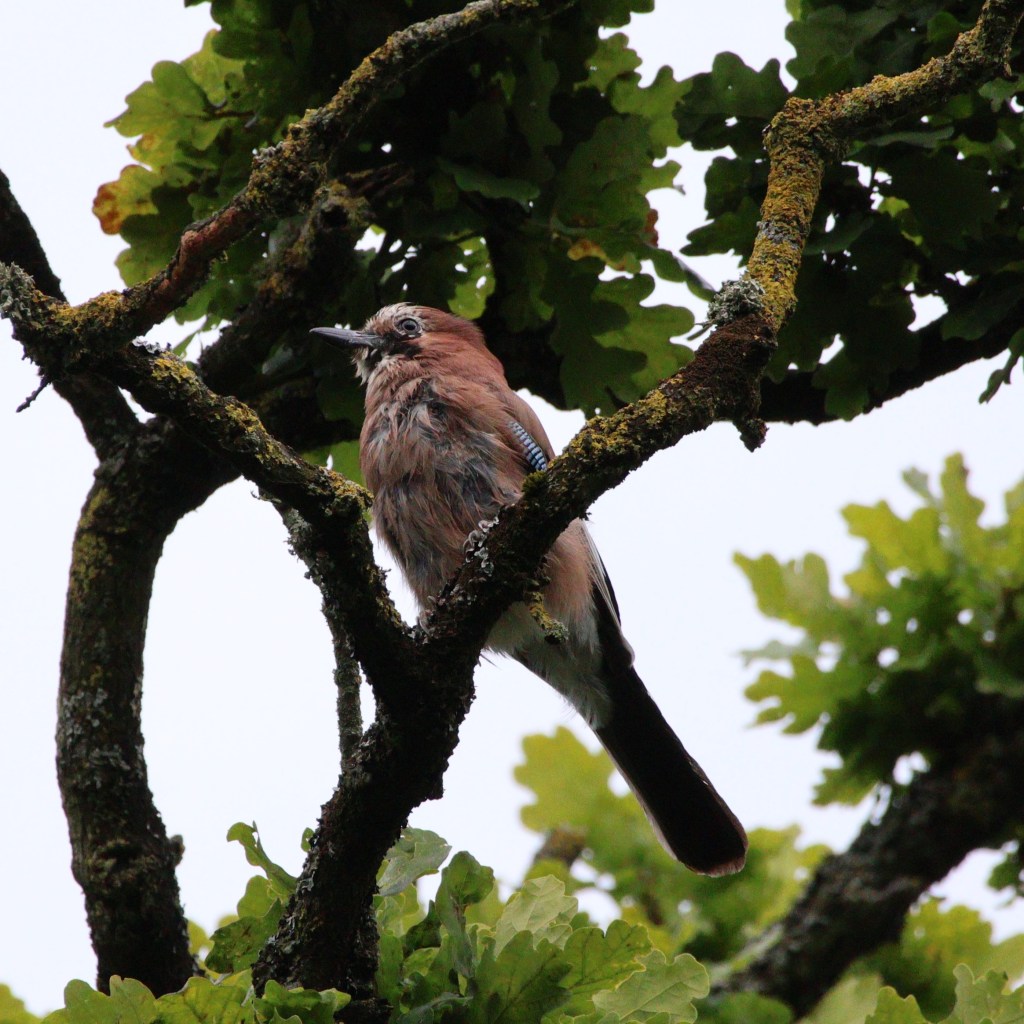
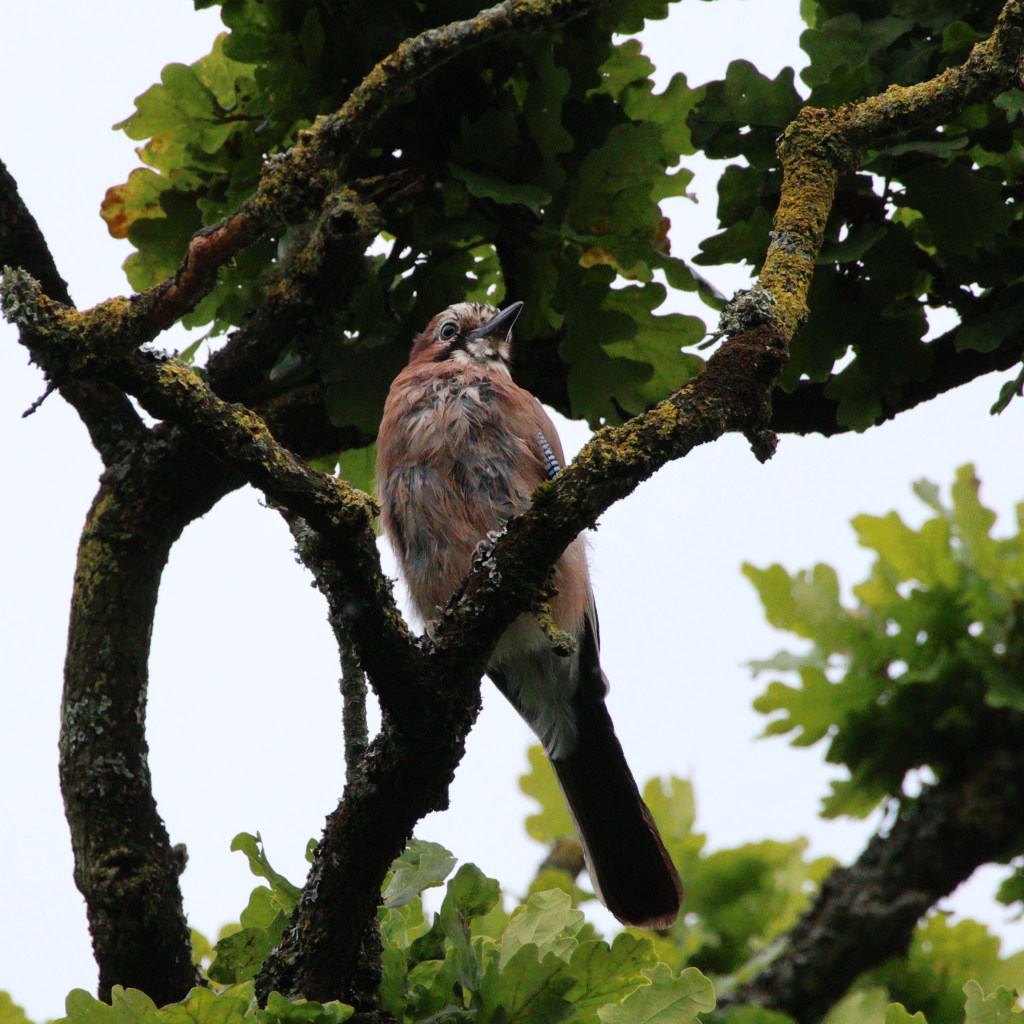

But at least this gave us our first spot to search. We returned again and again, hoping to recreate our accidental luck. Our trips started earlier and earlier, hoping to avoid the dogwalkers, runners, and general early parkgoers who would spook the jays into flying back to whatever dimension they came from. We narrowed down the area of our search each time, until we were only visiting the area behind the Phoenix Park Visitor Centre. (We have also seen them in the forested area along the southwestern part of the park, near Furry Glen.) There, we’ve spent many hours chasing jays back and forth as they dart between oak trees and stir up leaf litter in the hopes of finding a fallen acorn. In true cryptid style, they’re incredibly hard to photograph, always coming out blurry or fuzzy. So this article has been years in the making (and I really hope you enjoy it).
This changeling child of the corvid family has one obvious tell: their beaks are much blunter than the rest of their family members’. It makes it easier for them to hold on to their favourite food: acorns. These birds go nuts for tree nuts, rivalling squirrels in their ability to hoard a massive stash. And like squirrels, they do this so that they have something to eat when food is scarce. That is, when they remember where they’ve buried them. For you see, jays cache so many acorns, that each bird has the ability to spread more than a thousand acorns each year — far too many to eat. Some of these forgotten nuts eventually go on to become tall oaks in their own right, which in turn provide more food for the jays. It is believed these birds were the main propagators of oak trees before humans came along and invented forestry, and that they may be the reason why 80% of Ireland was forested a thousand years ago. So while there are no myths or legends tied specifically to the jay, I still see them as benevolent forest spirits, bringing new trees to life and pushing the borders of the woods, one nut at a time.
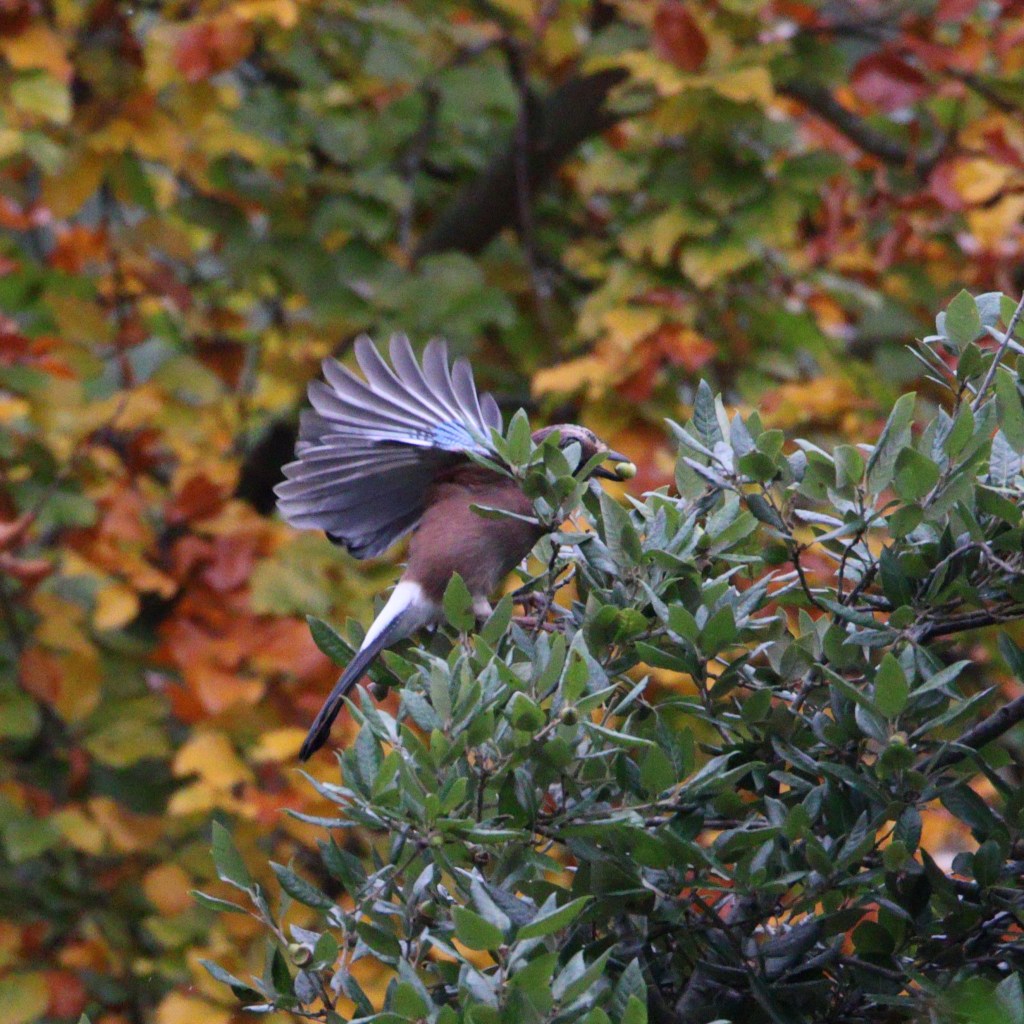
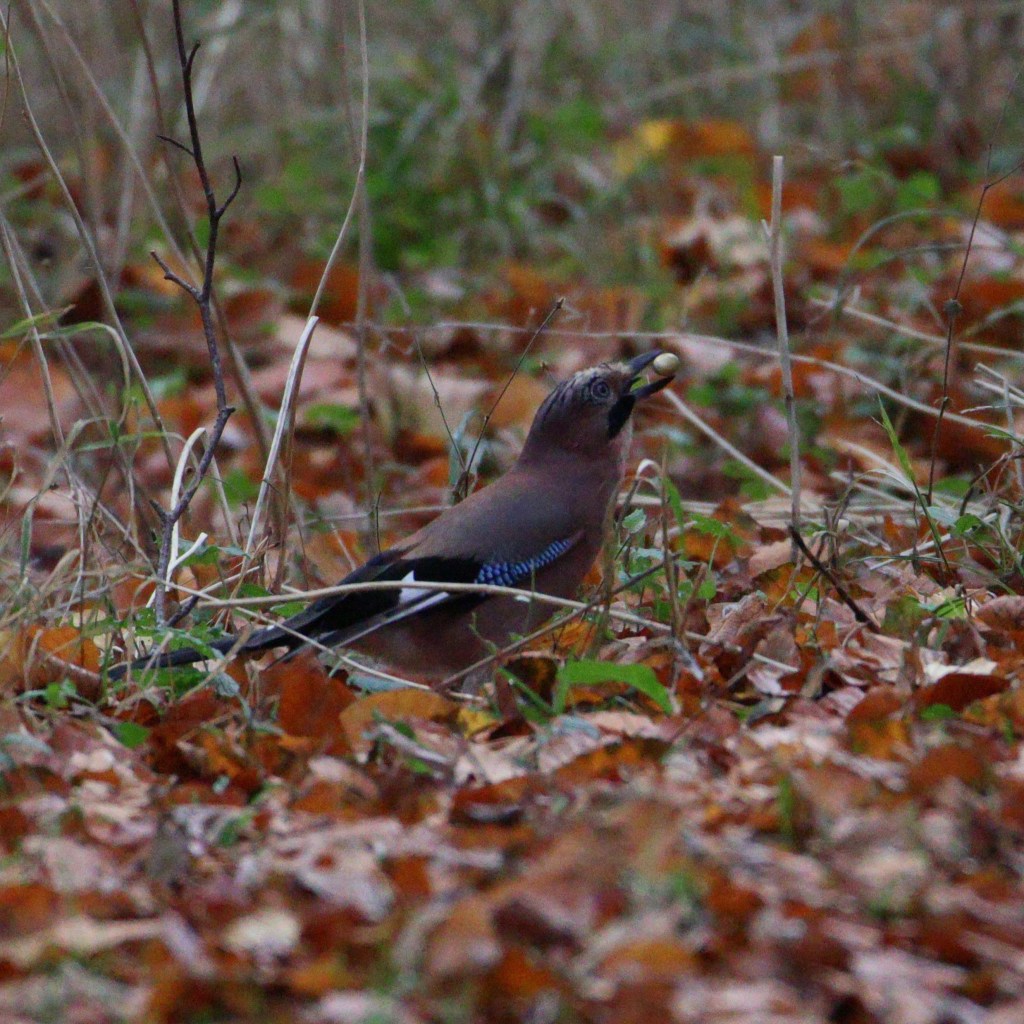

Their love of acorns is recorded as part of their Latin name; glandarias means “of or pertaining to acorns”. The other part of their name, garrulus means chattering. Having heard jays, I think our Irish name is more apt: “forest screecher”. The shrill screech of this bird high up in the trees is sure to make people stop and look around in confusion for the source of the scream. But these forest guardians have a trick up their sleeve to make sure they remain unseen: they are experts at mimicry. In Ireland they regularly copy the mewing call of the buzzard. But they’ve also been known to mimic cat meows or dog barks to confuse these animals and warn other birds of predators nearby. So not only do jays speak for the trees and guard the forest, they protect their fellow birds as well.
Readers from the UK or elsewhere in Europe may not be so impressed by these birds but our jays aren’t like other jays. They are a specific Irish subspecies found nowhere else in the world, one of only four birds who get that honour. Compared to their counterparts abroad, our jays are seemingly fae-touched and so increasingly shy. But that doesn’t really fit the stereotypes about Irish people being outgoing and friendly, so why are our jays so elusive? It may be due to the fact that their main habitat — broadleaf woodland, their beloved forests — have severely dwindled. Ireland is ranked 25/27th i.e. third LAST in the EU for forested areas as of 2021. Of the forests we have, a measly 1% is actually made up of native trees, with the majority being plantations of non-native (or dare I say…invasive) sitka spruce and lodgepole pine, which exist solely for the timber industry. I’m not sure how many of you remember Junior Cert geography, but try to cast your mind back to the soil chapter. Broadleaved deciduous trees drop their leaves, which become delicious humus that is vital for good soil health. Conifers, like the sitka and lodgepole, also drop their needles but they take far longer and are also acidic, potentially leading to podzol soils which are no good for growing things in. But we still have the jays, they still cache their acorns, why are we at cringe 25th place for forestry in the EU?
The answer, as always, is agriculture. The majority of Ireland’s land is earmarked for agriculture, and when I say majority, I mean over half. But agriculture is important, we need food to live, right? Bestie it’s almost all animal agriculture. You know, the thing that requires flat plains of nothing but grass where none but the livestock can thrive? And we don’t need just animal products, we need balanced diets that also include fruit and veggies and cereals. Almost 80% of Irish adults don’t get enough fibre, the people yearn for carbohydrates. Less than 10% of Irish land is used to grow fruits, vegetables and cereals we eat directly, so should something happen where we can no longer import the things we lack, we’re all going to have a very unpleasant and constipated time.
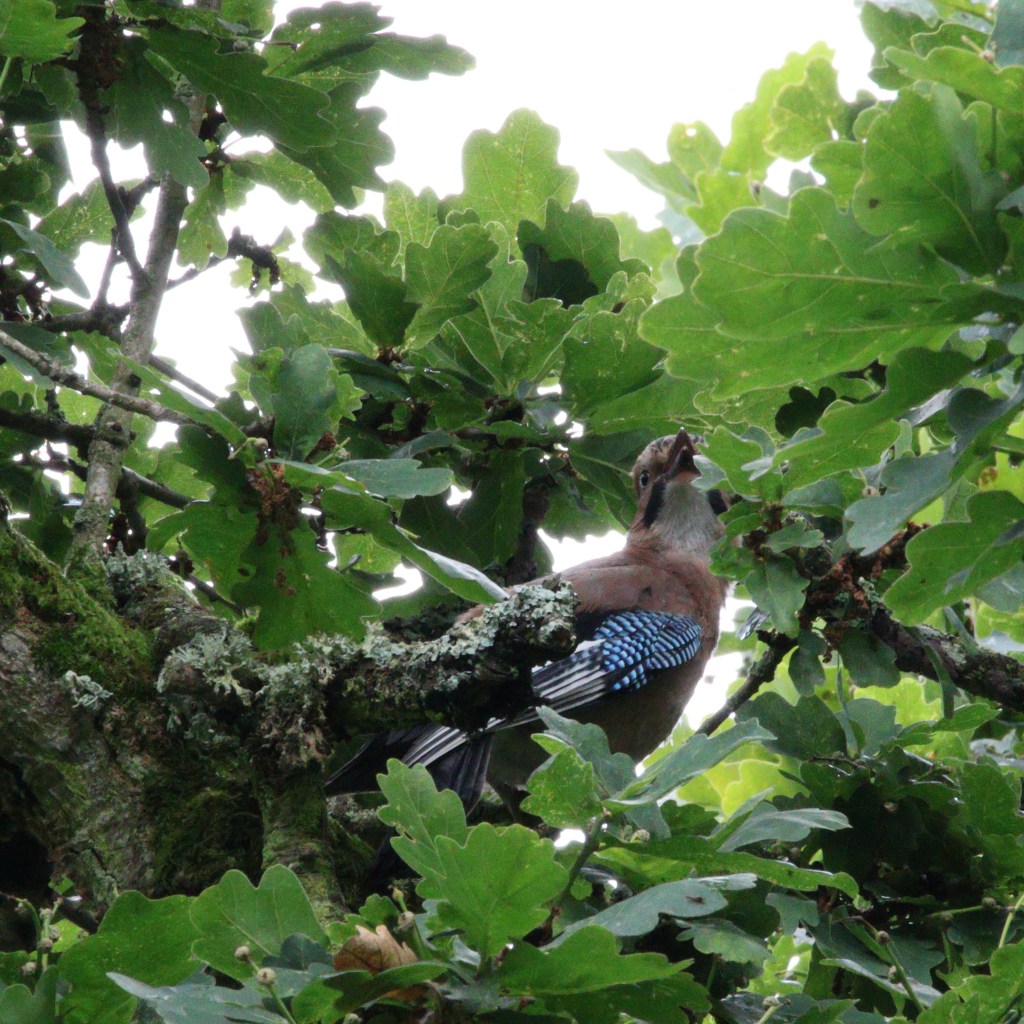

Ok. Maybe that last paragraph was a bit too dark, a bit too spine-chilling. Let’s return to the jays, and take a look at them in brighter weather. When the heaviness of winter is pushed up by spring shoots, you can find the jays flocking together for “crow marriages”. 30 or so unpaired birds gather together for a chance to pair up and find their soulmate. Courtship involves a lot of posturing with wings and an outstretched tail to out-stretch your rival’s tail. But the bold displays aren’t enough, you also have to be considerate and take your partner’s preferences into account, like feeding her only flat acorns. It’s like a speed dating event, but for birds. Isn’t that nice?
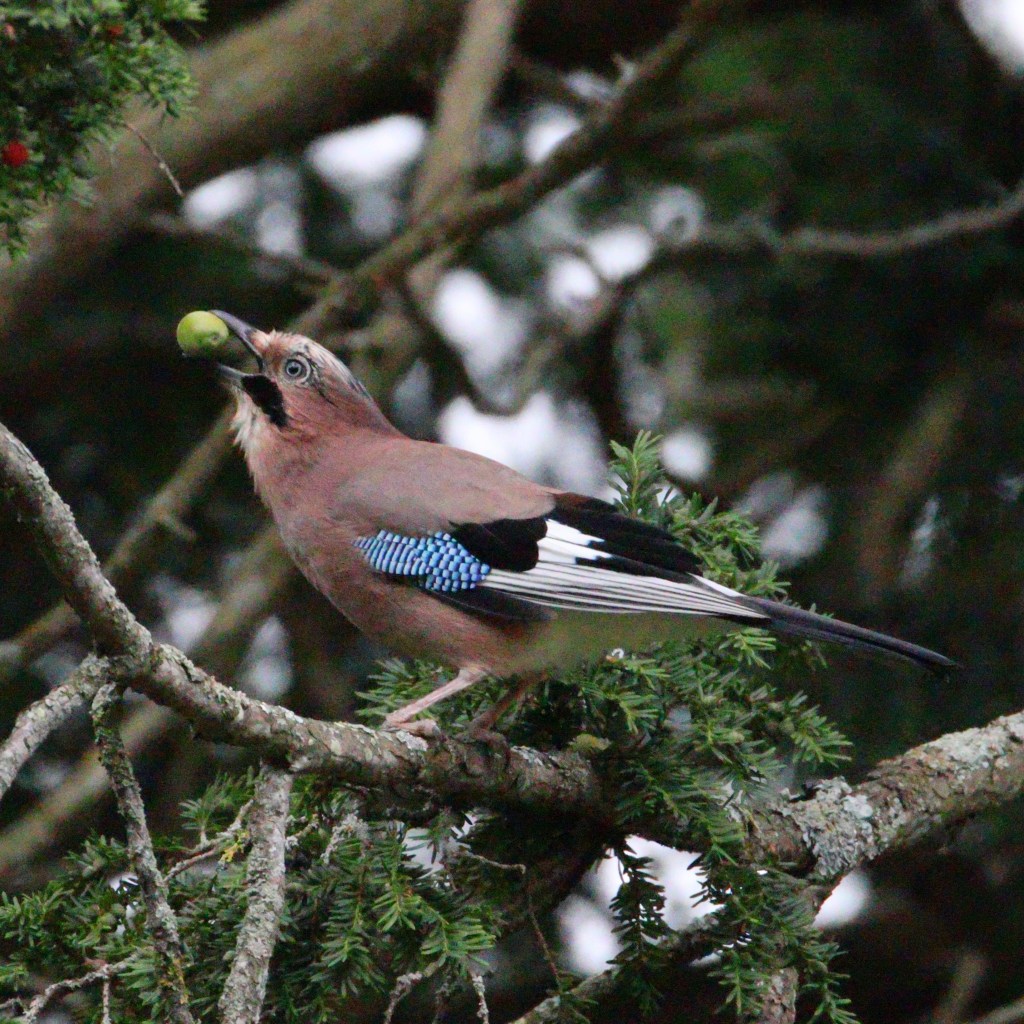
Despite their air of mystery and their losing battle for the woodlands of Ireland, jays have a green conservation status and can reliably be found by those with goodness in their hearts and a handful of acorns. Tread carefully this season, you wouldn’t want to crush a cache or snap a sapling, lest you attract the ire of the spirit of the forest.
 The Irish Bird Blog