It may be a new year but we’re the same Bird Blog; bringing you posts about the birds you know and the ones you’re yet to meet. And what better way to kick off than with a fresh faced settler on our shores? Or should I say re-settler, since this once prolific bird vanished along with our woodlands long ago. Could 2026 be their comeback year? This month’s bird is the Great Spotted Woodpecker (Dendrocopos major), known as Mórchnagaire breac as Gaeilge.
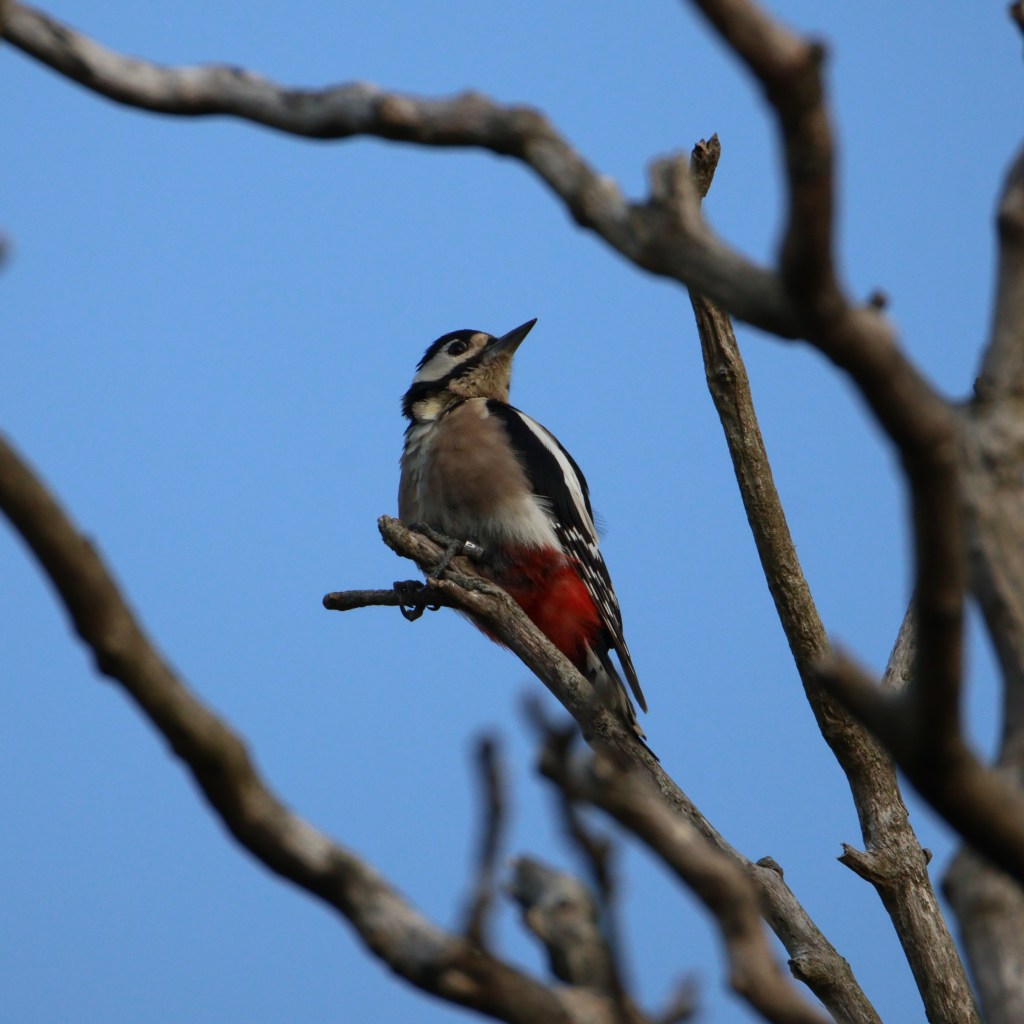
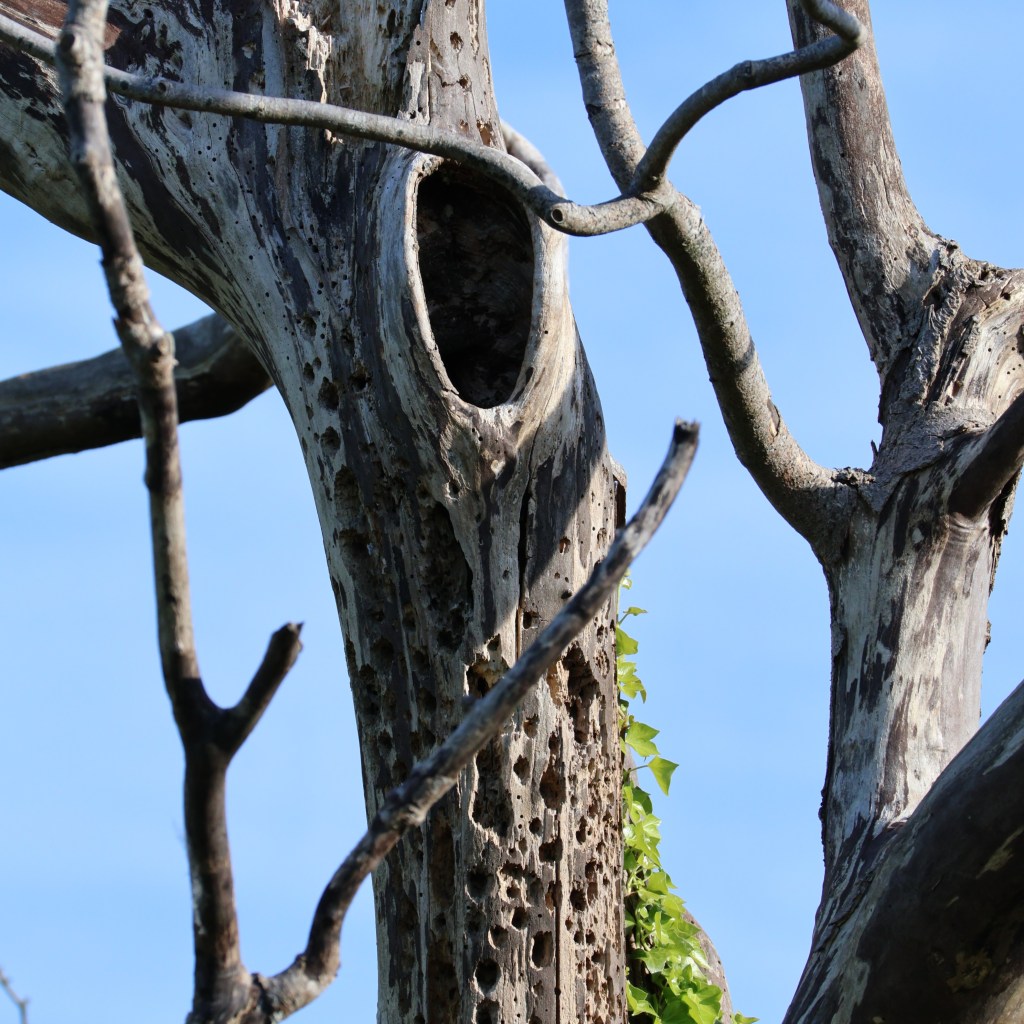
Standing deadwood looms like a skeletal hand between the green, full-leaved trees that line the path. Its bark has been mummified by the elements — bleached by the sun and stripped bare by the wind and rain. Dark spots pockmark its surface, ones that could easily be mistaken for some kind of rot. In reality, these are the work of an unseen force. One that you almost miss seeing yourself, but a flash of red catches your eye. Gliding towards a telephone pole is a glossy black and white bird, no bigger than a thrush. Squinting against the sun, you can’t tell if their wings are patterned with stripes or spots. They pose to help you figure it out, taking a break before they fly off again. A moment later, there’s the distant thrum of rapid hammering.
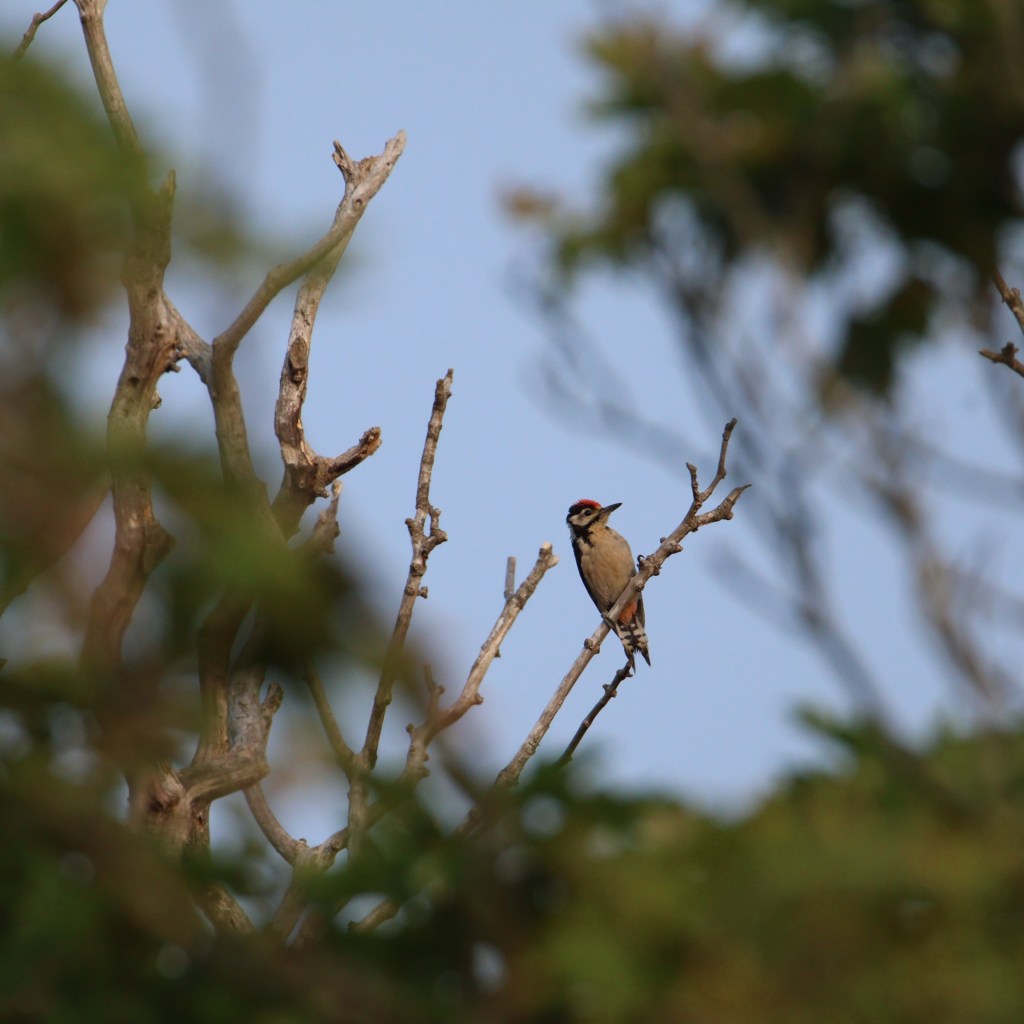
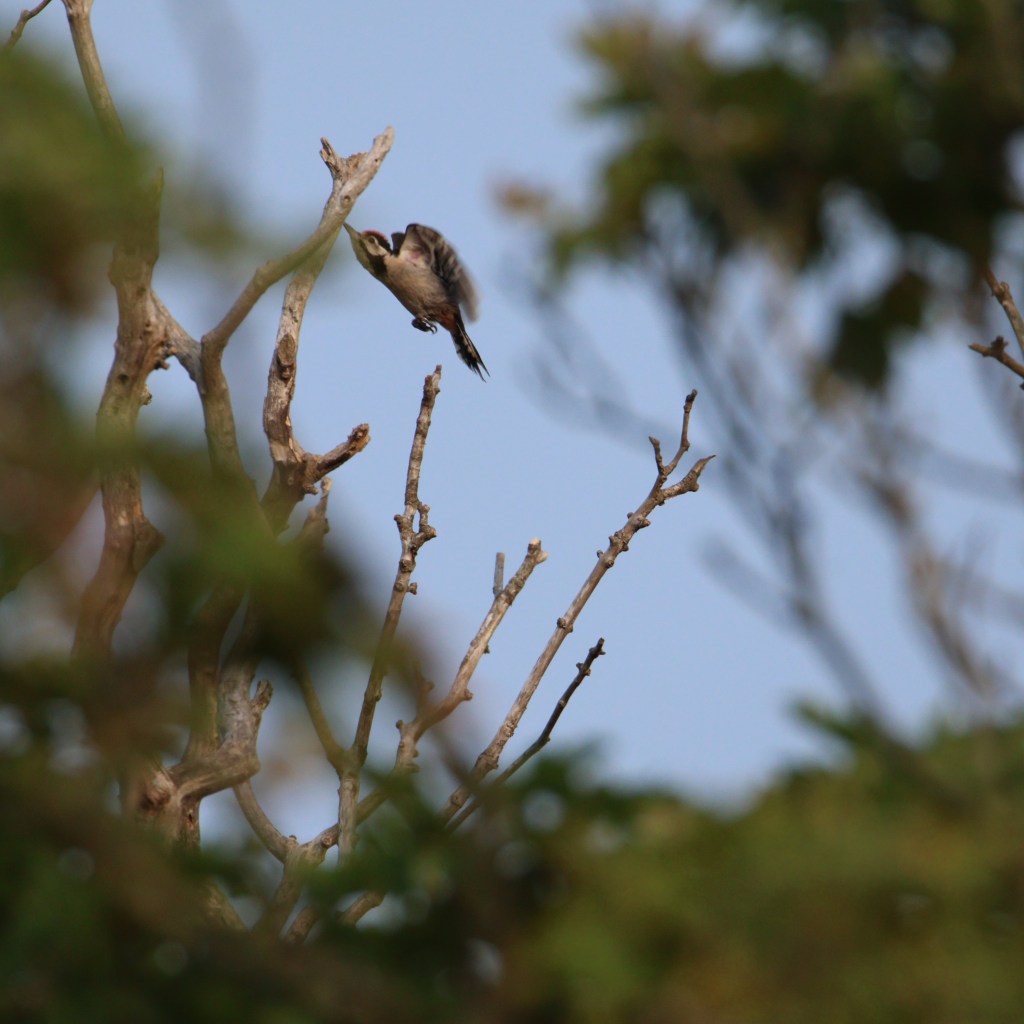
Woodpeckers. One of the most well-known birds in concept but not exposure. Our woodpecker’s Irish name translates to “large speckled/dappled knocker” which pretty summarily hits the nail on the head. (Feel free to use that name as an insult for someone you don’t like.) Their Latin name combines the Greek word dendron for “tree” with kopos which means “striking”; also an apt name. The major part of this name describes them being the great woodpecker version, in contrast to the okayish lesser spotted woodpecker. Their measly cousin hasn’t yet made the decision to cross over to Ireland, leaving the great spotted woodpecker to enjoy its spot at the top of the Irish woodpecker leaderboard.
Woodpeckers are, of course, famous for their wood pecking: an action that’s actually called “drumming” and involves them repeatedly hammering their beak into wood. The great spotted woodpecker is the speed champion of drumming, holding the record for fastest drummer in Eurasia, with a breakneck frequency of 10 to 16 hits a second! They can sustain this pace for up to two seconds, resulting in a maximum of 32 hits. In comparison, a human man named Kevin Shelley holds the world record for breaking 32 pine wood boards with his head in 30 seconds. (He also holds the world record for breaking the most wooden toilet seats with his head (46 in one minute).)
Drumming serves two purposes: to claim and defend territory, and to find food. When a woodpecker drums, they’re probing for larvae and beetles hiding beneath the surface of a dead or decaying tree. They have zygodactyl toes, meaning they have two toes facing forward and two facing backwards. They use these and their stiff tailbone to grip onto a tree and stabilise themselves so they can drum away with precision. If you watch them at it, you’ll see them leaning back on their tail-and-toes to keep them steady.
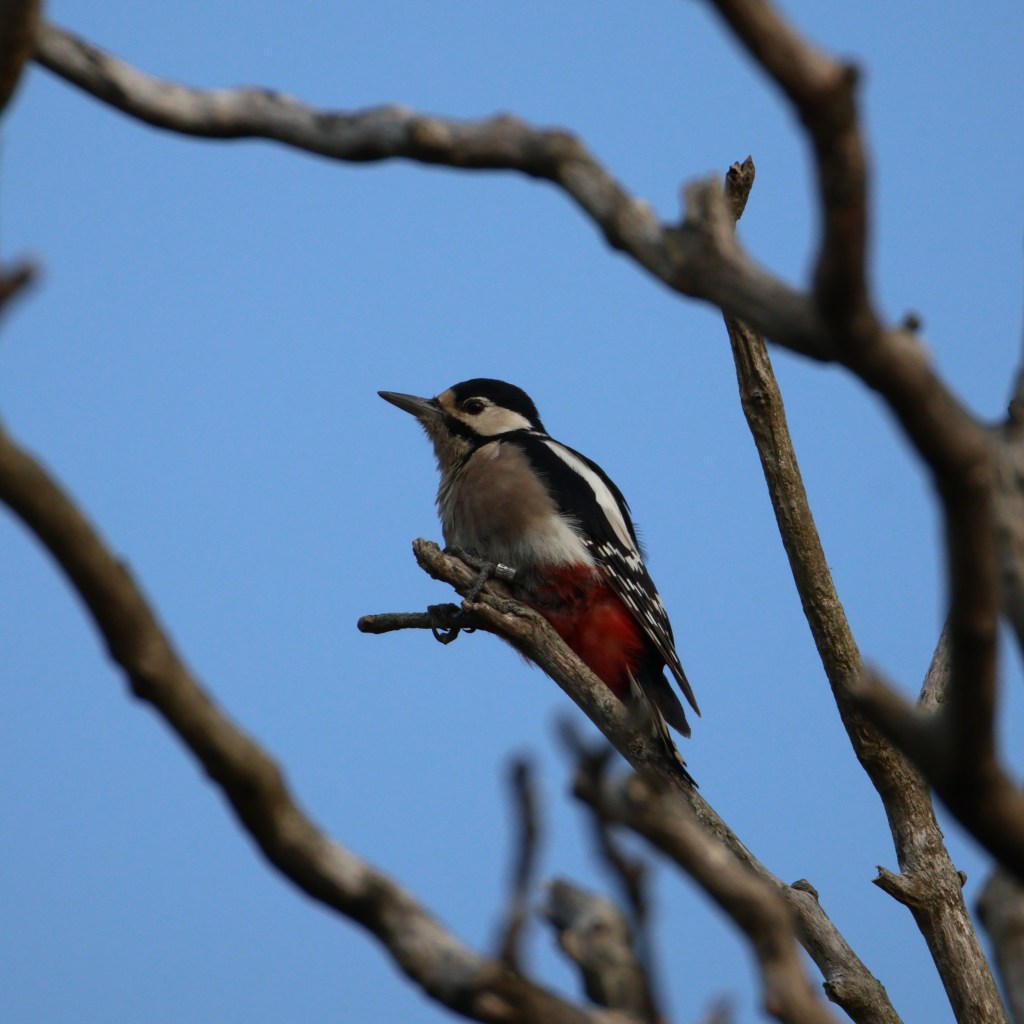
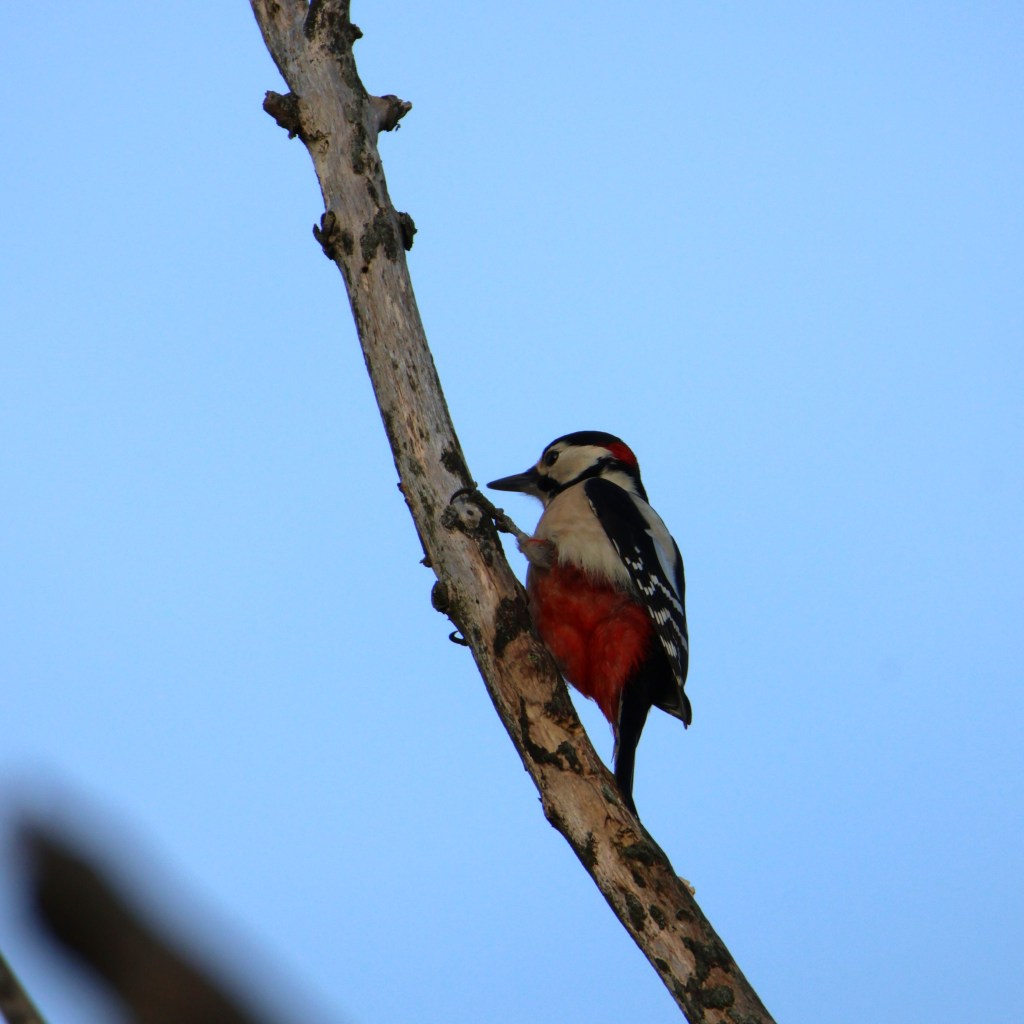

Sometimes the woodpecker gets an easy meal by simply plucking off whatever morsel is lurking on the bark’s surface or in its fissures. Other times they have to bore a hole as deep as 10 centimetres in, to slide their horribly lanky tongues in to wrap around some poor squishy baby bug. They can extend their tongues as far as 40 millimetres beyond their bill, and they’re covered in bristles and a sticky saliva that traps insects like glue. Their tongues are wound around their skulls, and are attached to their hyoid bone which has long flexible “horns” that can move forward to let some tongue out when required. I think the marketing potential for this could be great; you could make a chewing gum dispenser based on a woodpecker’s head. Or maybe one for sellotape? Numerous possibilities.
You may be thinking that all this excavation work is wasteful, but fear not. The climate conscious woodpecker is a recycling master. Not only do they use the holes they’ve carved as nests, but they also line them with the woodchips created during the drumming process; genius!
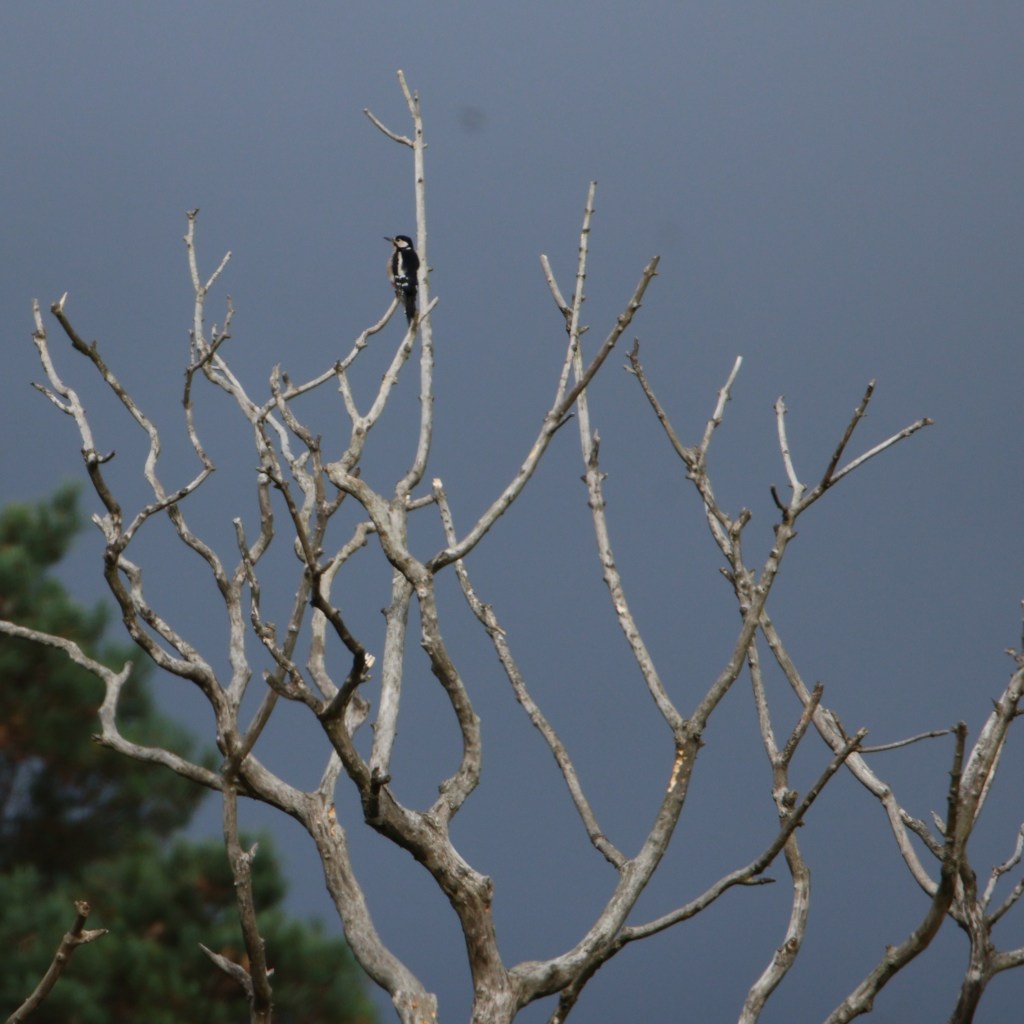
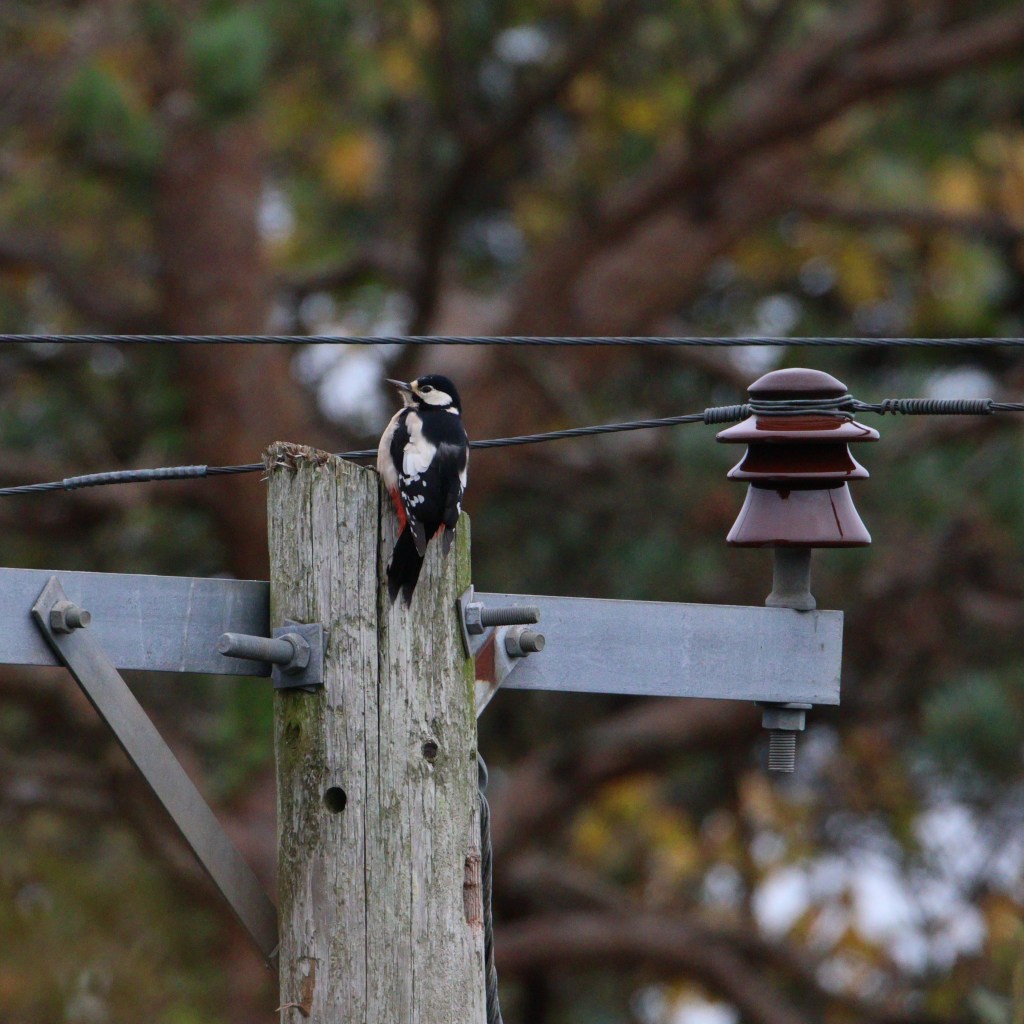
The non-canon lore of the woodpecker is that they were a resident here hundreds of years ago, and went extinct as our forests were cut down to make way for farmland. Before 1950 there were only three recorded sightings of this bird, believed to be vagrants; none between 1950 and 2005; then suddenly an influx of sightings on the east coast after that. Two separate groups of woodpeckers flew across the Irish sea and settled in the deciduous woodlands around Wicklow and Down. They’ve been found to be breeding successfully and are slowly making their way westward across the island.
This bodes well for those woodlands, as the presence of a woodpecker indicates that they’re in good health. A healthy wood has a wide range of species of various ages, and most importantly for the woodpecker, it has standing deadwood (also known as snags). Countless species of invertebrates rely on standing deadwood for food and shelter, and its presence in an area allows more light to hit the forest floor and encourage new growth. For a woodpecker to build a nest, there needs to be standing deadwood of a substantial size. These are usually older trunks that have been left undisturbed for decades. Standing deadwood is a part of the ecosystem and it’s important to let it decay naturally and eventually fall down to return its nutrients to the earth.

If one of your resolutions for the new year involves birding or being more present in nature, make sure to keep an ear out for the thrum of a woodpecker drumming, and give a hearty welcome to Ireland’s newest bird.
 The Irish Bird Blog