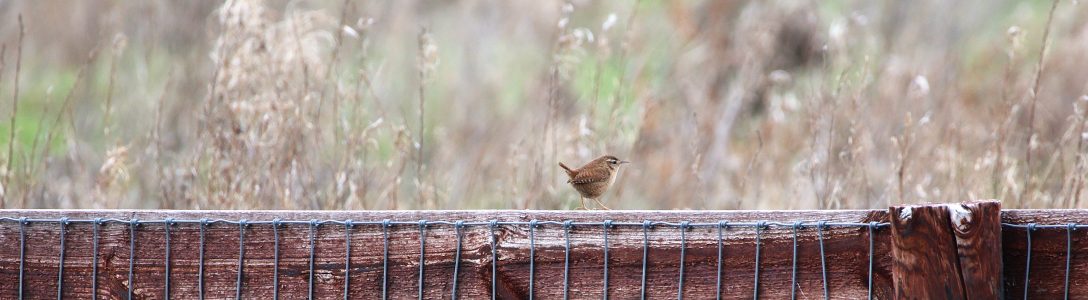
This has been one of the rainiest starts to the year in a long time. A dry morning has you thinking you’re safe but come lunch time, that fine misty spray will start tumbling in the breeze — if you’re lucky. If you’re not, the torrential downpour will last for twenty minutes, tops, before dissipating; leaving you a soggy mess that leaves puddles as you shuffle into your place of work. But Paddy’s Day is coming up and we thought, since it’s been such a time for the ducks, why not combine the two? After all, what’s more patriotic than the tricolour in the rain? This month’s bird is the Shoveler (Spatula clypeata), known as Spadalach as Gaeilge.
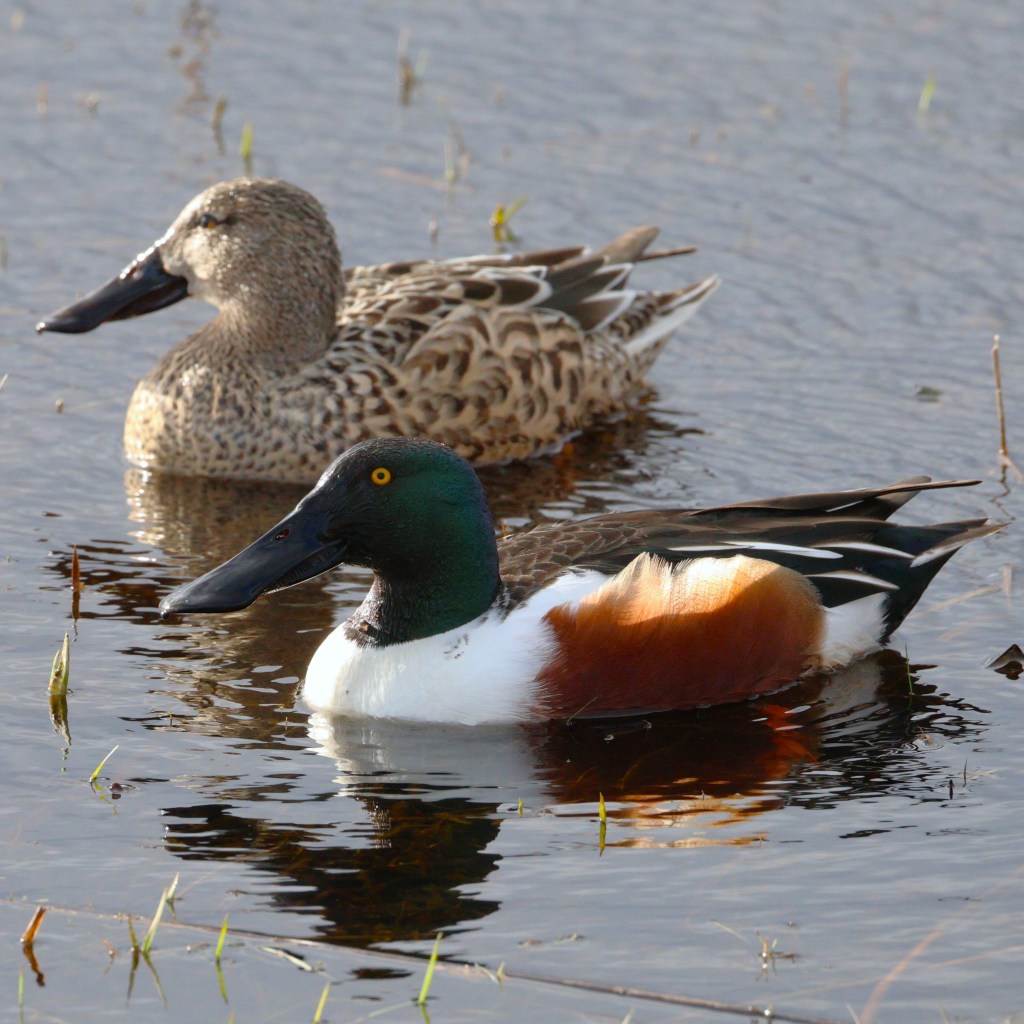
Standing on the wild shores of a vast lake, the wind that blows off the water is fresh and bracing. The barely risen sun casts a golden light on the water, highlighting the bright feathers of the hundreds and hundreds of various waterfowl. At first it appears as if they’re all mallards, but on closer inspection, you notice some have a flash of teal; some a ruddy head; and a good number have black bills as long as spades. Focusing specifically on them, you see the beaks connect to forest-green heads, which in turn are slotted atop a white body made brighter by the morning light. A russet patch on their side gleams bronze, the feathers almost as vivid as their golden eyes. As they dabble in the water, the weight of their massive bills heaves their bodies forward, nearly upending them. When they lift them out of the water, the obsidian bills glisten, and part to reveal a serrated edge.
This is our wonderful photographer Elle’s favourite duck! What’s not to love about that proud beak, unique for being so long and so dark? Their majestic green heads that carry those bills proudly, the brilliant white body bisected by a rich warm patch of cinnamon? The lapwing can get in the bin, there’s nothing more emblematic of Ireland than a bird whose body is literally the tricolour, and who thrives among the wind and rain. The shoveler’s Irish name spadalach is a nod to this, meaning “sodden” or “soggy” — you won’t catch these birds hiding from a drizzle.
While we’re over here focused on the shoveler’s adeptness at weathering a storm, others are drawn to that enigmatic bill. In the USA, these birds are sometimes called “Hollywoods” or more specifically “Hollywood Ducks”. Apparently their bill makes them look like they’re smiling for the camera. (Did this name originate before or after the proliferation of Daffy Duck?) They’re also sometimes erroneously referred to as “spoonbills”, which are an entirely different species, and “bootlips”. I’m getting flashbacks to the early 2010’s, if you know, you know.
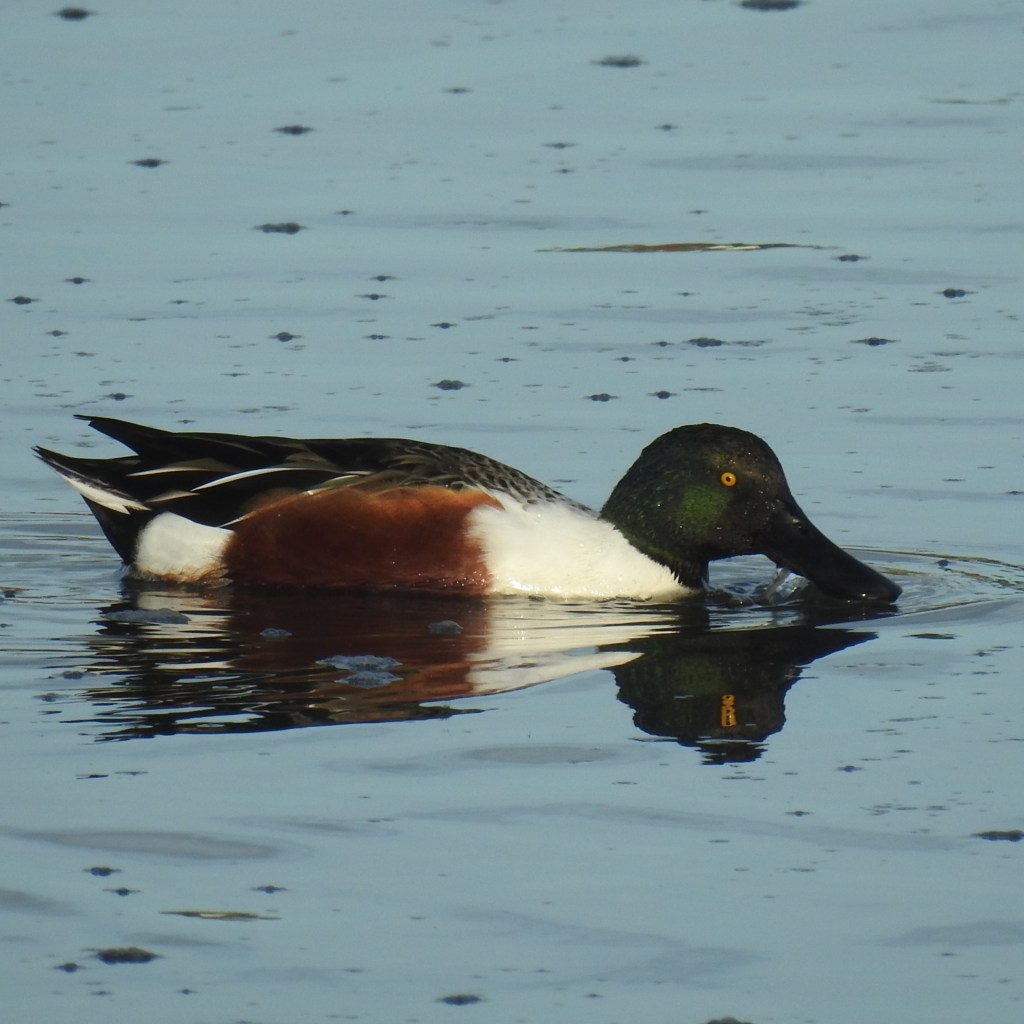
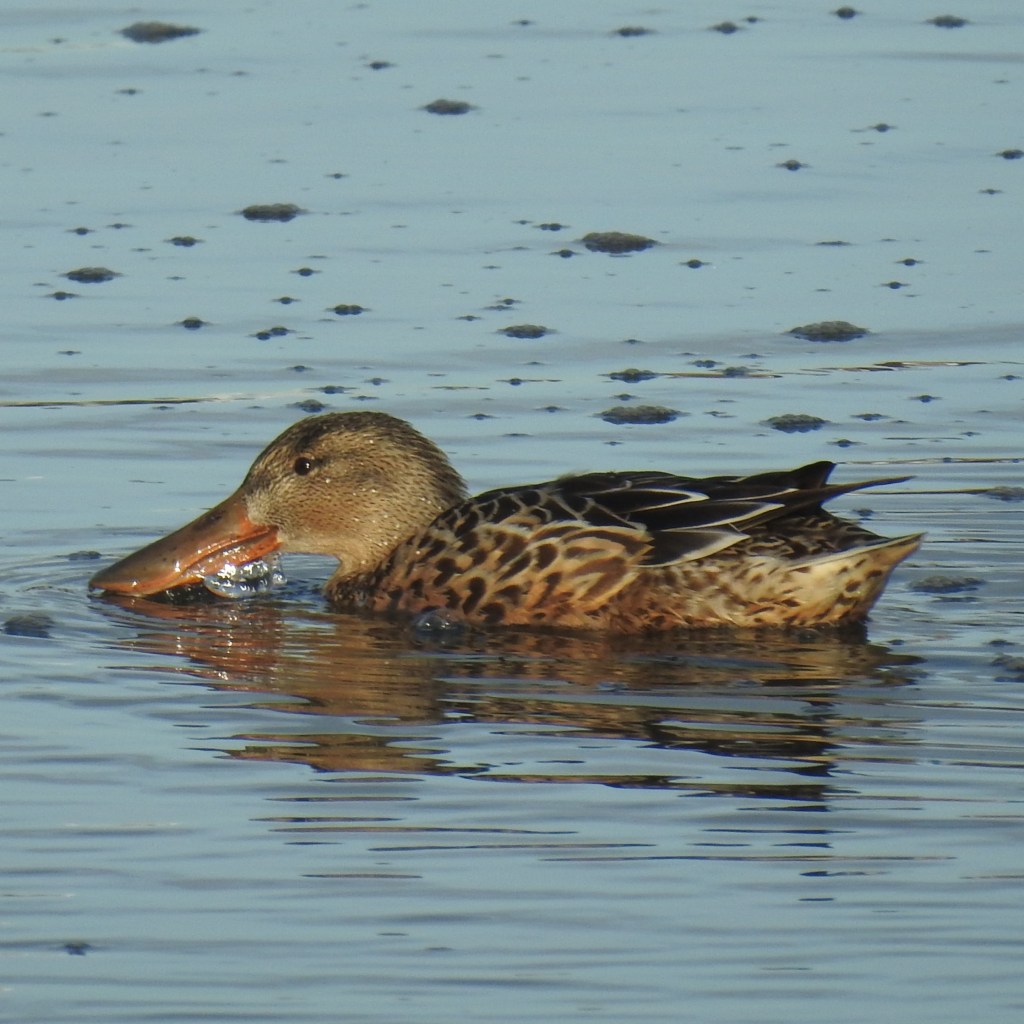
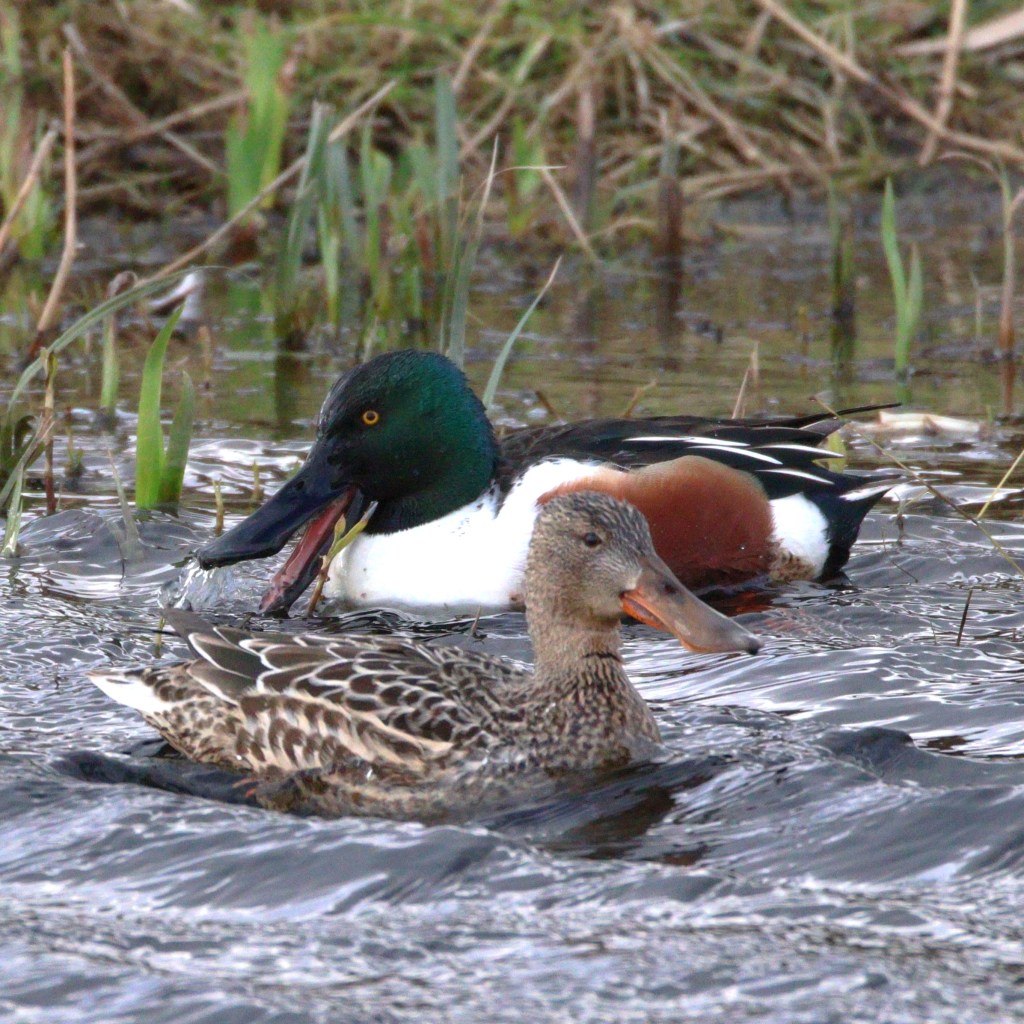
With all this raving about the shoveler’s big beautiful bill I’m sure you’re wondering what the reason is for the long face. Simple answer: longer bill make filtering for food easier. Shovelers are dabbling ducks (you may recall this from our mallard post), and the edges of their bills are lined with little, serrated, comb-like structures called lamellae (word of the day). These act like a sieve and filter zooplankton and little crustaceans out of the water and into their mouths. It’s not uncommon to see water gushing from the sides of their beak, like an artisanal fountain.
Often you’ll find them dabbling at the edges of lakes, which, anecdotally, seem to be their preferred habitat. We have a scant breeding population that you can find in summer up in Lough Neagh or around the mid-Shannon between Athlone and Lough Derg. But their numbers really pick up in winter, when we get visiting shovelers from all over the world; France, northern Europe, the Baltics, western Russia, and even the small Icelandic breeding population. Being rain fiends, they come for our wet winters and stay for two specific seasonal phenomena: turloughs and callows. A turlough is a seasonal body of water found mostly in karst areas in the west of Ireland, while a callow is a seasonally flooded grassland ecosystem found on low-lying river floodplains. For wetland birds, it’s an all-you-can-dabble-or-swim-in buffet.
But as we’re now approaching warmer months (please, I’m manifesting), our shoveler population will be whittled back down to just local numbers. These birds are listed as having a red conservation status, and unfortunately, it may only continue to get redder. Somehow, despite our limited amount of shovelers, hunting them is still legal between the first of September and the end of January. And yes I know you could say that that’s when we get an influx of birds and so it’s not that big a deal (shame on you). But we know that hunting is a direct contributor to bird species going extinct, and once they’re gone, they really are gone. Reintroducing a species is a gamble, and we seem to be putting it all on red with our nation’s birds.
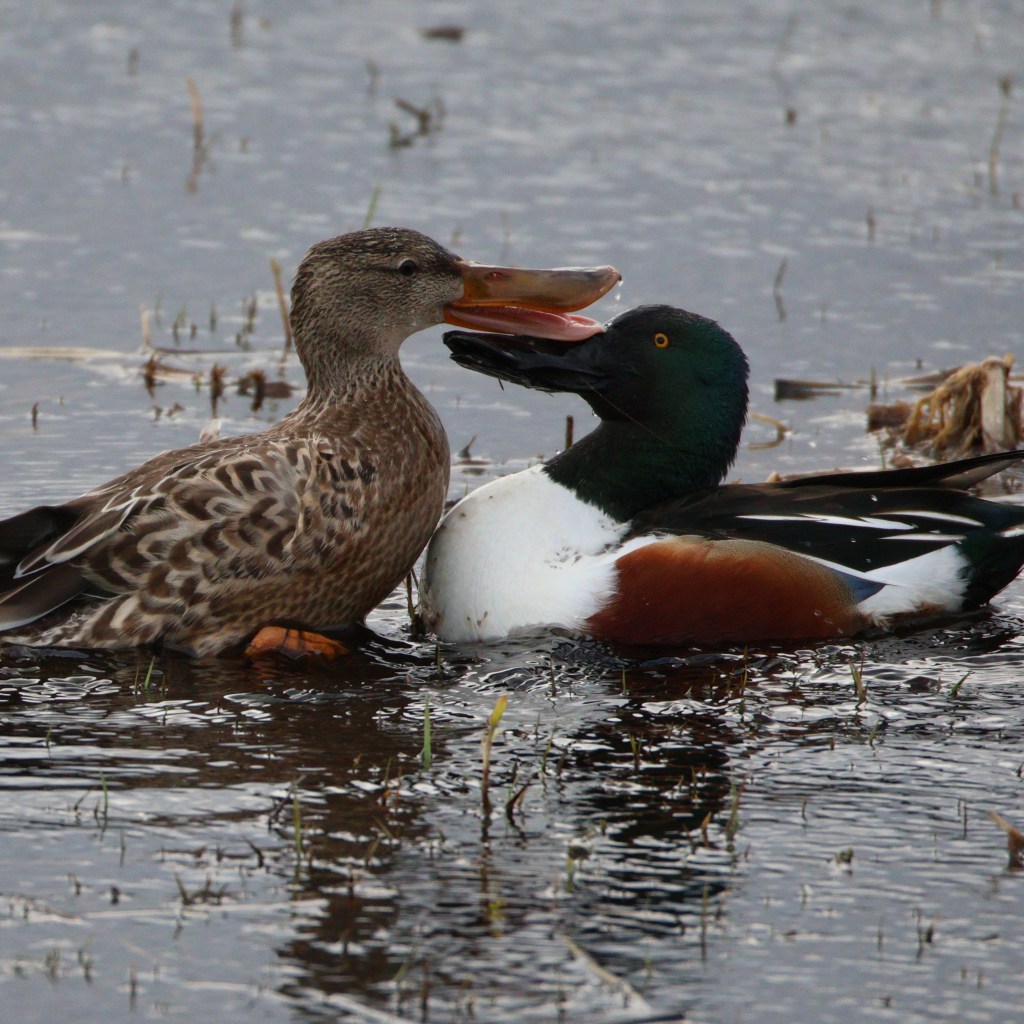
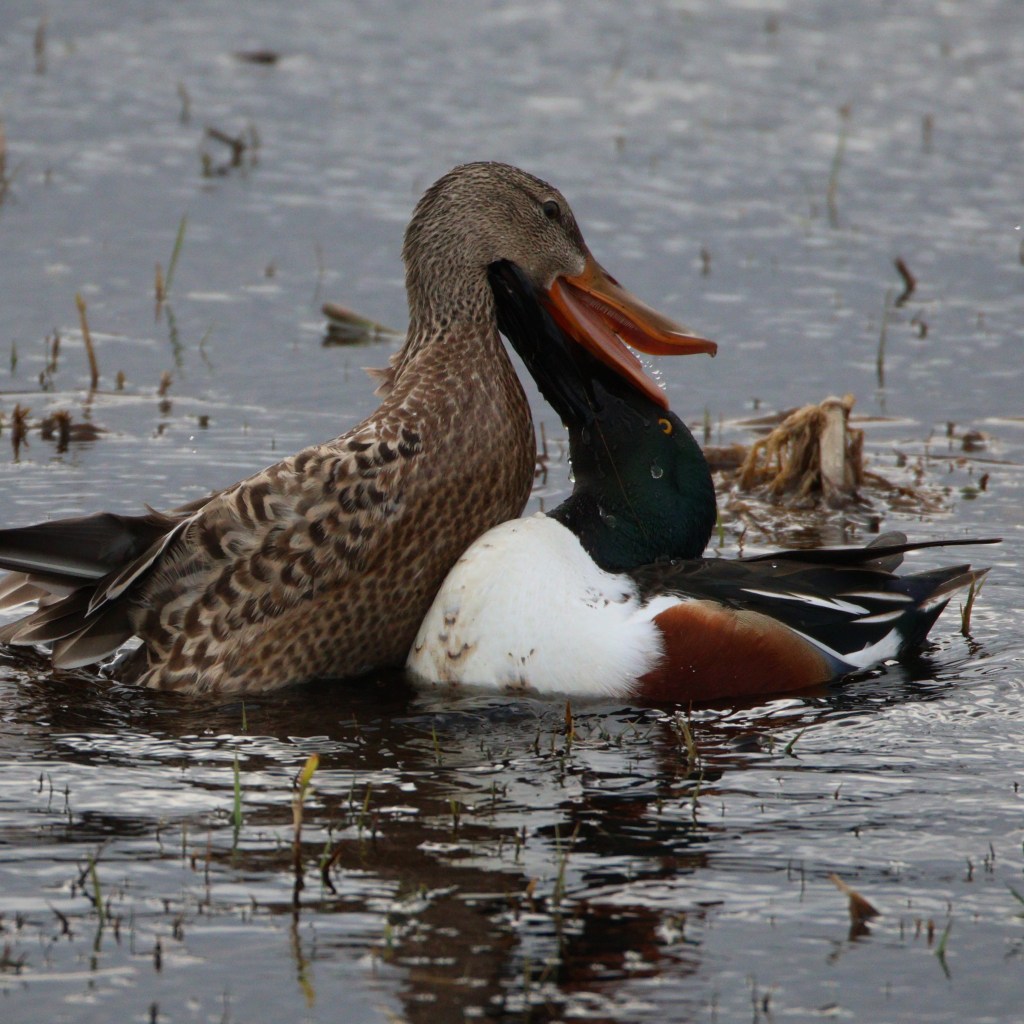
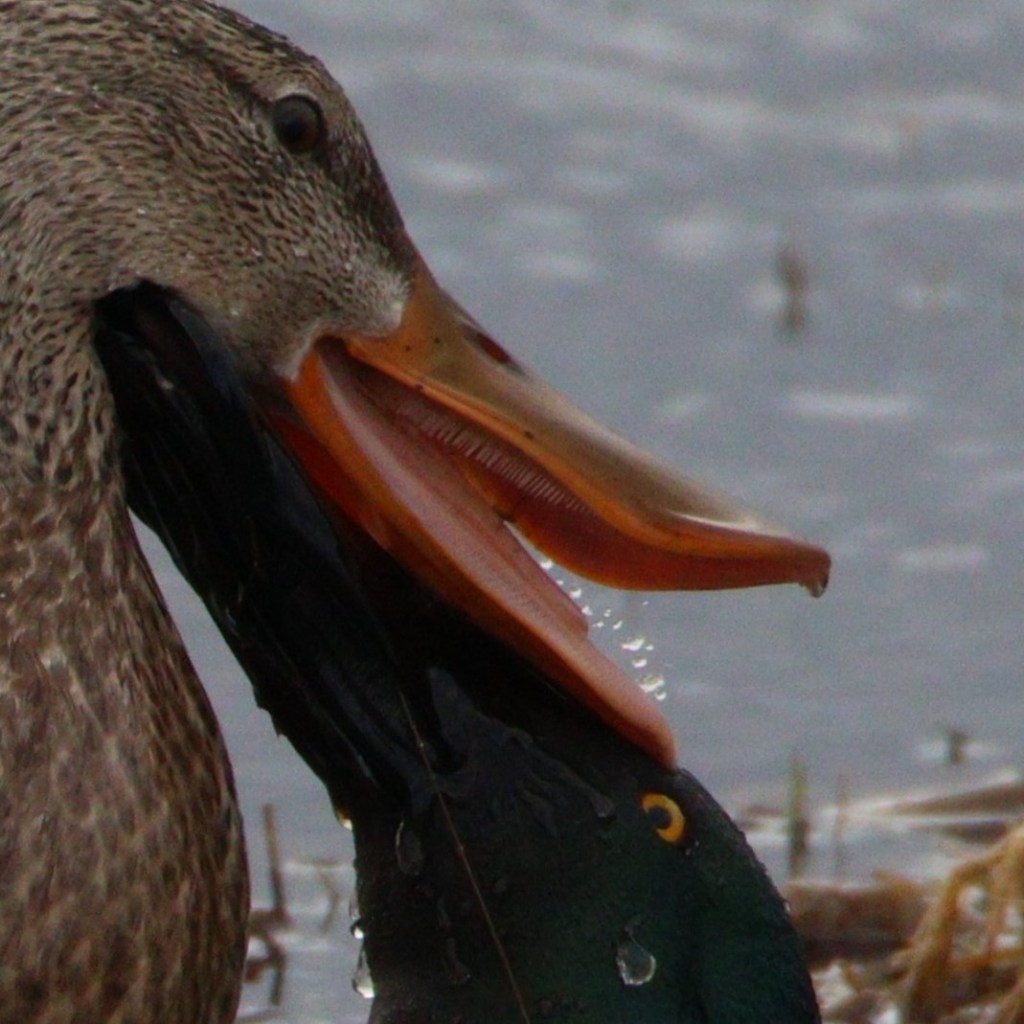
To see these big-billed, tricolour-sporting patriots, you’ll have to brave the rain like they do and head to your nearest wetland. It may be cold, but we’re made to weather storms. May the water flow off you like it flows off the shoveler’s back. Lá fhéile Pádraig sona duit, let’s hope it’s not a wet one.
 The Irish Bird Blog
How wonderful. Sadly our floodplains are being built on resulting in fewer habitats for this species and others.
LikeLike