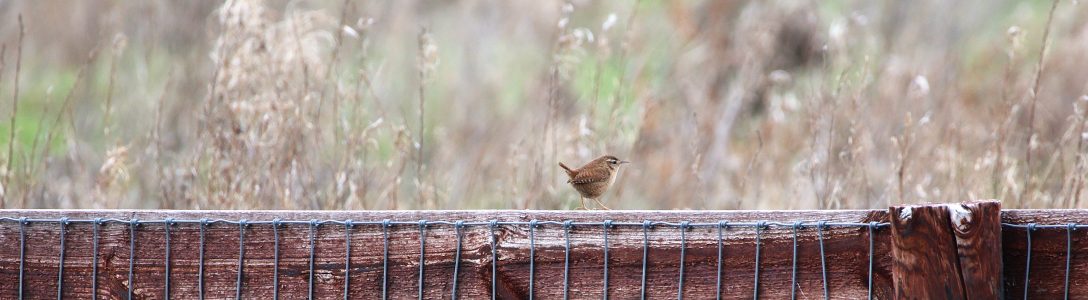
For any of my fellow green thumbs out there, how are we finding the return to the garden? I feel so much better while I’m pottering about, and of course the flowers help lift my spirits. Almost feels like I’ve been transported to a new place. Unfortunately there is still the rain to contend with. We’ve had some mucky days trudging through wet soil. But April showers bring May flowers, as they say. Coincidentally the bird we’re talking about today also happens to also be a herald of summer, familiar with bogged down grass, and a guardian of gateways into new worlds. This month’s bird is the Sedge Warbler (Acrocephalus schoenobaenus), known as Ceolaire cíbe as Gaeilge.
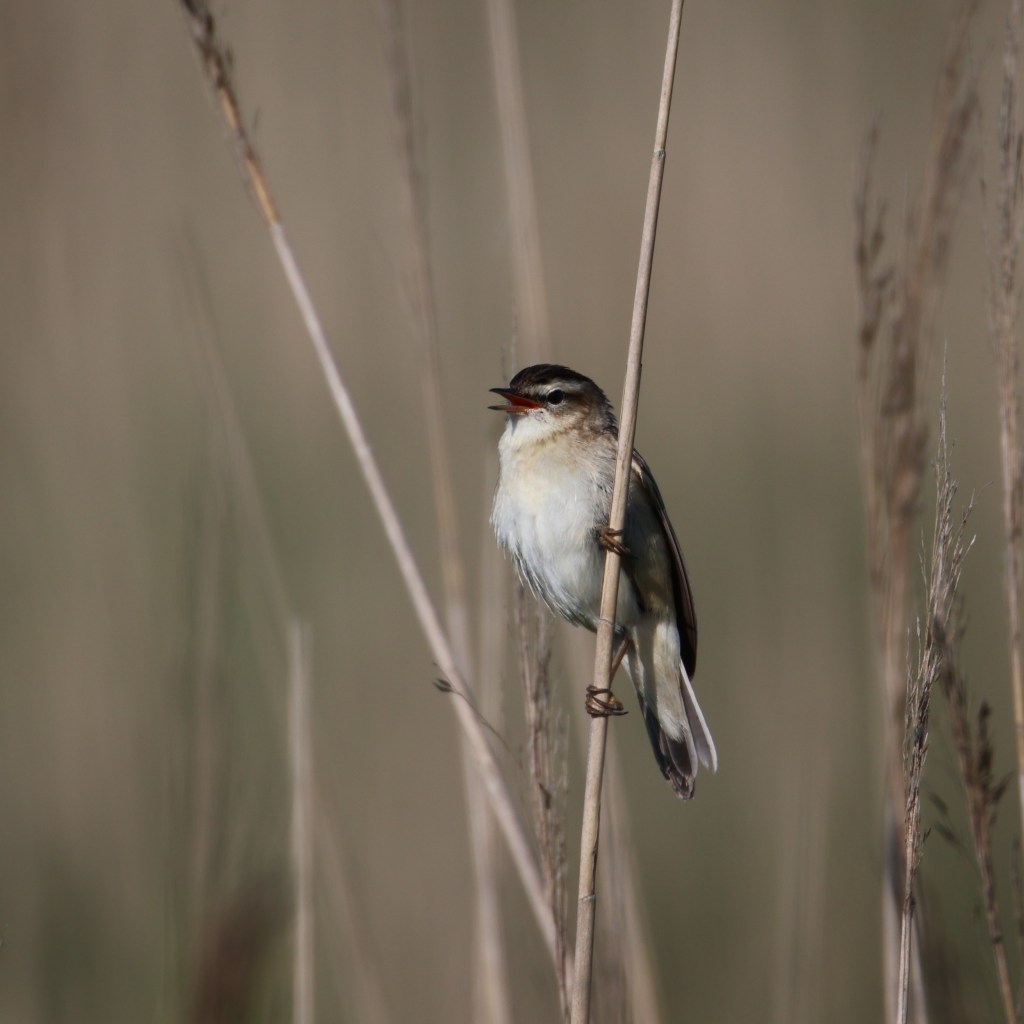
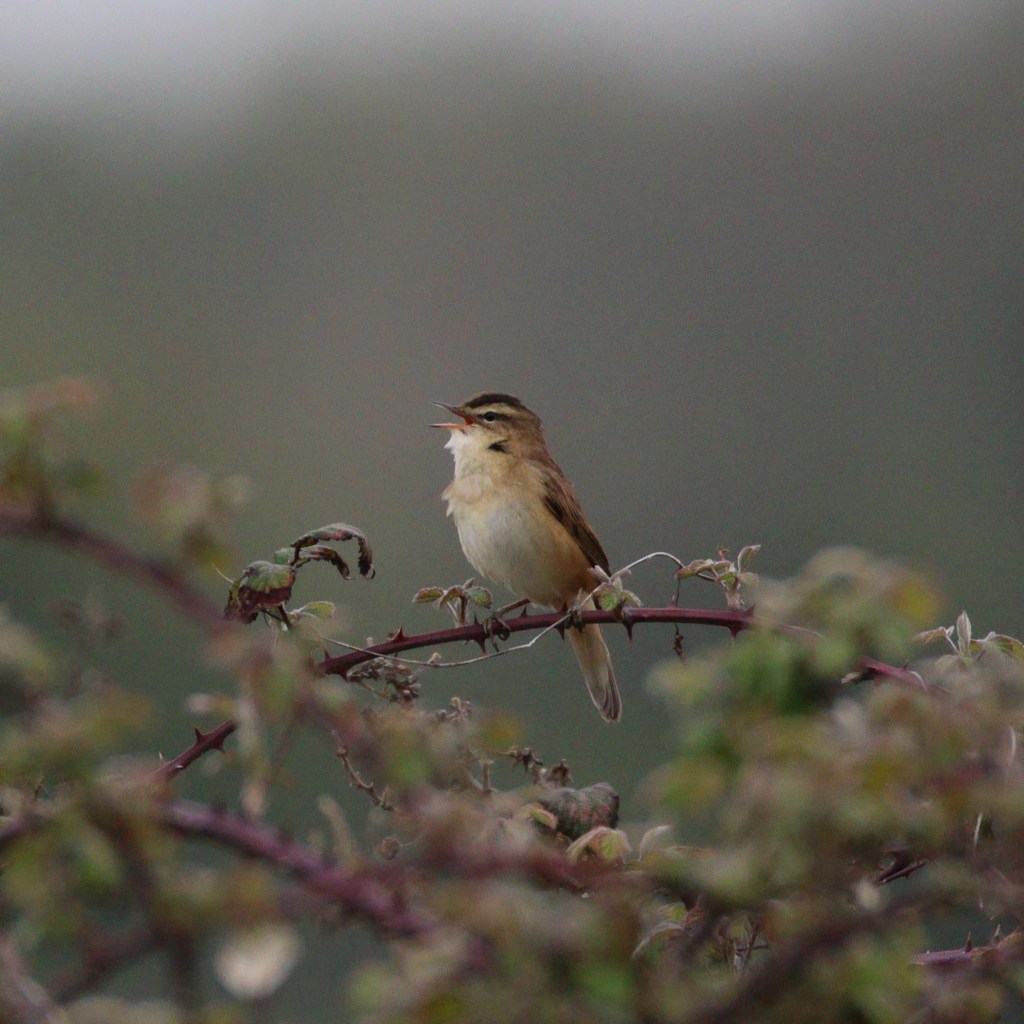
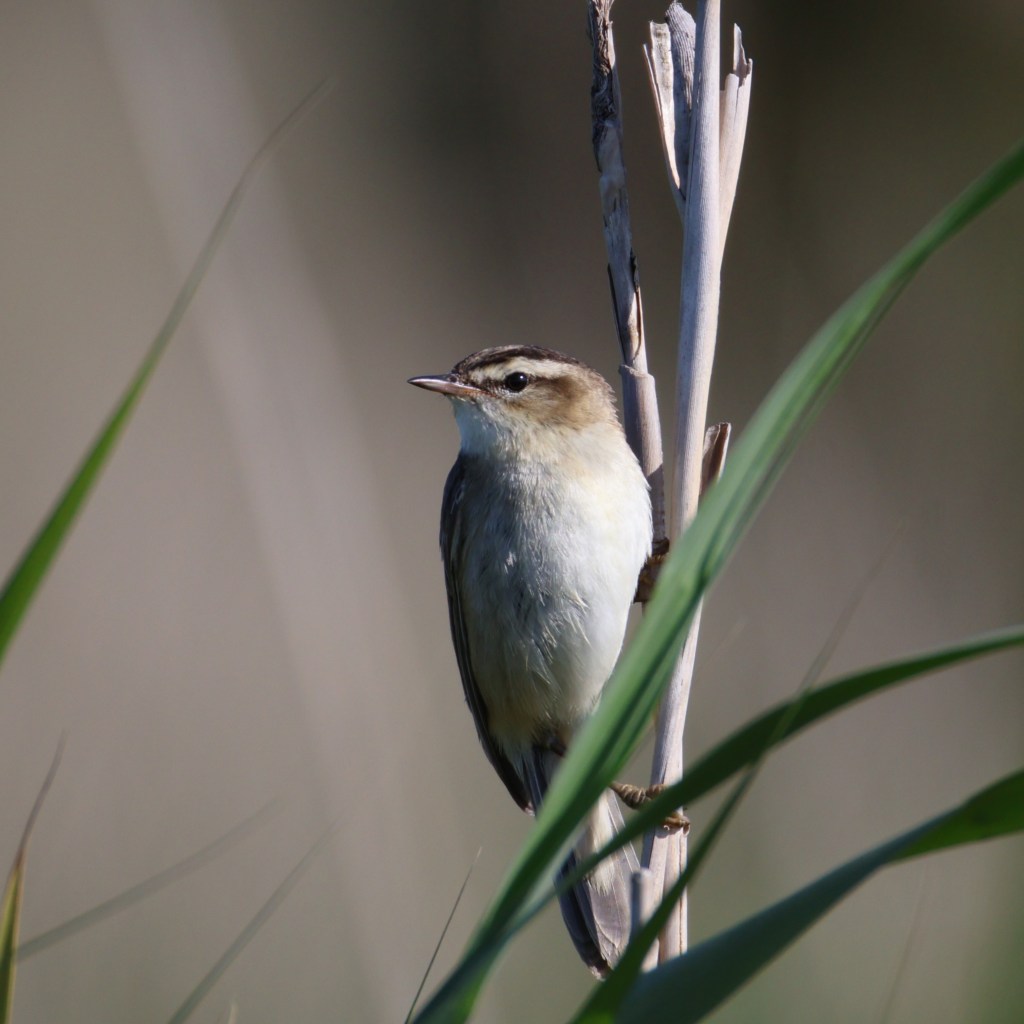
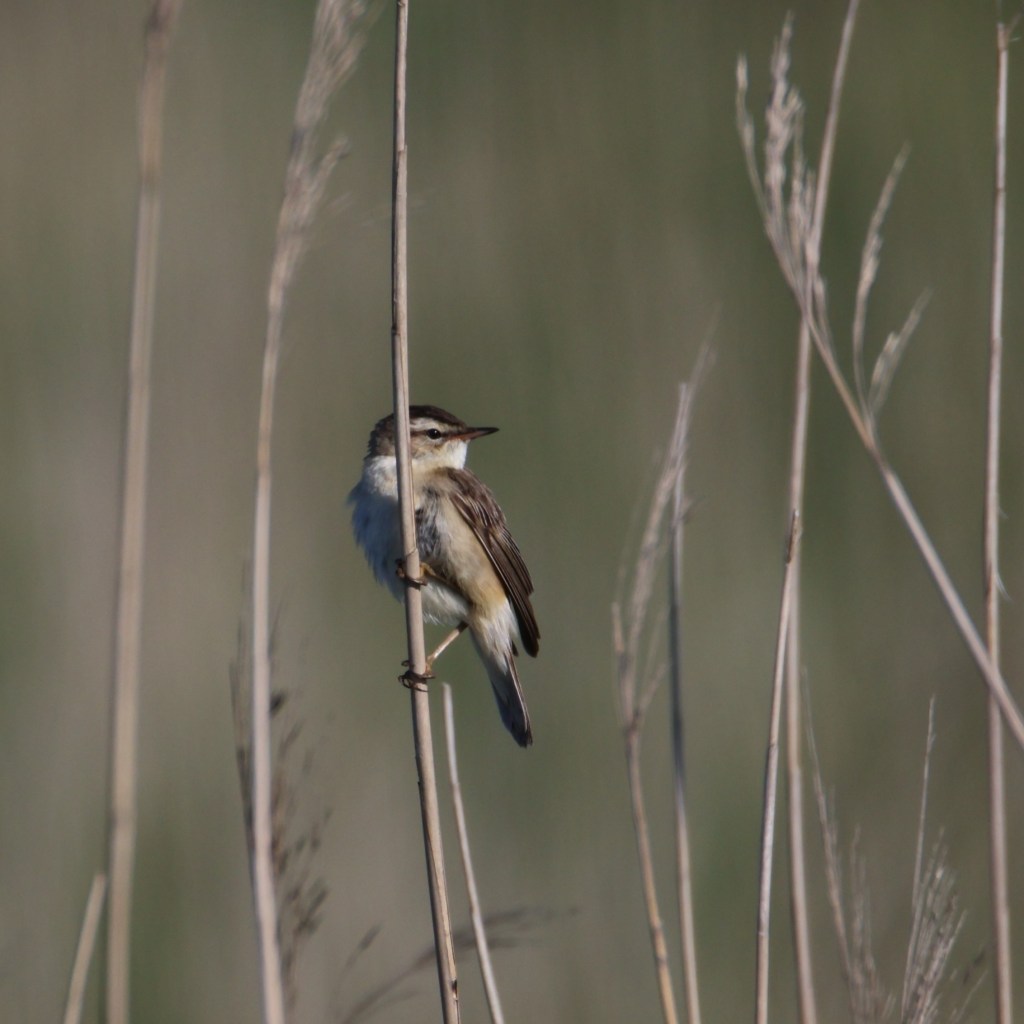
Walking down a dirt trail by the coast, an unearthly sound is picked up and carried by the sea breeze towards you. It switches up so quickly, encompassing entire eras. One moment it could be the call of a long-dead dino; the next, a laser gun from the far future. You follow it to the source, which comes from deep within a thorny bramble. It stops as you approach, then starts again once you move a few paces away. You do this a few times—a two-step dance with the strangest musical accompaniment you’ve ever heard. Then, between step one and step two, you spot them. A little brown bird with a front tanned by the summer sun, their dark eye made all the darker by the flourish of a white eyebrow above it. You close and open one of your own eyes to look at it properly, as if they’re trapped in a magic eye poster; trapped between shifting worlds.
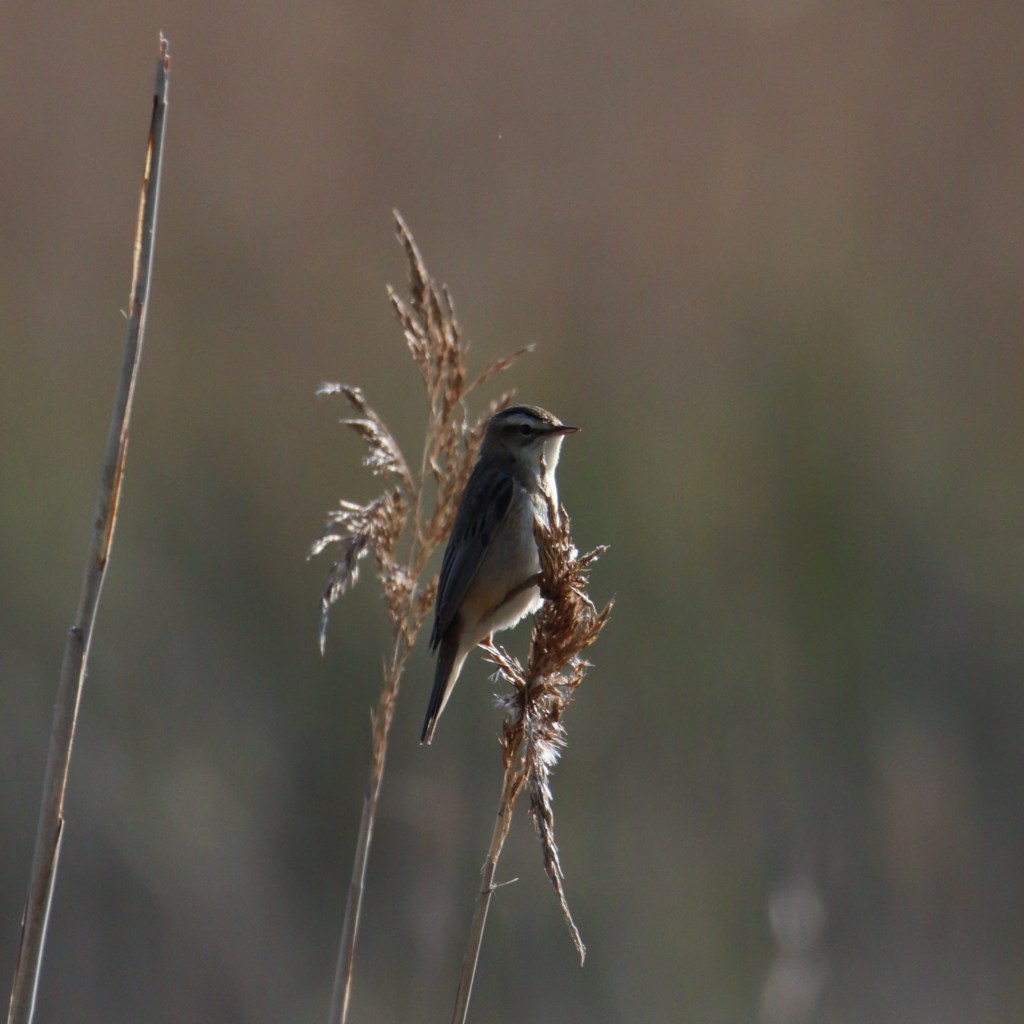
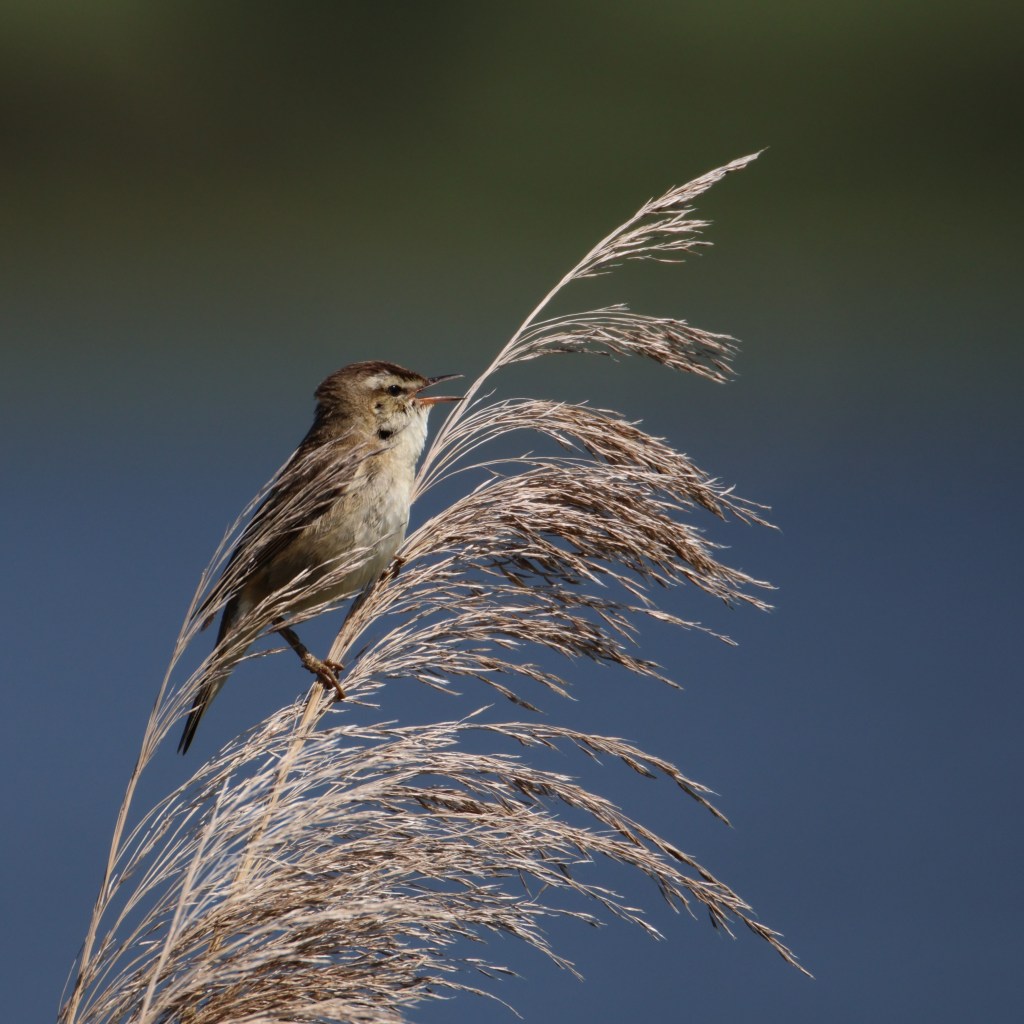
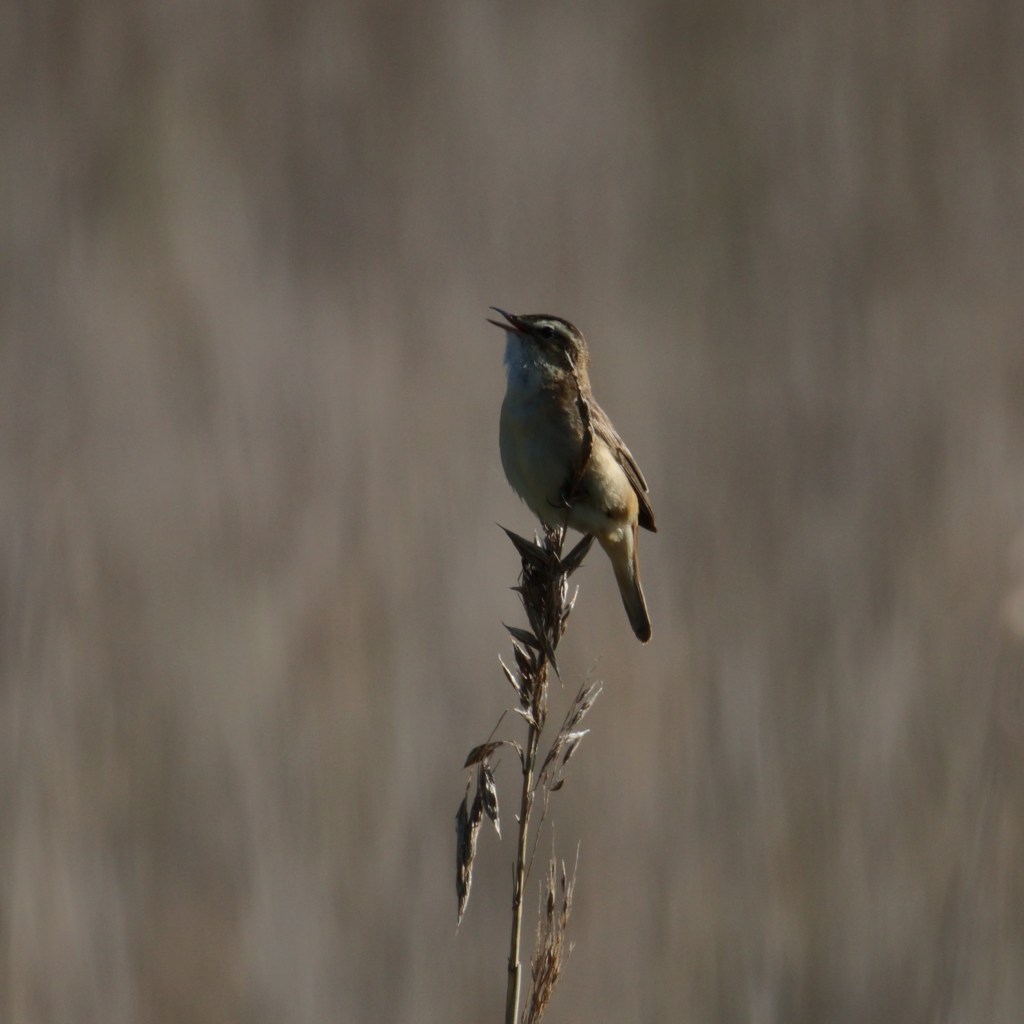
This is the first warbler we’ve had on the BirdBlog and you know we’ve gotta dive right into the music. Warblers can produce some of the craziest sounds you’ll hear in nature—they’re like skylarks dialled up to 11. They incorporate different phrases into their song, repeating them at random, and have even been known to mimic other bird calls. When they’re really belting one out, we’ve noticed little dark spots appearing on the sides of their throat—their neck feathers rise alongside the music and reveal darker ones underneath! Their Irish name is a fitting moniker, recognising their musical proficiency: ceolaire means warbler, but I’m sure you gold star Irish students picked out the word ceol (music). Cíbe just means sedge, making this a one-to-one translation to their Bearla name. Their binomial name, however, takes some explaining.
Acrocephalus comes from the Ancient Greek words “akros” for “highest” and “kephale” for “head”. Schoenobaenus is also from Ancient Greek, “skhoinos” meaning “reed” and “baino”, “to tread”. This is in reference to how they perch on the highest stalk of grass they can to sing, although we’ve had more luck finding them hidden away from predators in brambles or thorny thickets.
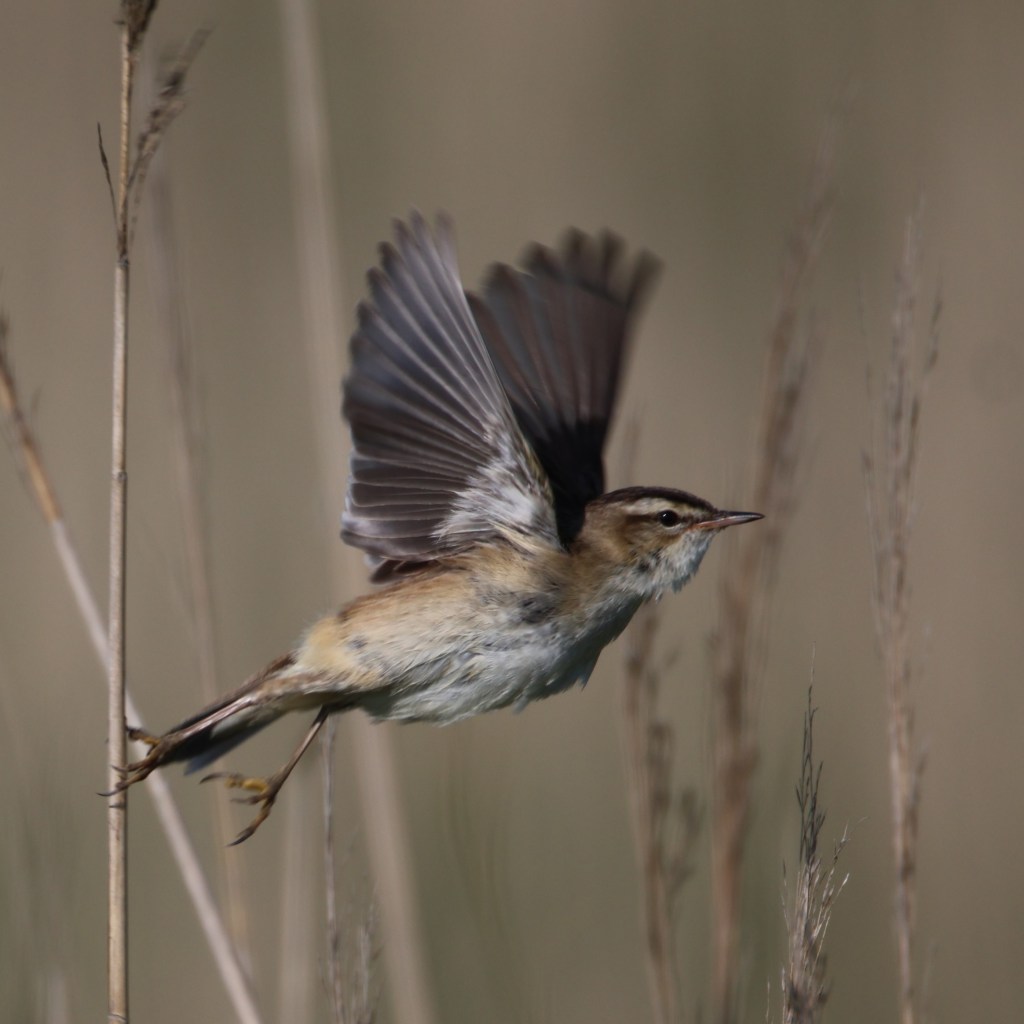
Sedge warblers arrive on Irish shores in April, heralding Persephone’s return from Hades, and leave with the queen of the underworld when September strikes. While they’re here they gorge themselves on nagging summer insects: mayflies, dragonflies, damselflies, you get the idea. They use their sharp beaks to pick insects from vegetation or snap them out of the air when they move between perches. Once the weather turns, they’ll sing their way south across the Sahara to enjoy the African heat from coast to coast across the sub-Saharan continent, before returning the following year to breed in Ireland.
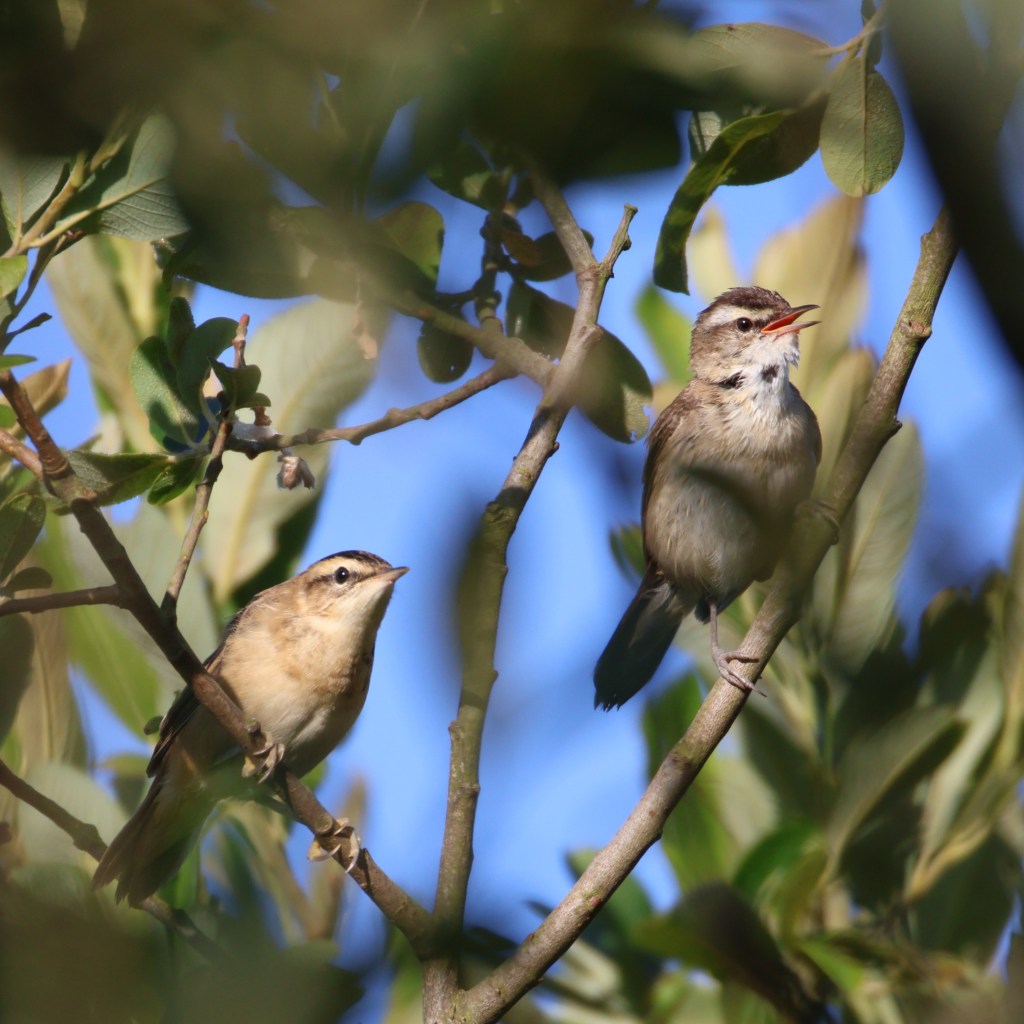
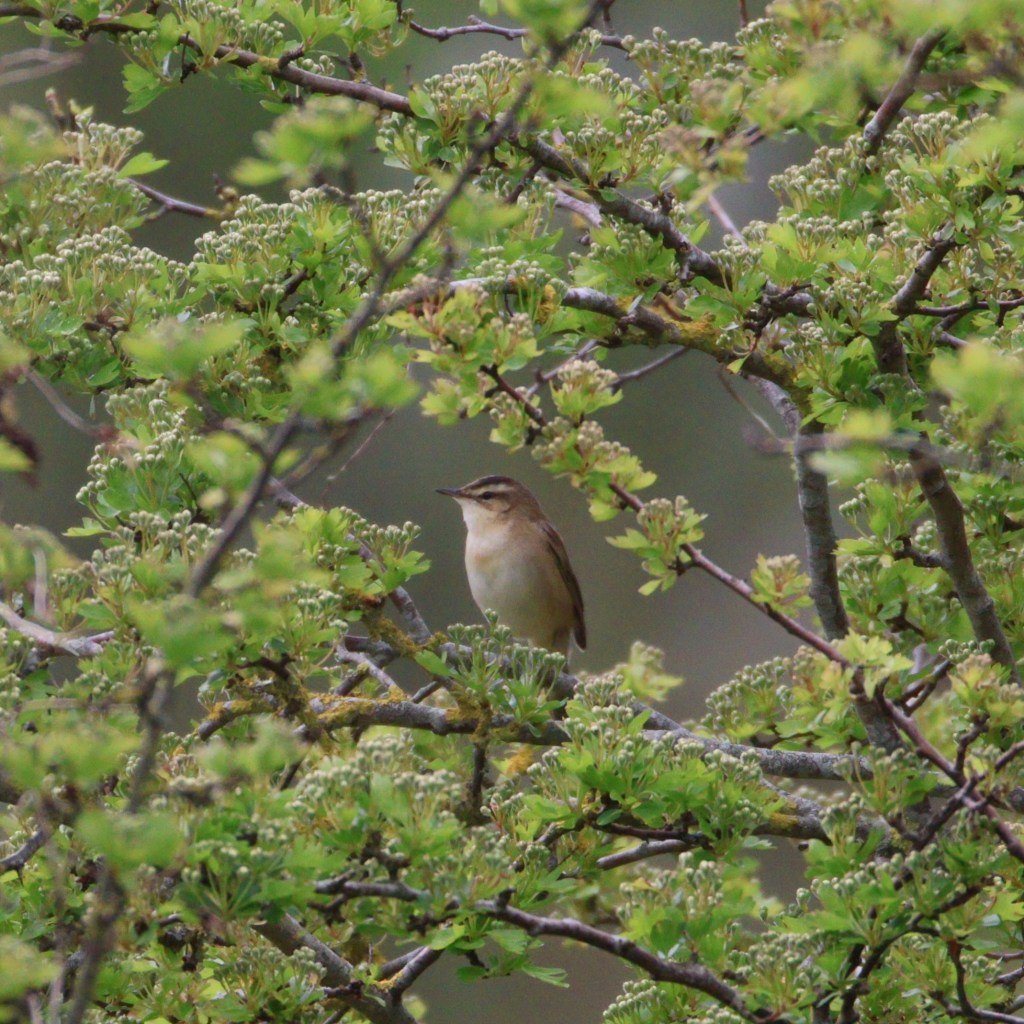
The marshes where sedge thrives are often featured in Irish mythology as entrances to different realms. If you’ve ever spent time in a boggy area, you can see why—they’re some of the most otherworldly ecosystems on the planet. Managing wetlands to accommodate many different species is no easy feat, but seeing as the sedge warbler is ranked green on the Birds of Conservation Concern in Ireland (BoCCI) list, we must be doing something right. Places like the East Coast Nature Reserve (ECNR) in Wicklow are a great example of land that’s managed for biodiversity but still pleasant and inviting for people. They encourage reeds to grow during the summer for incoming songbirds, and cut them back aggressively just before winter to make way for migratory ducks and waders.
The number of warblers emerging through the portal each year varies—we suspect this is due to the relative rainfall levels in their wintering grounds in Africa. These birds are affected by the creeping rise of desertification and encroachment of the Sahara on their already-hellishly-warm hangout spots. To make the journey across the desert, warblers will double in weight to stockpile energy for the treacherous trip, but this can only take them so far. With the Sahara expanding 10% in the last 100 years, we can only wish our warblers the best on their heroes journey.
If winter’s lingering clutch has got you down and you’re itching for something new, why not take a trip somewhere like the ECNR and transport yourself to a green paradise? You never know what you might encounter; a curling stem of sedge, a small bird perched upon it, and a swirling door to a place unknown.
 The Irish Bird Blog