As summer comes to a close, we thought we’d talk about a bird that gets a lot of attention during this season. Cast your mind back to when you were a child and you toddled to the park, clutching a plastic bag of sliced bread. The ducks you fed are the stars of our blog this month! While you probably know them as just “ducks”, their proper name is the Mallard (Anas platyrhynchos).

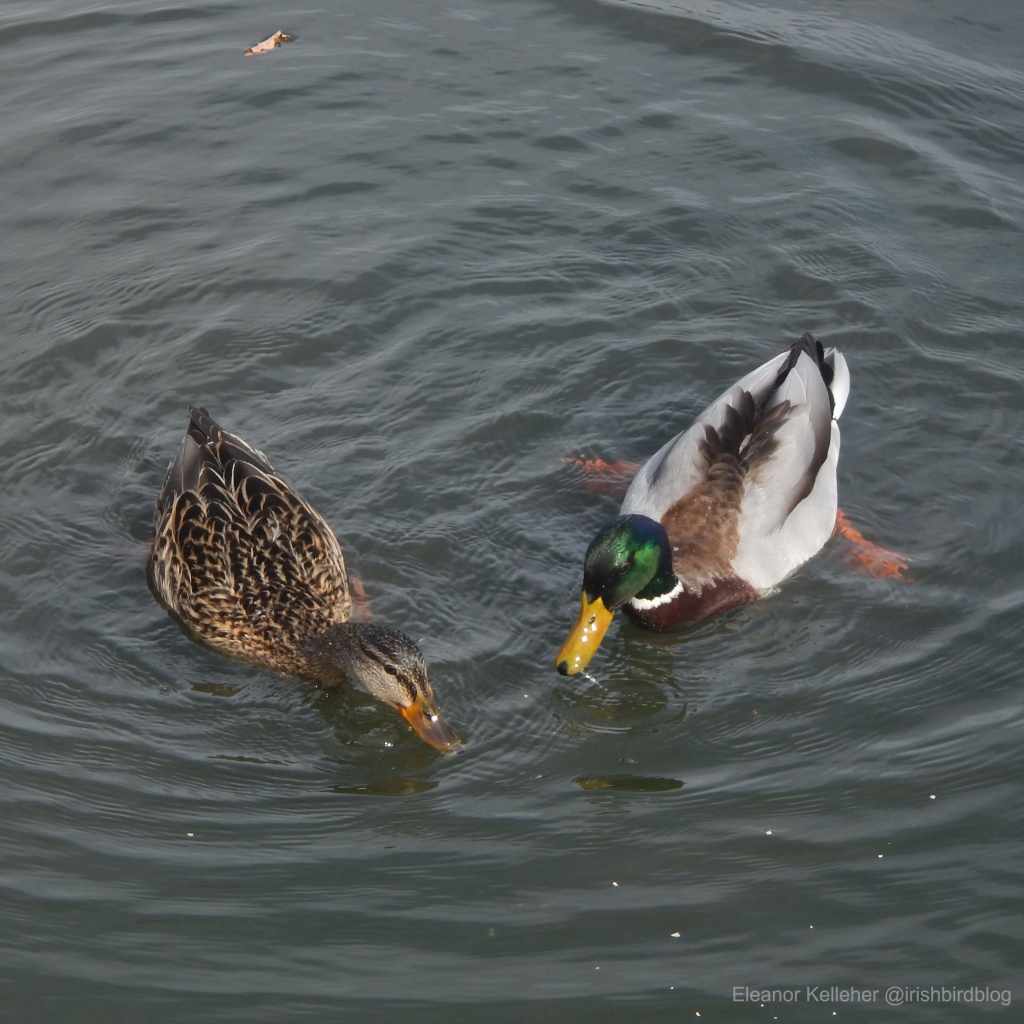
Mallards are one of the first bird species we learn to recognise as children in Ireland, and it’s no wonder why, given how bright and bold those green heads are. Along with their vivid feathers, webbed feet, and tendency for quacking, a key thing that sets them apart from other birds is the way they eat. A duck’s bill is perfectly suited for skimming the surface of the water, gathering any bits of floating food they can find. This activity is called dabbling, and happens to be where we get the phrase to “dabble” in something.
If you’ve ever seen ducks being fed, you’ve probably also seen them plunging their heads into the water and sticking their tail feathers straight up into the air. This is called upending, an activity that ducks engage in to nab food that’s sunk or when they want to dig around on the riverbed for some grub.

When I was in primary school, I would go visit a friend who lived in an apartment near a large pond. I remember one summer when I was over, she showed me a nest of eggs that she had found under a tree near the water. There were five or six eggs, the same colour as button mushrooms, all arranged in the nest like they were posed for a painting.
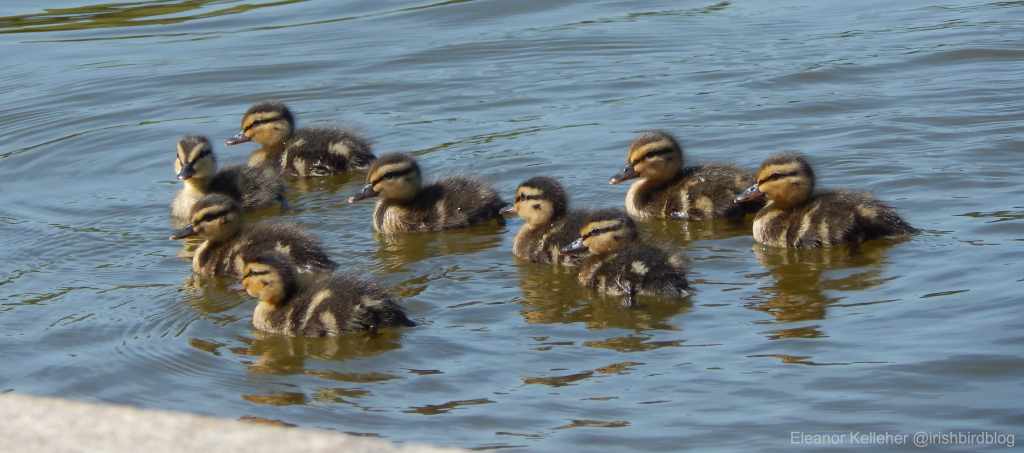
I visited her often that summer, just to see how the nest was doing. One day the eggs had hatched, and a cloud of brown and yellow ducklings took to the water, swimming circuits around the little island in the middle of it.
We were infatuated with them.
We would bring bread to feed them with, and gave them all names (not that we could tell them apart). We wondered what species they were, since back then we assumed they would grow to look the same way they did as ducklings, and we didn’t know any brown and yellow ducks.
As the weeks went on, and they got bigger and bigger, we realised that the full grown mallard we saw hanging around them was actually their mother, and they’d grow to look like her.
It was a disappointing revelation, we preferred the tiger-stripe, marble cake look of the ducklings.
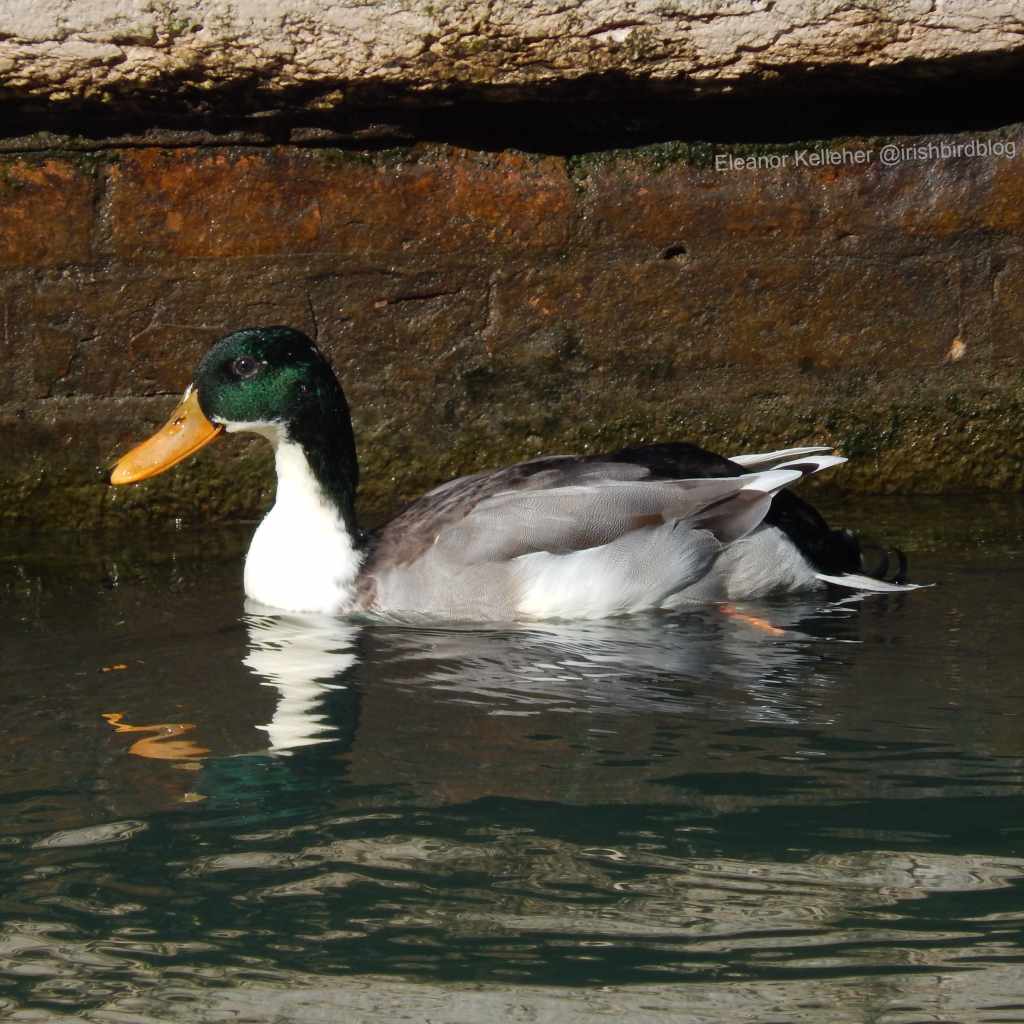
As time went on, we noticed that some of the ducklings had started to grow differently. Some of them were carbon copies of the mother duck, but others had started growing dark feathers on their heads that eventually turned bright emerald.
I’ve since learned that it is the microstructure of those head feathers that causes them to be iridescent green, almost as if the feathers were prisms refracting the light!
So why do the males have such flashy feathers, while the females are brown and mottled? Why are they so different?
Male mallards want to show females that they are nutritionally satisfied enough to spend all this energy, both in food and time, to maintain a pristine physical appearance, which alludes to their stronger and more successful genes.
Female mallards will be sitting on eggs for a month while they incubate them, so their plumage needs to protect and camouflage them among the grass and rushes where they’ll build their nest.
So, that explains the difference between males and females. But if you’ve ever spent time around a large group of mallards, you may have seen some that look a bit more unique, almost as if they’ve been splashed with white paint.
To explain that phenomenon, we have to go back over two-thousand years, to when humans first began domesticating ducks.
The mallard is the main ancestor of the majority of domesticated farm ducks around the world. These domesticated ducks are the ones you’ve seen in fairytales: they stand tall and upright, their feathers are all white, and sometimes they wear blue bonnets, pink shawls and have very poor taste in friends.
While these pristine farm ducks look quite different to the brown and green wild waterfowl, their genetic makeup is almost identical. So, occasionally when a farm duck escapes and mates with a non-domesticated duck, it can lead to interesting plumage patterns in their offspring.

Feeding ducks is fun! But, depending on what you throw, it may not be so fun for them. While mallards can digest bread, it’s certainly not the healthiest for them – it leaves them bloated and doesn’t provide any vitamins or minerals that they need. The next time you plan on going to your local park, canal, or waterway, remember to bring a healthier snack such as oats, peas, leafy greens or even just regular old birdseed!
 The Irish Bird Blog
[…] ducks are quite a bit smaller than mallards, and are roughly the same size as black-headed […]
LikeLike
[…] bill make filtering for food easier. Shovelers are dabbling ducks (you may recall this from our mallard post), and the edges of their bills are lined with little, serrated, comb-like structures called […]
LikeLike