The weather is starting to get warmer and with the bright blue skies and sizzling sun rays comes the many wonderful birds of this season. The bird we’re talking about for this month’s post has been heralded as the voice of the beginning of summer, and what a lovely loud voice it is! We’re talking about the Eurasian skylark (Alauda arvensis), known as Fuiseog in Irish.
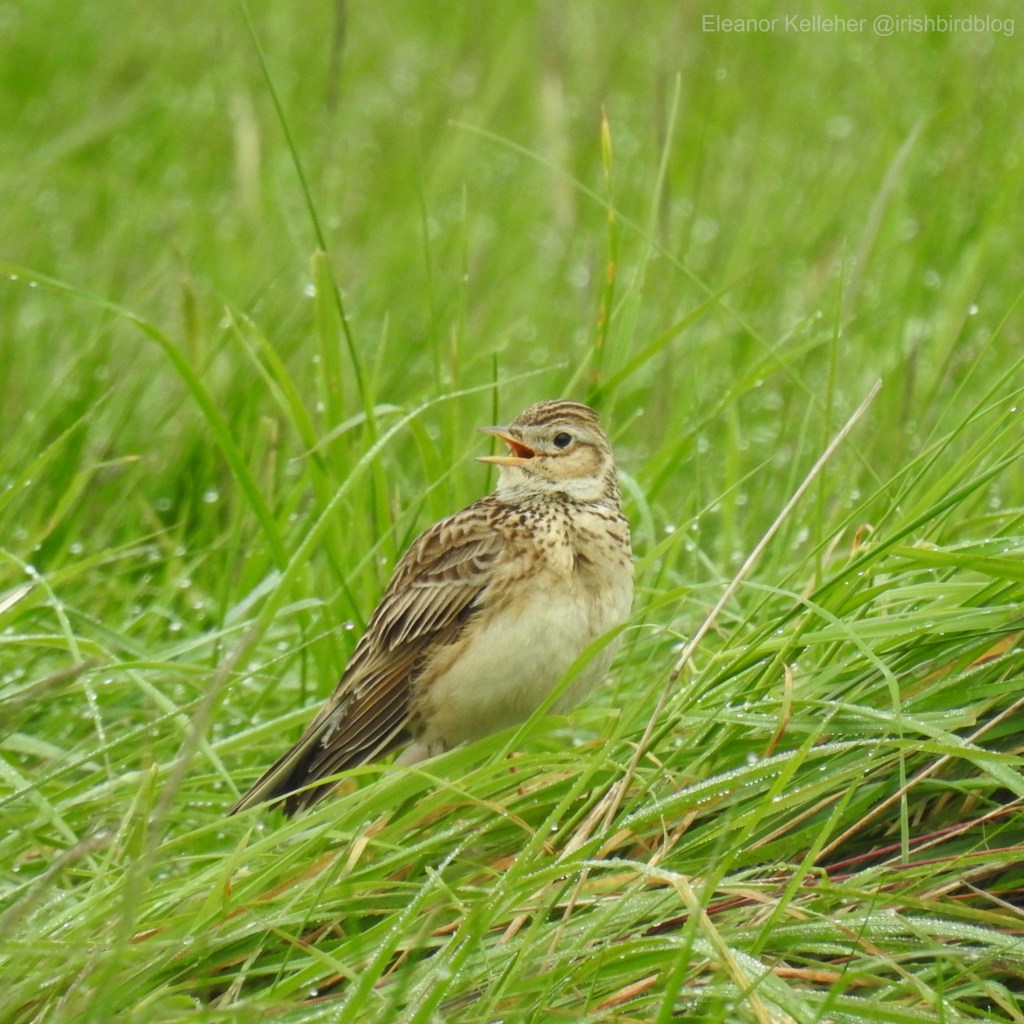

There’s nothing quite like traipsing through a wide open field with a cloudless blue sky above your head and the warmth of the sun at your back. In the distance, you can hear the sweet melody of multiple mingling birdsongs, but no matter which way you tilt and turn your head, you cannot spot the source of the chorus.
The skylark is no doubt a member of this elusive bird band. They’re either camouflaged in the long grass, shrunk down low to avoid predators, or high in the sky, so far away that they’re barely a speck.
Despite their affinity for stealth, you’ll still definitely know when one is nearby. Their loud song is unmissable for its unique sound, sort of like a series of varied chirrups and trrrps. If anyone reading remembers the sound of dial-up internet, that’s the closest thing I can liken it to.
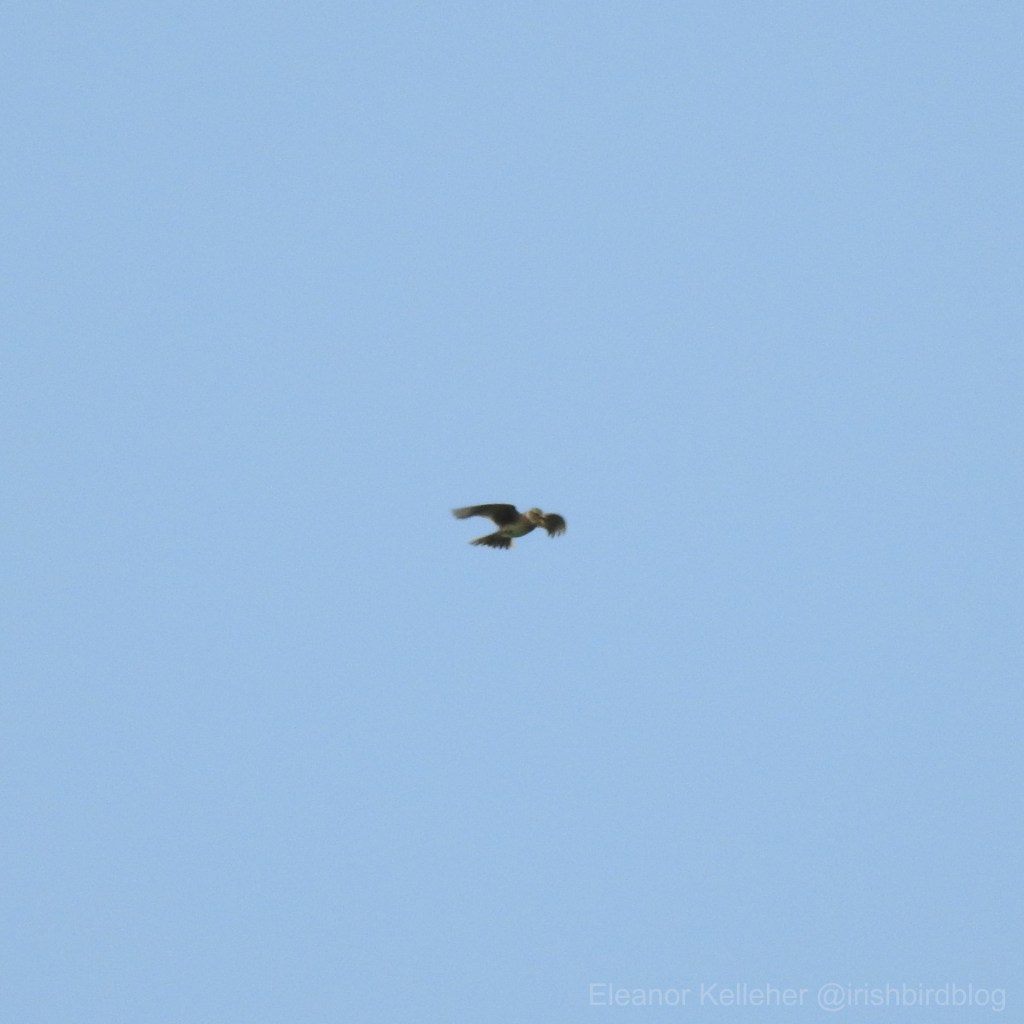
You can start to hear them sing from around late spring (February/March), until they eventually settle down near the end of June. The song is a distinctive, continuous stream of warbling notes that can last up to half an hour! Not only that, but it’s usually sung while the bird is flying 50 to 100 metres overhead, hovering and flapping its wings 10 to 12 times per second. That is some serious lung power for such a small bird!

Because of this unique song and its association to summer and brighter days ahead, the skylark is quite a famous bird that’s been the subject of many a poem and song. In fact, skylarks have a deep cultural connection to Ireland, touching many legends of our mythology, including Fionn Mac Cumhaill (who in a poem wrote of “The lark singing out his clear tidings“).
Another honourable Irish mention goes to the renowned 19th-century poet, Sir Samuel Ferguson. Ferguson penned the lyrics of his famous The Lark in the Clear Air to accompany a traditional air (meaning a folk song or ballad) called Caisleán Uí Néill that was collected by his wife, Lady Mary Ferguson (fun fact, Mary Ferguson was born Mary Guinness and was the great-great-niece of Arthur Guinness!). The Lark in the Clear Air has withstood the test of time and has been performed by many musicians since its creation in the 1800s.
The skylark has even been mentioned in Shakespeare’s most famous play Romeo and Juliet, as I’m sure many who have gone through Junior Cert English class remember:
Romeo and Juliet (Act III, Scene 5, Line 27):
JULIET: It is the lark that sings so out of tune,
Straining harsh discords and unpleasing sharps.
Some say the lark makes sweet division.
This doth not so, for she divideth us.
Some say the lark and loathèd toad changed eyes.
O, now I would they had changed voices too,
Since arm from arm that voice doth us affray,
Hunting thee hence with hunt’s-up to the day.
O, now begone. More light and light it grows.
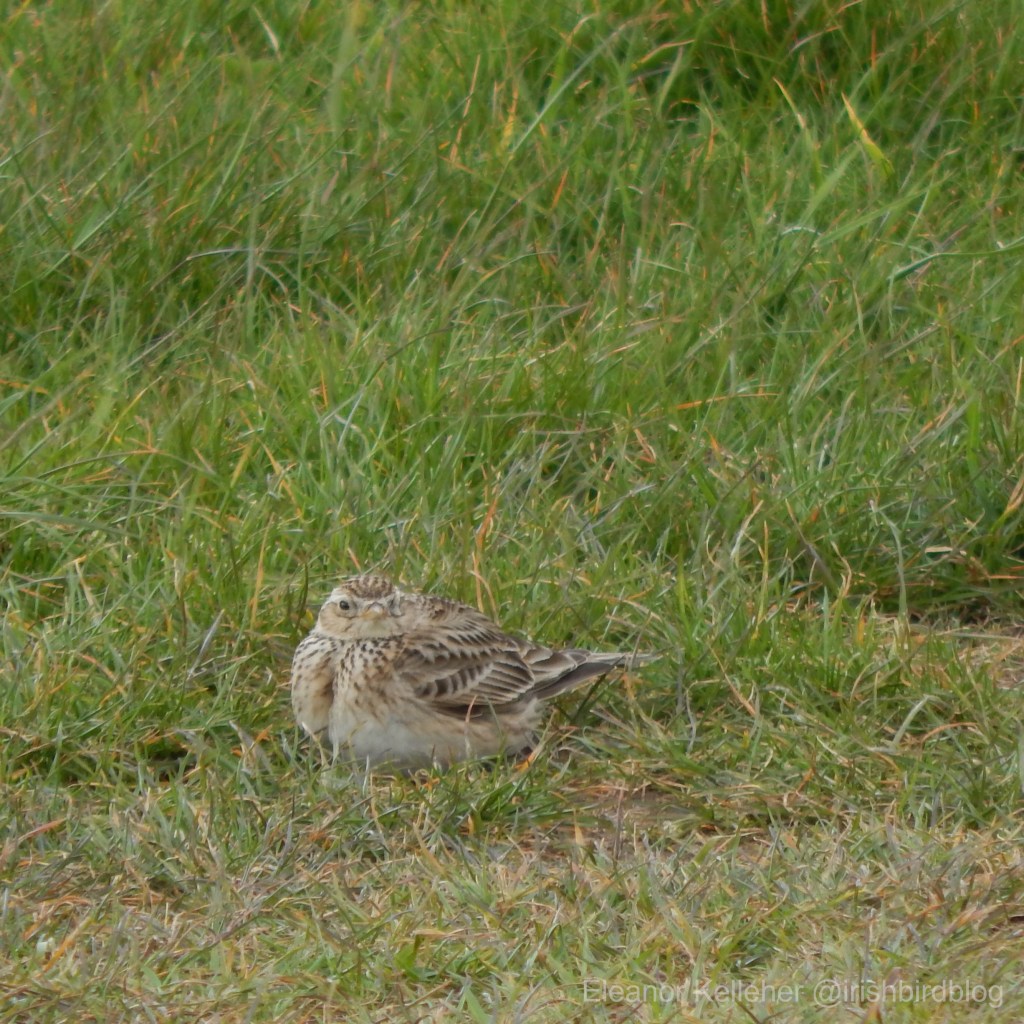
Unfortunately, despite its beloved status, recent studies have shown a 30% drop in skylark numbers since the 1970s, with loss of feeding and nesting areas listed as the primary reason.
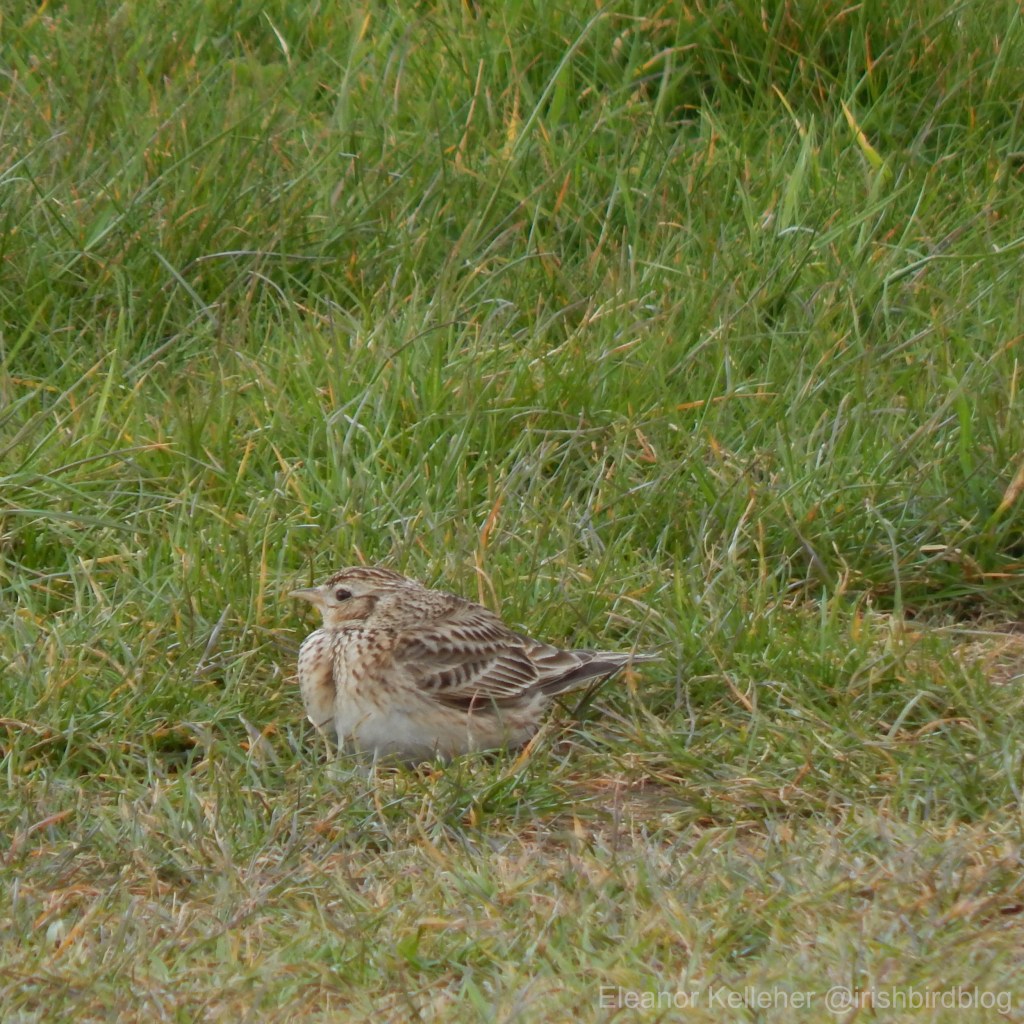
Skylarks are ground-nesting birds. They build their nests in small depressions in the ground surrounded by long grass – fallow farm fields are often used, but you can also spot them at home in any large space of unmowed grass. We have had some luck in the flat grassy areas of Phoenix Park! They are easily disturbed by foot traffic and farm machinery, and it’s virtually impossible to spot their nests from afar. When we last went looking for skylarks, I almost accidentally stepped on one that was quite well camouflaged, so I know first hand how easy it could be to trample a nest you might not even realise was there.
Their diet is also more varied than the shape of their beak may lead you to believe. Skylarks have a sharp, pointed beak that is best suited for hunting insects, but they’ve also been known to eat fruit and leaves. Despite this, they still aren’t getting enough to eat or feed their young, due to the shrinking of suitable skylark habitats.
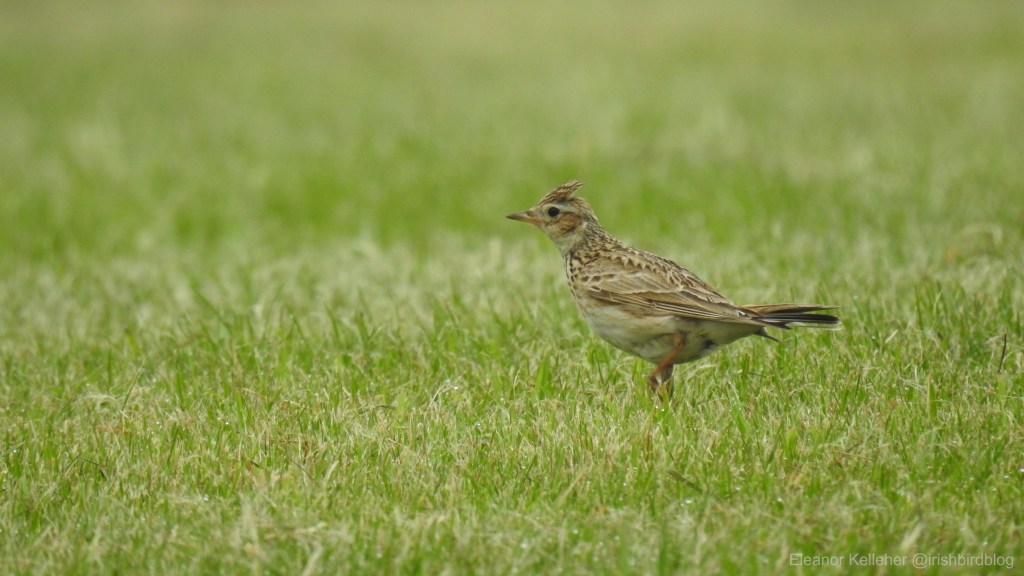
The skylark’s iconic call was once a quintessential part of the soundscape of the Irish countryside. Unfortunately, it appears that that unique song has dwindled in the last few decades, along with the cuckoo, the corncrake and the swift; other birds who once ruled the rural skies. If you’re planning a trip to the countryside this summer, be mindful of where you step, and keep an eye on the skies for our vertical vocalist.
 The Irish Bird Blog
[…] be dismissed as “some boring brown bird”; to the inexperienced birder, mistaken for a skylark or a […]
LikeLike