We’re posting this month’s post later than intended because our personal lives have been pretty chaotic the last few weeks. Have you ever heard the phrase “April showers bring May flowers“? Well, we’ve been going through more of an April whirlwind; and that’s not even including the actual stormy weather we’ve been subjected to. As it happens, this bird blog post is about a bird that’s endured a lot of hardship throughout history and managed to come out on top – something we all need as we’re waiting for the sun to come out and stay out. This month’s bird is the Eurasian/Common Chaffinch (Fringilla coelebs), known as Rí Rua in Irish.
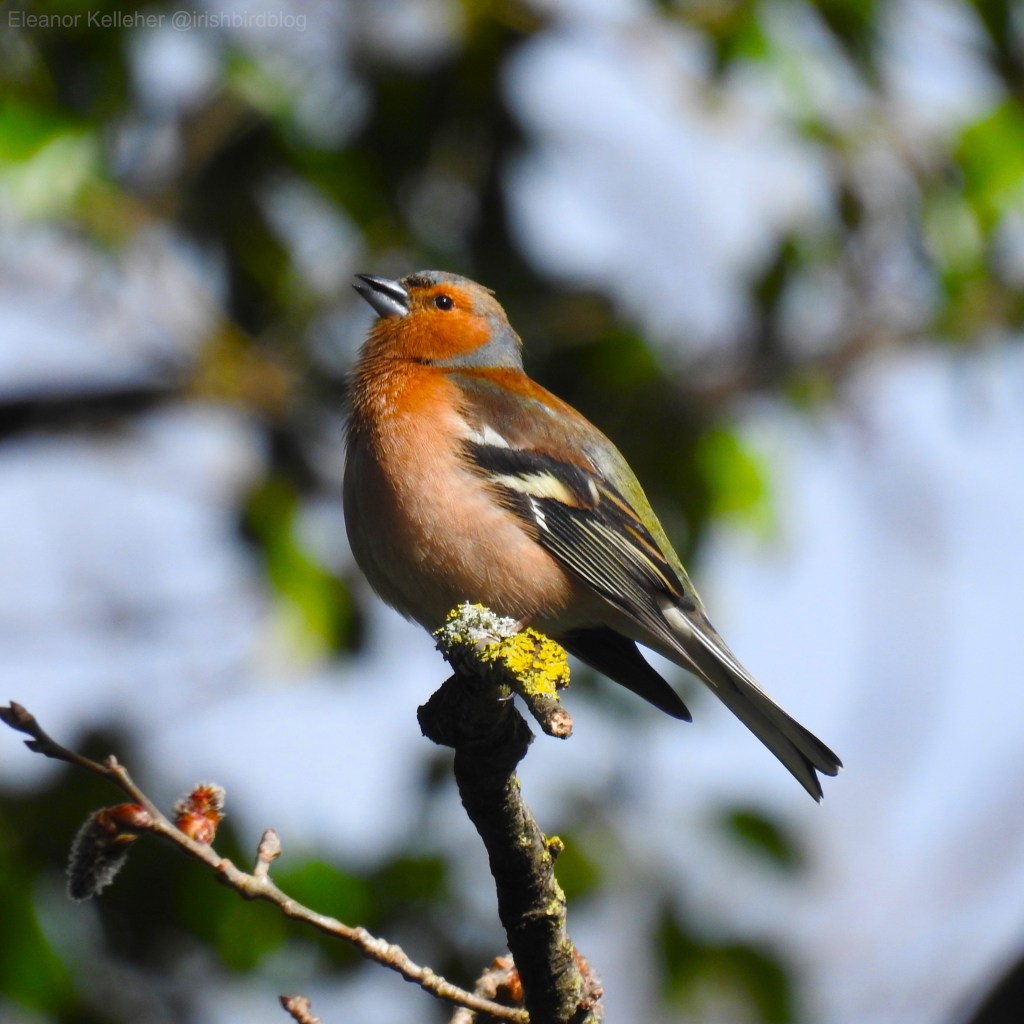
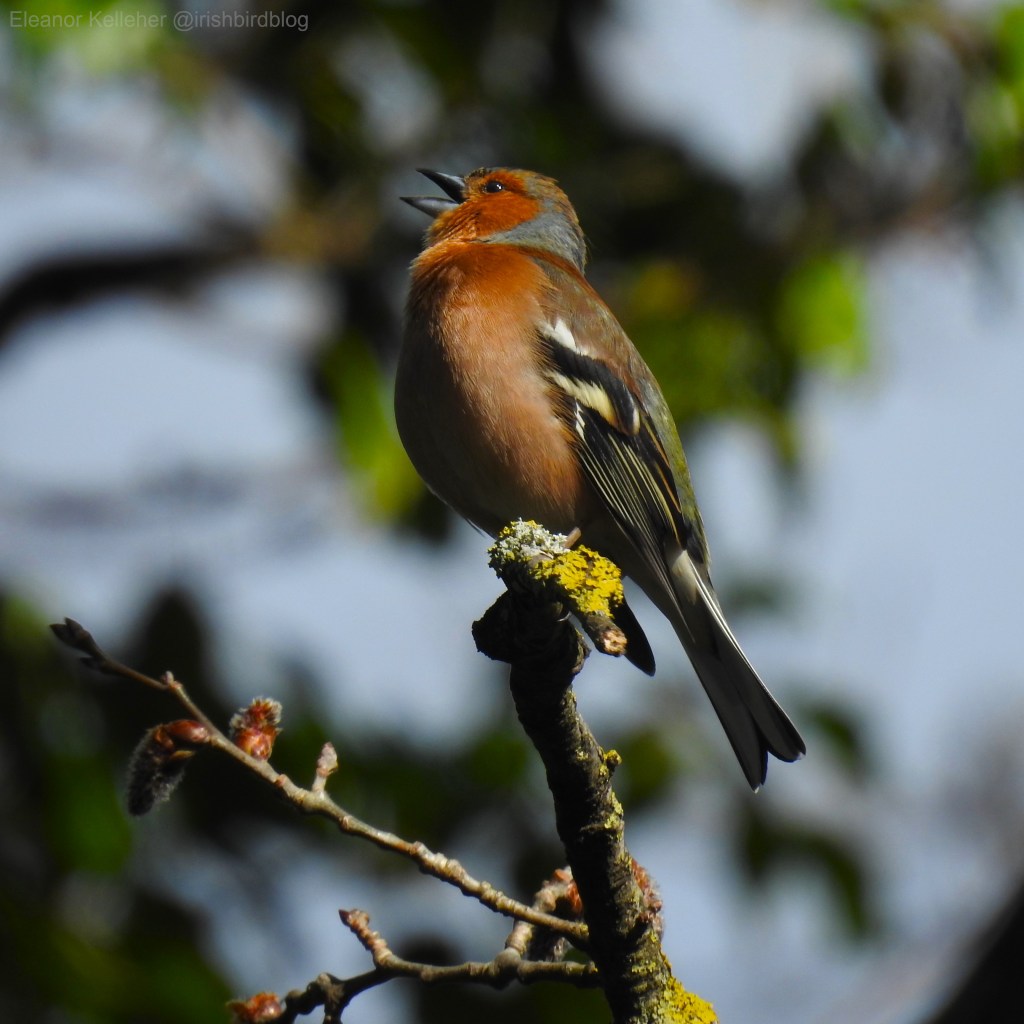
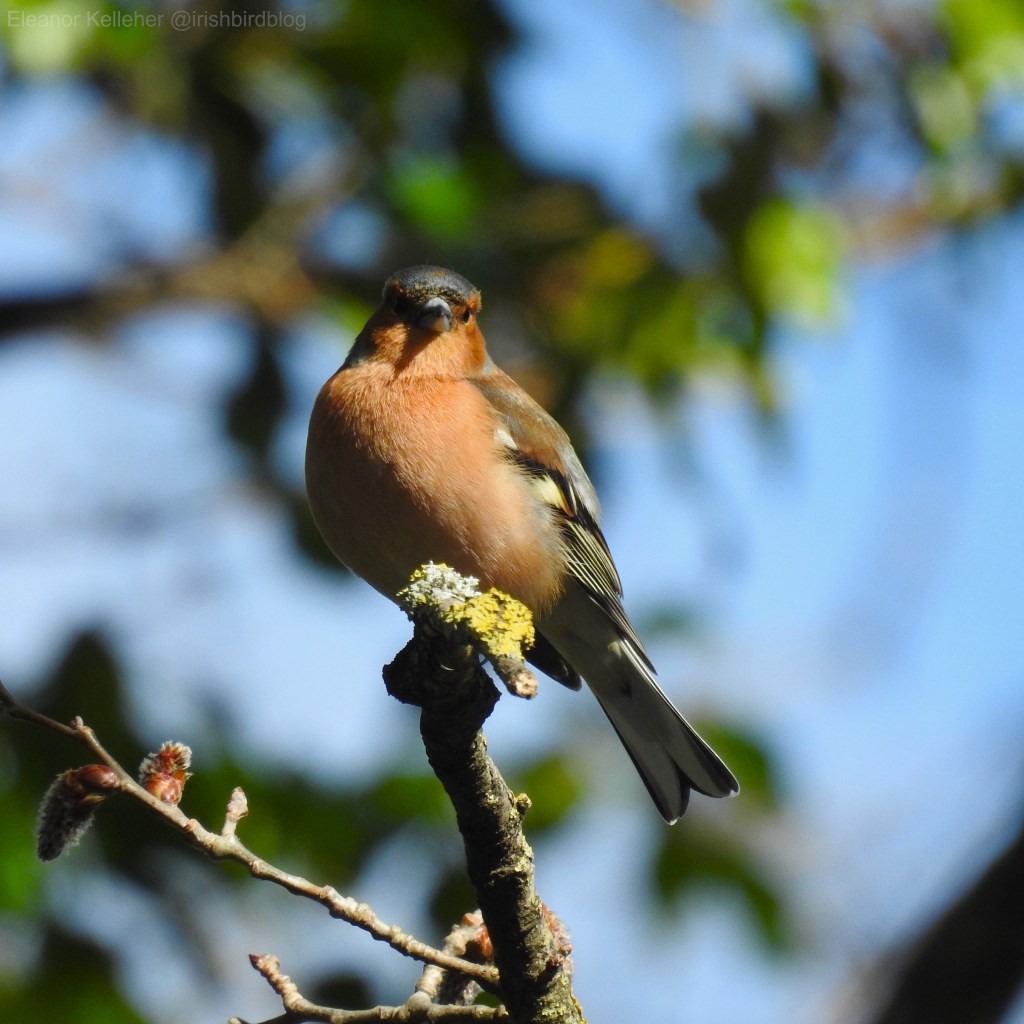
Hey Irish speakers, how many of you worked out the meaning of the chaffinch’s Irish name without looking at the title of this post? It’s no wonder they earned such an evocative moniker – just look at those rosy cheeks!
The coelebs part of their Latin name means unmarried or single. Carl Linnaeus, the Swedish biologist and father of modern taxonomy (look him up), once remarked that during winter in Sweden all the female chaffinches take flight for Italy, leaving the poor bachelor birds behind.
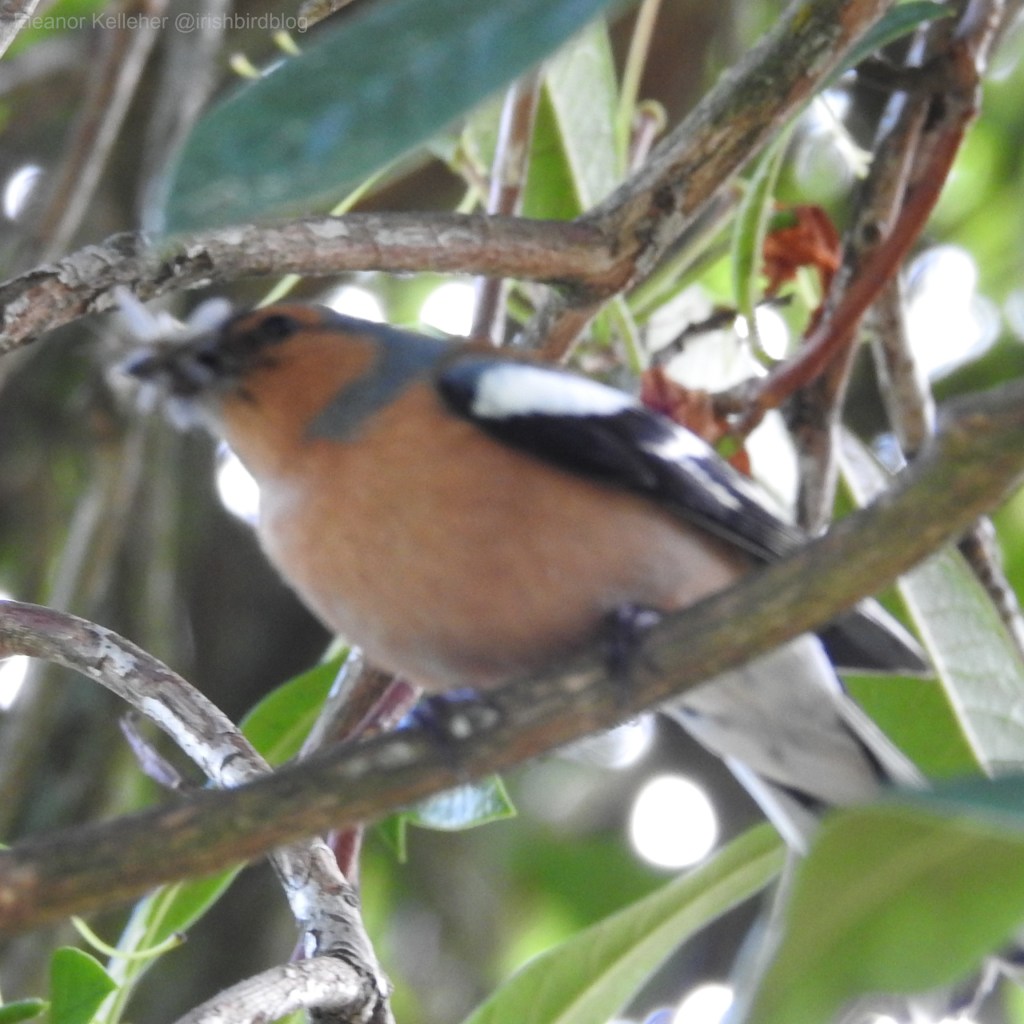
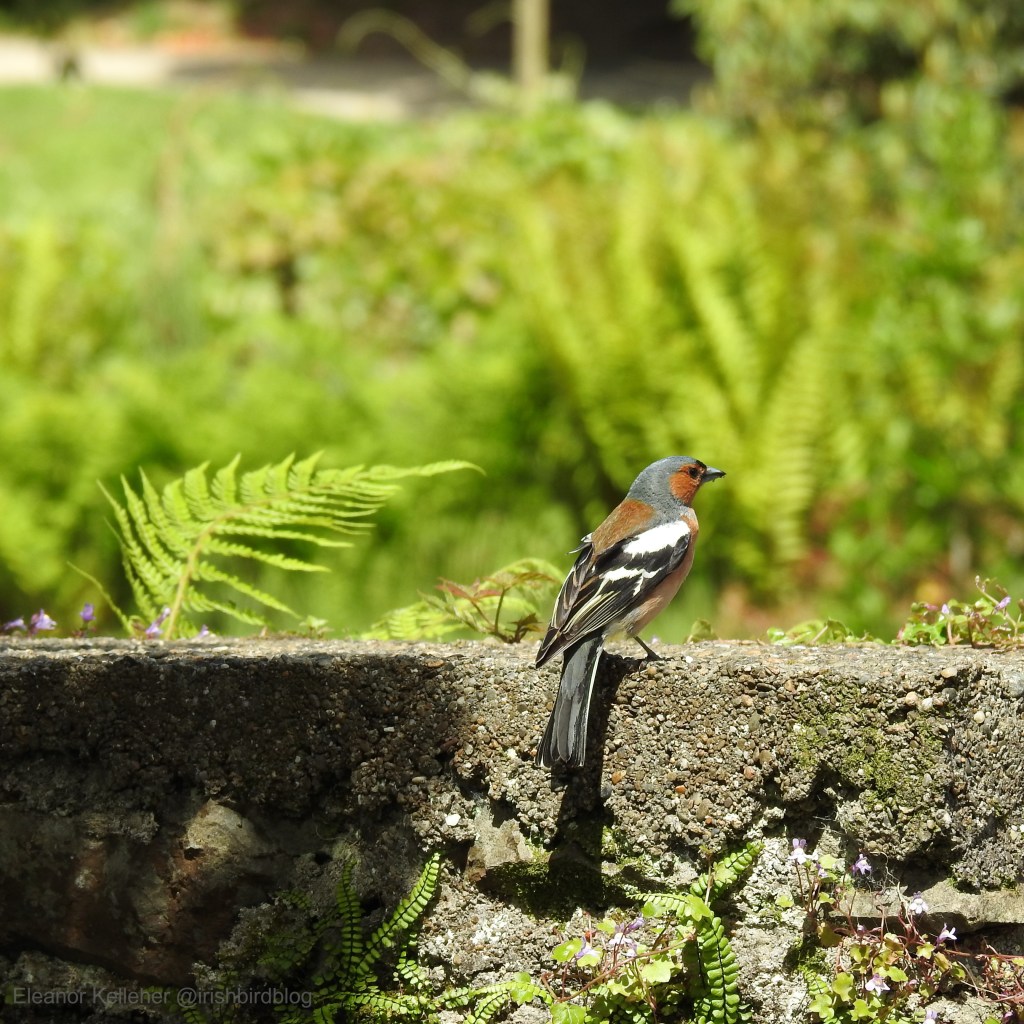
I can’t imagine leaving such a handsome boy behind (although going to Italy in the winter is pretty tempting). The males certainly have a beautiful colour palette; their face, breast, and underside are a healthy ruddy red that ripens to wine in wintertime – so hardly the time for the ladies to be taking off! As for the rest of their plumage, they’ve got a distinguished blue-grey nape and crown that complements their red face and chest. Their backs are mossy-brown, helping them to blend into the trees, and their wings are mostly black with bright stripes of white that make it easy to pick these birds out of the crowd.
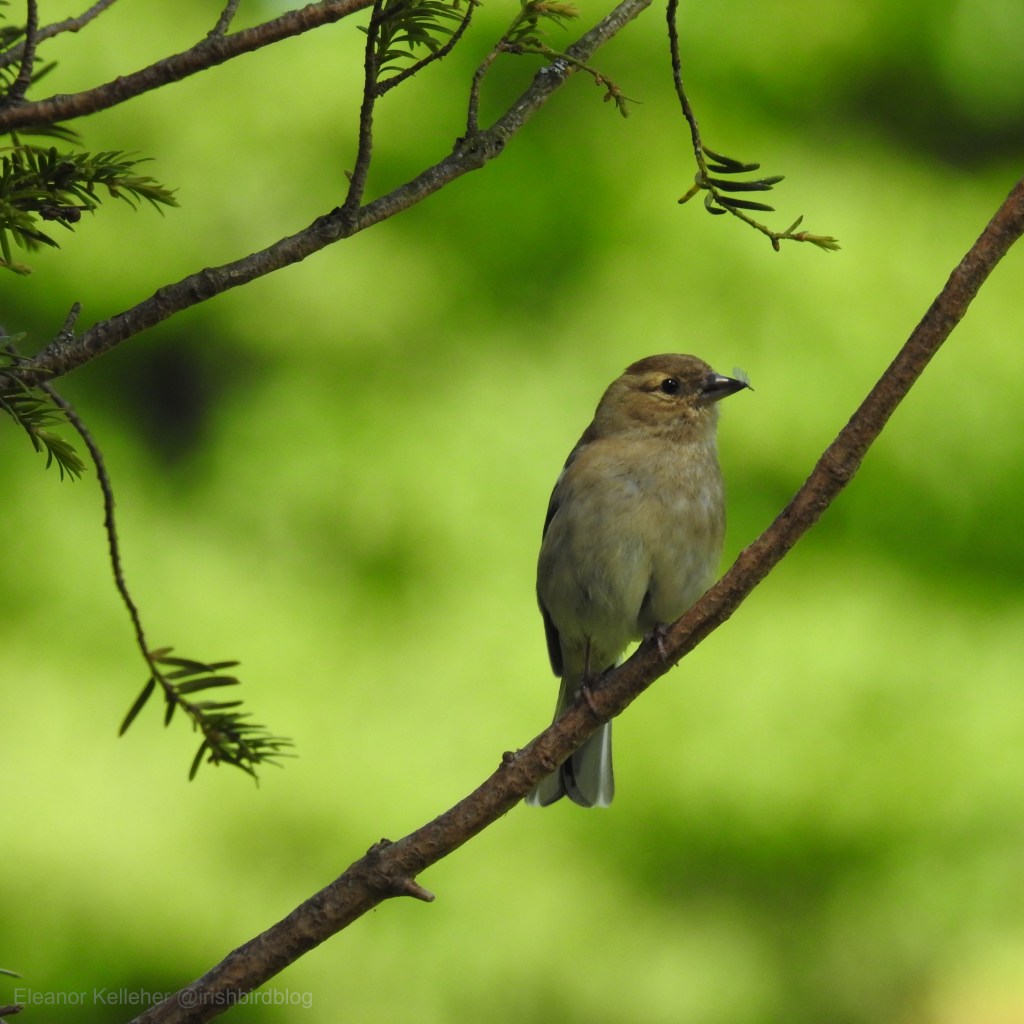
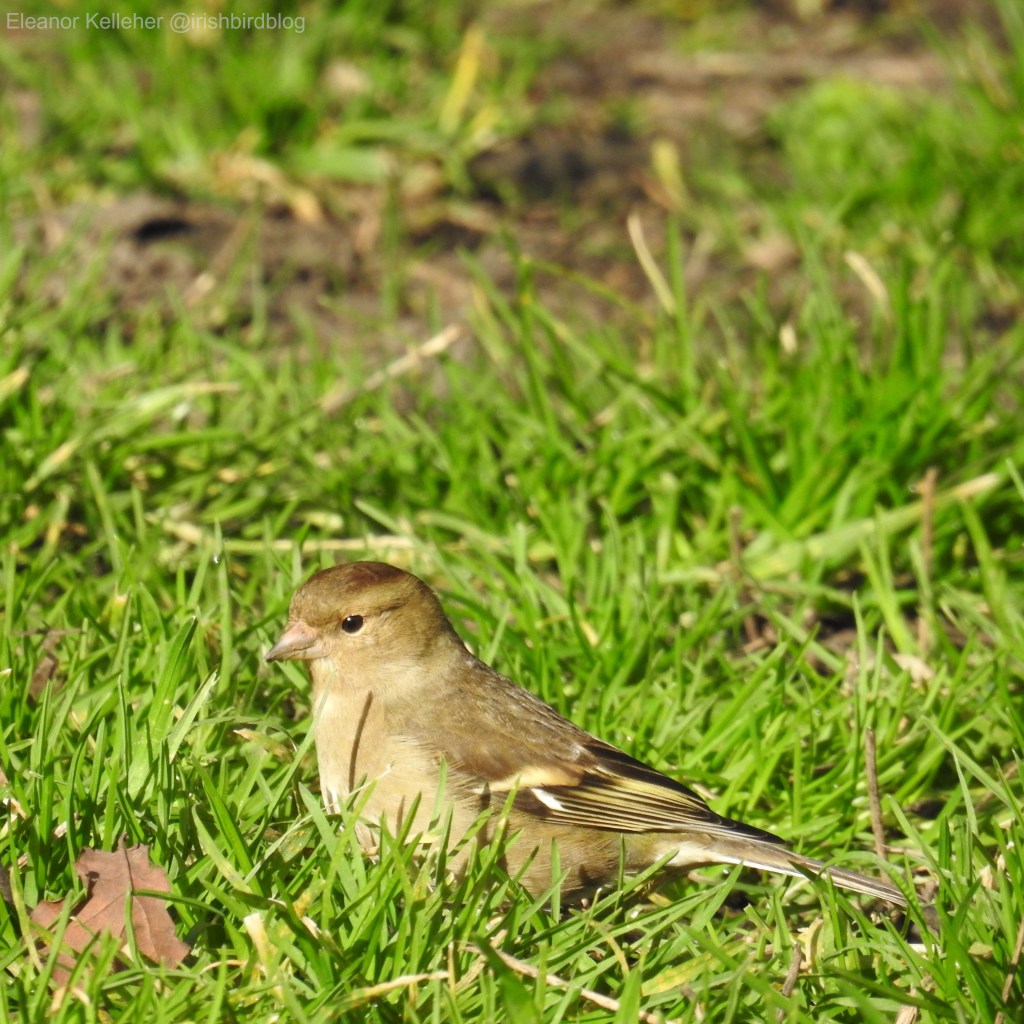
They are sexually dimorphous birds, so the ladies don’t look as vibrant to us. I like to imagine they’re sepia toned versions of the males, though they also have the distinct black and white wings, so you should still be able to identify them. Overall, I’d say that chaffinches are some of the more easily recognisable birds – definitely on the list of birds I’m able to ID quickest.
All on their own, these bachelors and bachelorettes have to fend for themselves. Much like broke college students, these birds seek out meals wherever they can. The “chaff” part of their name refers to the fact that in the olden days they’d spend weeks searching through the discarded chaff of harvested grains in the hopes of finding a few paltry seeds. Their Classic Finch™ beak was made for cracking seeds and busting nuts, but they also feed their chicks endless caterpillars and insects when they’re young so they can get those gains from the protein and grow extra fast.
Like other birds in their family, chaffinches have a history of being trapped and kept in cages for their lovely song. In 1882, the English publisher Samuel Orchart Beeton issued a guide on the care of caged birds and included the recommendation: “To parents and guardians plagued with a morose and sulky boy, my advice is, buy him a chaffinch.” Around that time, chaffinches would be entered into competitions to see which bird could repeat their song the most amount of times in a given time frame – an innocent enough contest, you might think. But occasionally these birds would be blinded with a hot needle because people believed it encouraged their singing. I’ve no idea why, because that’s the last thing I’d want to do after suffering through that ordeal. You might also like to think we’d given up on habits from the 200 years ago, but chaffinches are still a popular bird to keep as a pet today.
Though I don’t agree, I do understand, because they really do have such a wonderful song. It’s like a cascading waterfall of notes that all fit together like puzzle pieces, and it ends with a sharp “wolf-whistle”, an apt calling card for these little bachelors. They like to make their presence known by singing loud and proud from the tops of trees, you’re more likely to hear these birds before you see them! And they have been recorded to have regional dialects – so it’s likely our chaffinches sound different to the ones on the other side of Europe!
Thankfully, we don’t have to capture chaffinches anymore to hear their song, because they’re one of our most common garden birds! According to the Irish Garden Bird Survey of 2020/2021, the chaffinch the was 4th most common bird in rural gardens (found in 96.5% of gardens), and 9th in urban ones (84.3%). Put out some seeds and I’d say you’d almost be guaranteed to see (or at the very least, hear) one.
You’d think that a bird with such historic ties to humans and farming would pop up in some sort of myth and folklore, but there isn’t any that we could find! Even here in Ireland where we love our symbolism, there aren’t any chaffinch tales. Such a shame, as I think they could have been great in a fae story, perhaps something about a lonely red king?
In the first summer of the pandemic, the sound of chaffinch song would accompany me while I made up my own stories. He was very punctual, always appearing in the garden at 5 p.m. and singing into dusk when most of the other birds were quiet. After work I’d spend my time writing with the window cracked so I could hear his sweet melody pouring in. He was always hidden, perched in the red branches of the maple tree, but always a lovely constant presence. I’ve moved out of that place now, but anytime I go back there in the evenings I can still hear his song carried on the breeze.

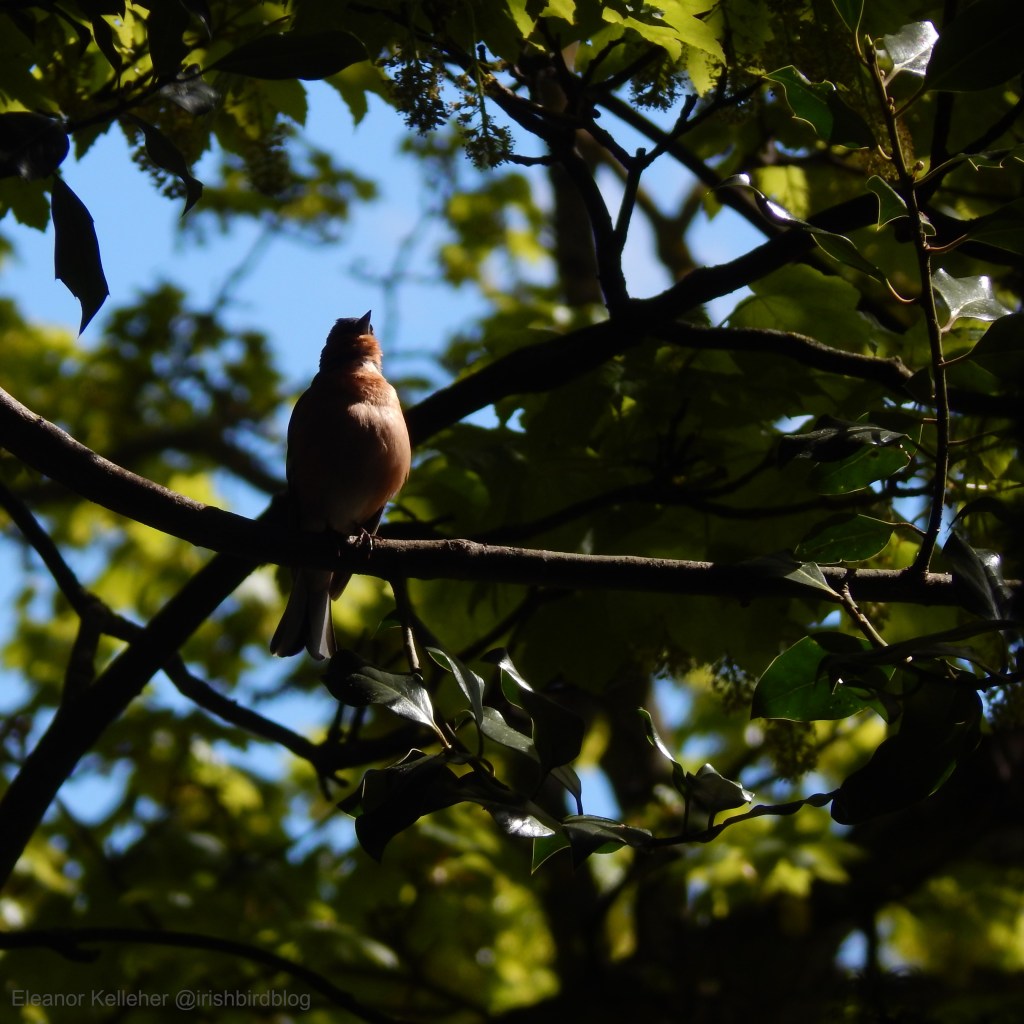
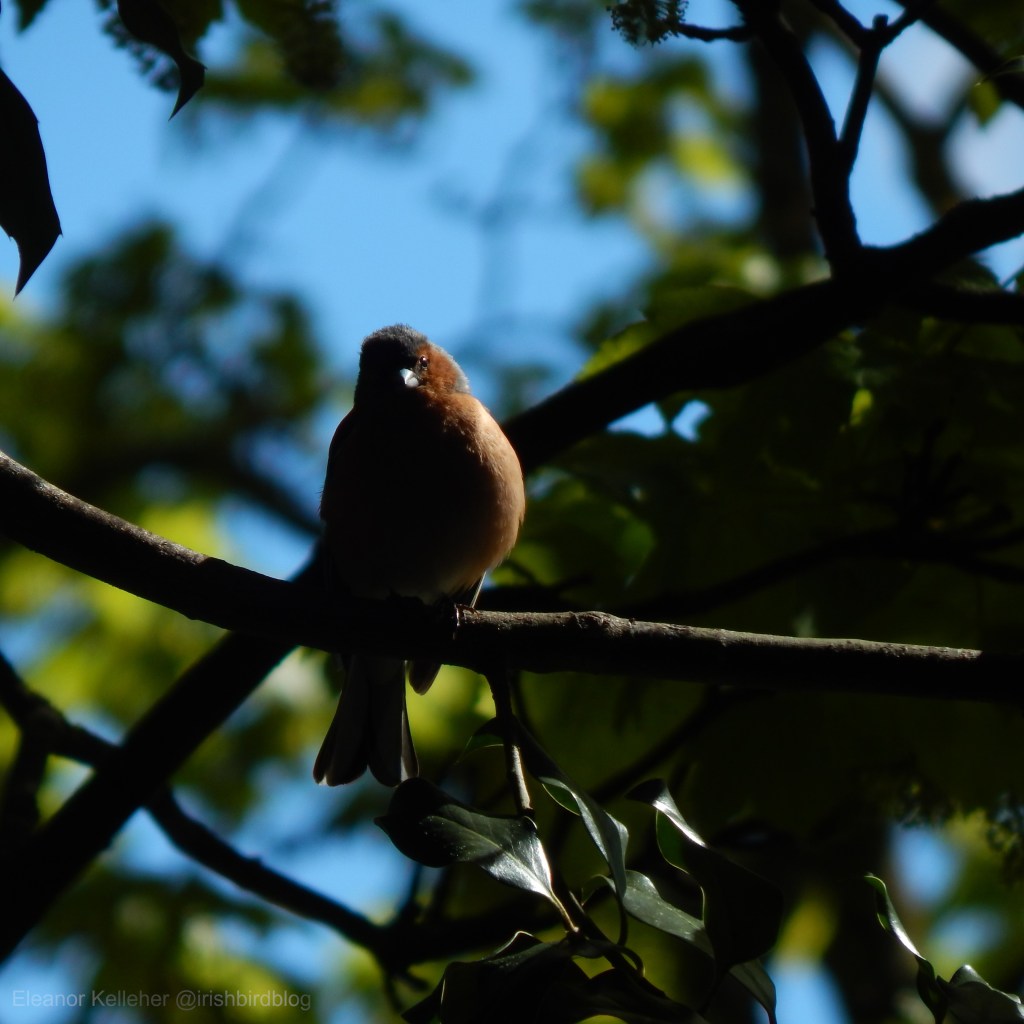
Chaffinches are striking on all fronts, and we’re lucky these bright beautiful birds are doing well in Ireland! Next time you’re out in nature, see if you can’t just pick out the song of a chaffinch and follow it back to the throne of the red king.
 The Irish Bird Blog
[…] © The Irish Bird Blog […]
LikeLike