The heaviness of autumn has truly draped itself upon us. At some point in the last couple of weeks the world became just a little more muffled under the constant pattering of rain. I know that soon I’ll be listening to the wind keening down the chimney and breathing in the smoky haze of winter – but before I commit to my heaviest coat, there is the small matter of Deireadh Fómhair and the spookiest/best holiday of the year. As is tradition, October’s bird is a member of the astute and ominous corvid family, and they’re a particularly wicked member, so take care while you’re roaming out there in the dark. This month’s bird is the Rook (Corvus frugilegus), known in Irish as Rúcach.
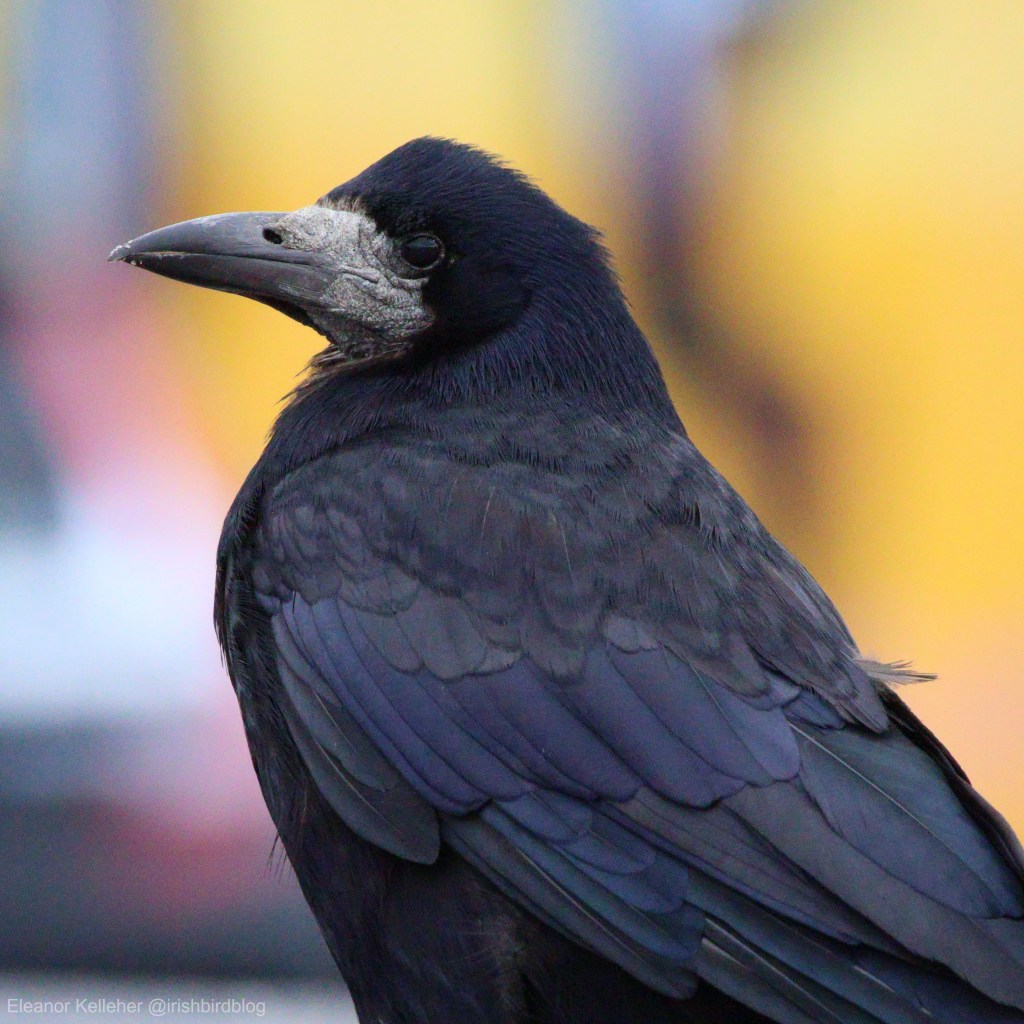
I do so love a bird whose name evokes the sound of their call, and this coarse croaker is no exception. The latter half of their Latin name, frugilegus, means “fruit-gathering”, and while these birds do consume a lot of plant matter (cereals, root veggies, and acorns, alongside fruit), they also balance out their diet with meat. Insects; worms; beetles; slugs; snails; the occasional small mammal or hunk of carrion; these glossy black birds are a fan of everything nasty a witch might want to stick in a stew.
Up until writing this post, I had always been under the impression that the rook chess piece was named after these birds – alluding to their intelligence and the sort of sharp mind you need to get good at chess. Turns out that it actually comes from the Persian word rukh which means chariot, and in earlier editions of the game, these pieces were shaped like little chariots instead of the towers that they are today. Interestingly though, there is a bird in Middle Eastern mythology who’s also named rukh (Roc in English). Roc was an enormous bird of prey that had the strength to carry off entire elephants, similar to the myth of “crows” carrying off newborn lambs. Is it something in the name that inspires these tales, I wonder?
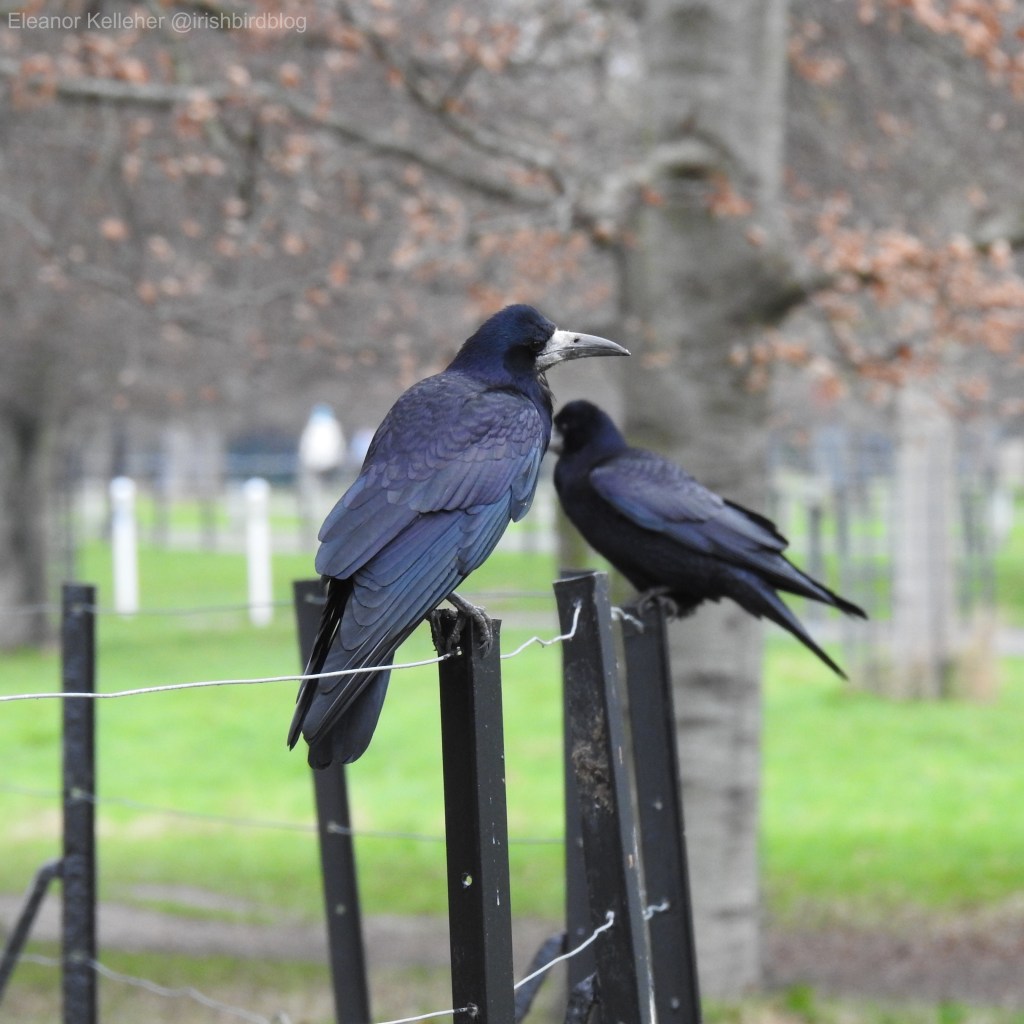
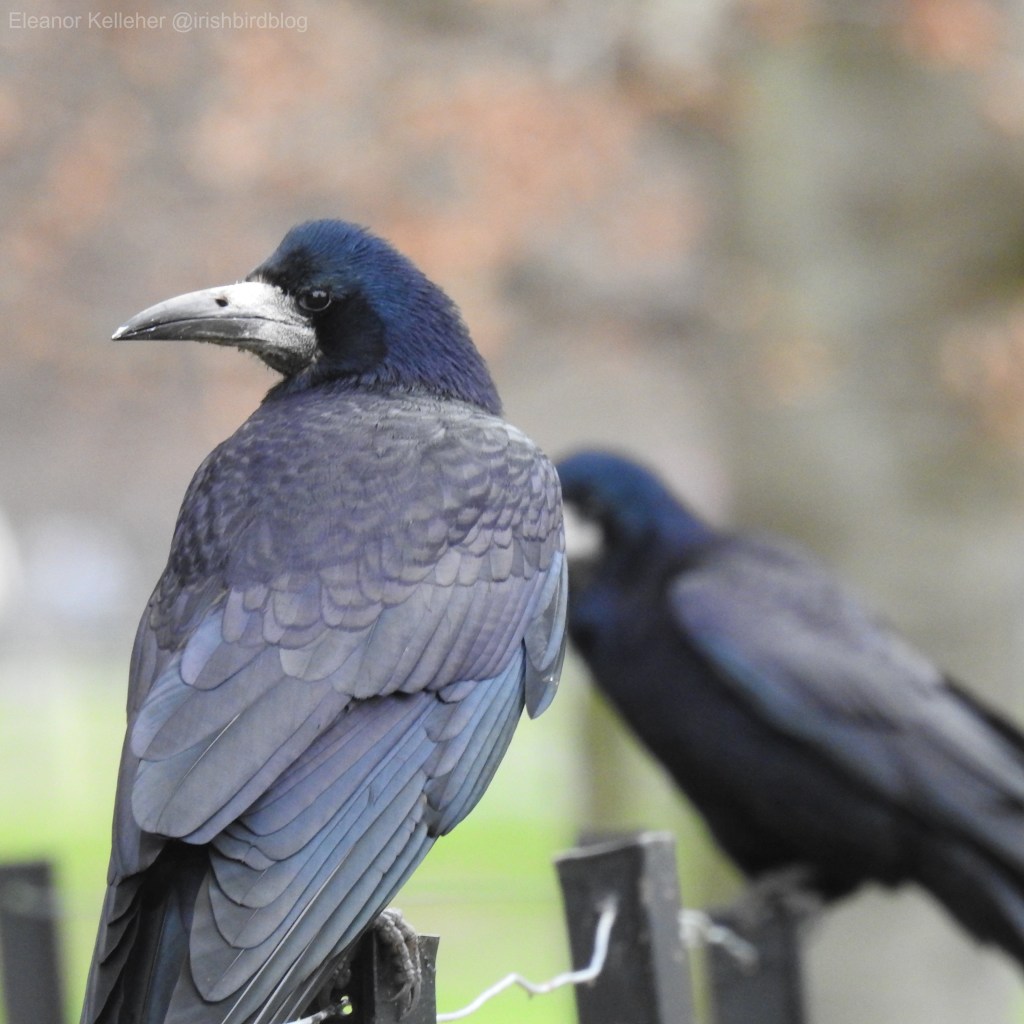
Or is it all in the look? Because rooks do have a distinct plague-doctor look about them. Of course they have the slick, starless black feathers that many corvids seem to have in some capacity, but these appear to be missing on their faces, revealing stark white skin underneath. The absence of these feathers gives their beaks the slightly curved, slightly steely look of a scythe.

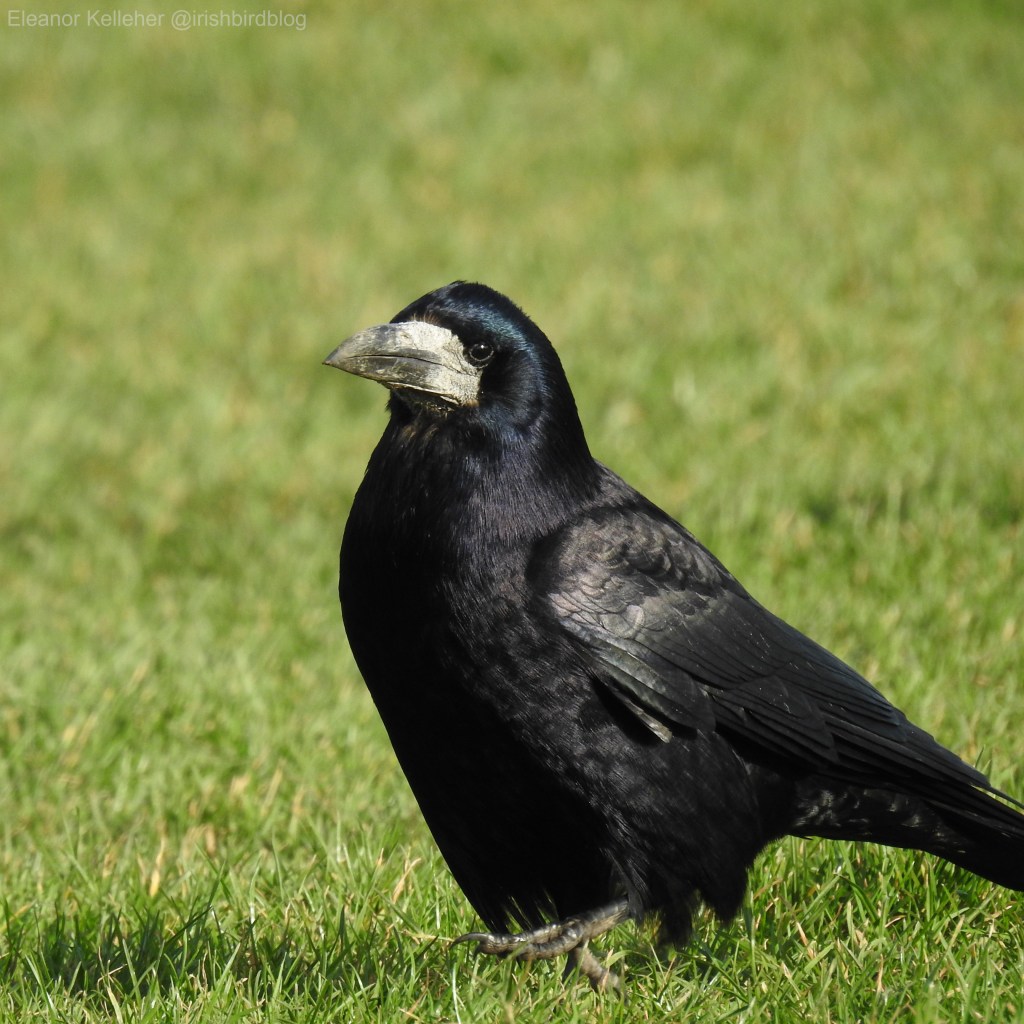
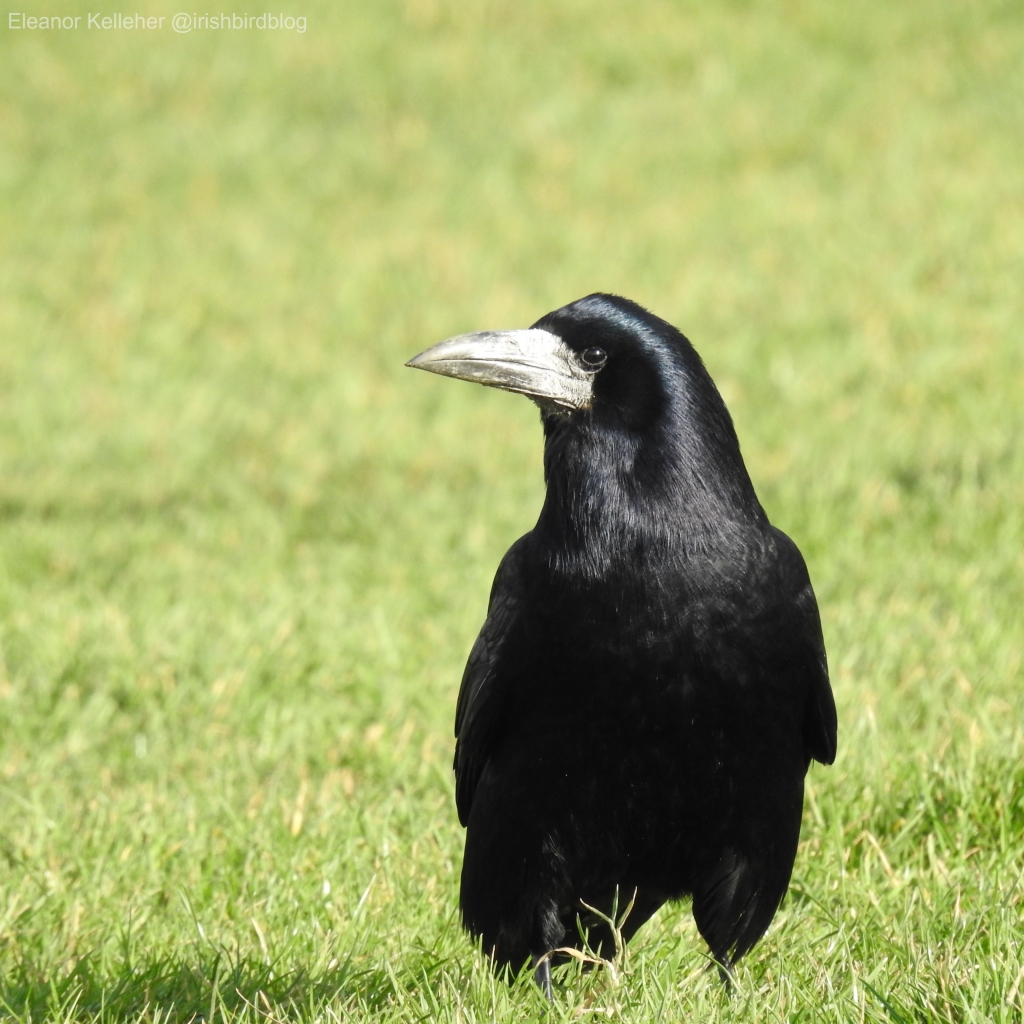
This devilish look is reserved for distinguished adults – juvenile rooks sport fluffy facial fuzz until they’re two years old, and could easily be mistaken for the star of last year’s Halloween blog post, the carrion crow.
And these birds are distinguished, even going as far as to (seemingly) wear trousers. In a first for Irish corvids, rooks have shaggy feathers at the top of their legs that resemble the unmistakable ruffle of pantaloons, something that sets them apart from the other members of their family. It doesn’t surprise me that these bright birds would sport something from the Age of Enlightenment, though personally I would have gone for the powdered wigs.
It’s difficult to discern what Celtic myths are about rooks versus other corvids, since the individual names of the birds in the family would be used interchangeably throughout the centuries. I would assume the rook and the raven often switched places in stories, given they’re the most similar in terms of size. So, we can assume rooks were also associated with war and death, since they would appear after a great battle was over to pick at the corpses.
That’s actually the reason why we have so many rooks (and other corvids). With fewer birds of prey to swoop in and spirit away our modern day battle-fallen soldiers (i.e. roadkill), these birds have positioned themselves to fill that ecological niche. Of all the corvids that we’ve talked about on this blog so far, rooks are definitely the least likely to be found hanging around urban areas. But that doesn’t mean they don’t enjoy going for a cheeky dumpster dive from time to time to find an easy meal.

Like other corvids, rooks are sociable and friendly, though these birds take their relationships to a new level by establishing large colonies of like-minded birds called rookeries. These colonies are often positioned at the tops of trees, and get especially busy in the winter (sure doesn’t everyone get social at Christmas time?) The average number of nests in a rookery is 50, a decent-sized apartment’s worth. Rookeries aren’t private clubs, especially in the colder months as they gear up for the breeding season, so sometimes you’ll even find jackdaws hanging out in them with their corvid cousins. If you’re curious and would like to see this phenomenon for yourself, you can find one in Phoenix Park. Opposite the zoo, there is the Phoenix Park Cricket Club and a fenced off area with a pond and lots of trees. Take a stroll through that area (you’re allowed in, the fence is to stop something other than people) in winter and you’re sure to hear the incessant cawing of the rookery overhead.
Within the flocks themselves, males and females will pair-bond for life and will often give each other “kisses” by fondling each others bills. If you’re lucky, you’ll see a pair performing some impressive aerial acrobatics, swoops and dives and sharp turns. In the evenings they’ll return to the rookery to hangout with the flock before departing for their communal roosting site, which is a different spot from the rookery. Wisely, these birds heed the ancient wisdom of the proverb “Don’t shit where you eat”.
If these colonies get large enough, they can actually have an effect on the area around them – namely on the soil. The amount of, ahem, ornithogenic (word of the day) material found in the soil near these rookeries is very high. Ornithogenic matter is rich in carbon, nitrogen, and phosphorous, which can be great for plants. If you haven’t got a green thumb and you’ve tried everything at the garden centre, maybe try some bird poo and see if that helps (disclaimer: bird poo may have pathogens and parasites in it so if you’re actually gonna use it as fertiliser, you should do more research than just listening to me yap).
Unfortunately, as is a common trend with birds, there are people who take issue with their behaviour. And as is common with people having issues with wildlife, the majority of the people in question are farmers.
Rook-shooting in Britain was a relatively popular blood sport that involved using specialised guns named rook-and-rabbit rifles to shoot juvenile rooks out of trees, with the excuse being that rookeries were a nuisance and a detriment to crop harvests. I personally suspect that the penchant for rook and rabbit pie, which was made with juvenile rooks and considered a delicacy at the time, may also have something to do with getting rid of these “pests”. The Tudors seemed to take specific offence to them, with Henry VIII introducing the Vermin Act in 1532 to protect grain crops and Elizabeth I passing the Act for the Preservation of Grayne in 1566, which called for more bird culls.
You may think that things have changed in the half a millennium or so that it’s been since then, but nope. Despite the fact that rooks are protected by the Wildlife Act here in Ireland, people still shoot them. It is obviously abhorrent behaviour, especially since it’s based on opinions that were formed in the 16th century, which have since been debunked. Experts now think that rooks are actually beneficial to arable farmland since they prey on the insects and larvae that would damage crops, and their presence deters smaller pest animals, so once again, we find that birds are actually better for your land. Nature wins again.
I’d be worried if I had been seen in the company of anyone who shoots at rooks, and the shooters themselves may want to start wearing masks, because these birds are not only very intelligent, but also capable of feeling a wide range of emotions. Including grief, and anger.
Rooks have been known to mob humans that they dislike, swooping at people with their large wings and talons outstretched. They aren’t quick to forget a face either, and can hold grudges across generations. They will mourn their dead by holding sombre funerals, flying onto perches near the corpse and breaking into a chorus of shrill, mournful cries that are interspersed with periods of eerie silence.

When I was younger, I remember reading a story in a collection of stories for kids that featured a rook and it has stuck with me to this day. The story is about a boy who becomes obsessed with collecting bird eggs and drawing them with this special holographic pencil that he won in an art contest. His friend tells him that it’s cruel to be stealing eggs, but he waves her off and continues doing it, going in search of rarer birds than the ones in his garden. One day, he walks past an old ruined tower encircled by dozens of rooks and he decides to climb it and steal some of their eggs. Undeterred by the birds swooping and clawing at him, he rushes home to draw his prize. Just as he is about to start, he turns and sees that unbeknownst to him, the rooks followed him all the way home, and one of them is perched on his windowsill with his precious shiny pencil in their beak. He leaps forward, but the bird takes off, returning home with something as precious to the boy as their eggs were to them. The moral was not to steal, because how would you feel if you lost something special to you, but honestly I think my young self internalised the message that you shouldn’t mess with rooks, and so I would always give them a wide berth when I saw them.
In slightly more uplifting news, these birds have been found to be smart enough to use tools. They even know to modify the tool they’re using to solve a problem, like bending a wire held in their beak to hook food out of a tube. They also have an understanding of gravity that exceeds that of chimpanzees; in one experiment they “managed to knock a reward off a platform by rolling a stone down a tube toward the base of the platform. Rooks also seemed to understand the idea that a heavier stone will be more likely to knock the platform over. In this same test, rooks showed they understood that they needed to pick a stone of a shape that would roll easily”.
They’ve also come up with ingenious methods of getting rid of ticks and mites from their bodies. One method has them enlisting the help of ants to climb aboard and eat the offenders. Another involves using chimneys to smoke out the pests, and Niall Hatch of BirdWatch Ireland once observed a rook holding a smouldering cigarette butt in their beak under their wing feathers to fumigate themselves.


Thankfully, as is the case with many of our other corvids, the rook is not in any danger of disappearing. Their intelligence and adaptability will keep them safe as the world shifts around them, and who knows, maybe far in the future we’ll have new myths about rookeries with enough birds to block out the sun, or rooks with smoking wings raining dead parasites down onto unsuspecting victims below.
With another corvid ticked off our list, who’s to say what bird we’ll bring you in a year? Keep an eye out for dark shapes swooping past, they might just be the star of next Halloween’s bird blog…
 The Irish Bird Blog
[…] they also have a link to another bird: rooks. Red-footed falcons don’t build their own nests, they tend to take over old disused nests in […]
LikeLike