For this month’s blog we’re doing something a little different: putting the focus on a phenomenon rather than a bird. It’s one that’s easily missed, occurring in the dead of night when you’re sound asleep in your warm bed. But out there, in the dark, untouched by streetlights, creatures start to stir. As the sun begins to rise, the Dawn Chorus welcomes the world to a new day. This month we’ll be sharing our DC experience, and giving you all the details on where to go if you want to partake in this wild ritual.

Navigating by moonlight is a lost art. The curve of the moon, yellow as a hag’s toenail, glows cold through the clouds. In the darkness, the familiar path becomes totally unknown and you cringe at each step in case something goes wrong. Your body is rigid, from the frost-tipped air and the anxiety winding its way around your limbs, as your mind summons every fearful thing you’ve ever known to lurk in the murky places at the edges of your vision; edges that are so much tighter and closer than in the light of day. Far off in the distance an alien sound breaks the stillness — almost mechanical in nature, like a pipe being swung at high speed. The elusive snipe taking off for places unknown. The knowledge doesn’t quite sink into your bones, though, and you start at the sound. You feel your way onto a bench, giving your shaking knees a reprieve. Not five minutes later, the first familiar birdsong breaks through the silence, and your whole body deflates with relief.
First on the scene are the blackbirds with their bright eyes reflecting the retreating stars. As we sat huddled and clutching our flasks of hot drinks for warmth, hearing these birds melted the ice from my body. Their song, usually fluid and burbling, had taken on another layer of complexity. The notes punched through the air, shattering the frost crystals. Several materialised out of the undergrowth at once and battled to control the airwaves. But hot on their heels were the thrushes, both mistle and song. From their perches high up in the trees, they sang to the heavens, songs layered with notes we probably haven’t even discovered yet. They dipped down to the guttural, the animalistic, almost industrial, and then ascended to the purest silvery tune, lighter than their hollow bones.


The dawn chorus can be heard early in the morning starting from around mid-March all the way through to May. But it’s not like birds know what a month is, so on a warm bright day in January or February, you may be awoken by the bleating of a blackbird. It typically starts around sunrise, so you have to be in place before that, and continues until about seven in the morning. We went on our dawn chorus adventure in mid-April and chose the East Coast Nature Reserve (ECNR) for its distance away from any main roads, (scant as the traffic would be at that time, we wanted to hear the birds clearly).
The rule of the dawn chorus is that birds with the largest eyes are the first to begin singing. The size of the eye itself is a factor, but so is the size of the pupil. Think of blackbirds with their giant inky-black peepers. They can absorb more light than birds with more prominent irises, like the dunnock or the jackdaw. So, they end up with the first chair position in the orchestra since they have a better chance of spotting predators or competitors with their big ol’ eyes.


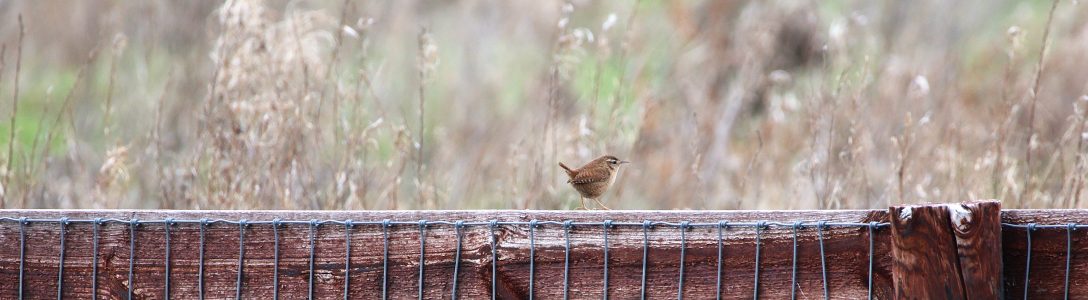
Following that rule, you get two birds who are renowned singers in their own right: the robin and the wren. Not five minutes after the blackbirds began did we hear them starting up. These little cheepers are small but mighty, with songs that can be heard an impressive distance away. We spotted one robin, fleetingly, in a tree above my head, but couldn’t locate any others or any wrens at all. They took over the undergrowth, singing from the brambles or low hanging branches. Their songs, too, were showier in the nascent light of dawn. They may not have the range of sound that the thrushes do, but they layer what they do have in an impressive feat of quick cheeps and trills.
But what actually is the dawn chorus, you might ask. Great question, dear reader. This time of year is when birds begin showboating in an effort to find mates and establish territories where they’ll rear their young. The birds start singing early in the day to make it clear that they’re a competitor in this year’s summer of love and also desirable partners with alluring songs. Singing loudly will draw predators to their location, so they start in semi-darkness when it’s not light enough for predators to be able to find them. And I think there’s an element of being like “Yeah, I’m here, and I’m singing, I ain’t afraid of no sparrowhawk”.


Next in the line-up are the featured artists from abroad, the migrating warblers who come to Ireland in summer and leave once the party’s over. Chiffchaffs and the willow ans sedge warblers, concealed in a sea of long dry grass, filled in the gaps between the robins, wrens, and blackbirds. By this point, another five or so minutes had elapsed and we moved from our bench to a small wooden walkway over a pond. All around us were trees and fields of brown stalks, perfect for hiding. The warblers’ songs aren’t as loud and don’t carry as far, but if you tune your ear to their frequency, you’ll get lost in the chatters, squeaks, and tinkles of their music. Much like how vocalising is integral but rarely celebrated, the warblers occupy a space where their quick, snippy songs help give texture to the dawn chorus. They’re like those “ohohoh”s that you can hear in most every pop song from the 2010s.
To get up so early to do this, are the birds’ sleep cycles disrupted in some way? Well, funny you should ask. Sleep has been well studied in birds and it turns out they don’t have a solid 8 hour cycle like us. Diurnal birds, (opposite to nocturnal, they sleep at night and wake during the day), have been recorded sleeping for only a few minutes at a time, waking up, and then falling asleep again. They’ll do this hundreds of times a night. In those handful of minutes, they go through one or more full cycles of REM and slow-wave sleep — alternating between maybe 10 seconds of REM and a couple of minutes of slow-wave. Compared to the 25% of REM sleep we need, birds need less than half at only 10%. As well as that, they can let one “half” or hemisphere of their brain fall asleep, while the other stays awake (this is called uni-hemispheric slow wave sleep). They can literally sleep with one eye open, most likely to watch for incoming threats, or for the dawn light so they can start singing.
But what about the birds you may have encountered singing in the dead of night? In cities or any other well-lit areas, birds confuse our streetlights for sunlight and end up singing all throughout the night. Robins especially seem susceptible to this, (which makes sense given their close proximity to us). The specific cause is streetlamps not being angled downwards and instead dispersing light in all directions, which is bad for light pollution in general, but especially bad for the birds.


Five minutes later and we made our way to the main birdwatching hide. The glow of the sun was washing the trees orange, and high up in them, the small bodies of songbirds had begun to flit to and fro. Our usual suspects, the chaffinch, goldfinch, and great tit, had come to adorn the chorus. As a piece of music crescendos to its peak, so too did the dawn chorus with the additions of these birds to the mix. Their familiar songs were warped in the ferocity of the performance; I mistook a great tit several times for some unknown singer. But despite the fervour, their songs elevated the emotion in the music; all our familiar birds singing together in the air. Of course it wasn’t a kumbaya moment for them, they were telling each other to get lost if they knew what was good for them. But to witness it, as a human who does not have to sing for my supper, in the golden light of a new day, was totally remarkable and unlike anything else. I wish I could have bottled it to keep for when I’m feeling low.
When we finally sat in the hide with the sun well and truly risen, we heard the “coo coo coo, coo coo” of a wood pigeon, and the answering melancholy song of a collared dove somewhere across the water; our two symbolic cymbal crashes signifying the chorus was at an end, and the day’s regularly scheduled music would proceed as planned.


So that’s our experience of the dawn chorus! All in all, it only took about twenty minutes total, rising to a peak with the sun. I was trepidatious about getting up so early, but I actually felt so energised. Maybe it was the knowledge that I was awake when everyone else wasn’t or something. But if you’d like to experience this yourself, there are events that BirdWatch Ireland runs every year across the country that don’t involve getting up so early! You can take a guided walk with an experienced birder who’ll let you know what you’re hearing. International Dawn Chorus Day for 2026 is May 3rd and there’ll be tens of DC events on both that day and the following weekend on the 10th — so do sign up if you want to experience it yourself. I can truly say it was like nothing else I’ve ever done and I’ll definitely do it again next year.
Congratulations, that was a fittingly eloquent article to honour the chorus that lifts so many so often. Being an avid camper, one cannot help being roused and regulated by the Dawn Chorus. The birds start up about half an hour before the sun peeps over the horizon, but perhaps that is just because I am at ground level and they see it sooner. One of the most remarkable and memorable experiences I had was, while camping on the Grand Canal, between the 12th Lock and McEvoys pub, being woken every morning in the forest that lines this undeveloped stretch of canal by the bird wave, as I called it. The canal is on an east west alignment, and as the sun rises in the east, you can hear the chorus a few miles off, propagating towards you at the pace the sun rises. It reaches a crescendo as it passes overhead, and fades off. This experience is totally unlike one where you are in a patch of forest, as the audible direction from east to west is not supported by a linear platform of trees.
All that aside, I have asked myself “Why do the birds sing twice a day in unison”. I would be very grateful if someone could post their thoughts on this as I have not come across a satisfactory explanation. My gut tells me that the birds need to oxygenate their blood to insulate from the cold prior to sleep, and upon awakening, to do the same again to get the system in order. Almost like breath control as practiced by Taoists, a kind of Avain Chi-Gung. darraghaiken@gmail.com